
Original briefings. Zero spin.
Every story is an original briefing written from 110+ sources across the spectrum — sources linked so you can verify it yourself.
 economy
Notable (5/10)
September 11, 2026 at 10:12 AM
economy
Notable (5/10)
September 11, 2026 at 10:12 AM
Jeff Currie Says Diesel Margins Near $110 a Barrel Signal 'Structural' Inflation, Not a Blip
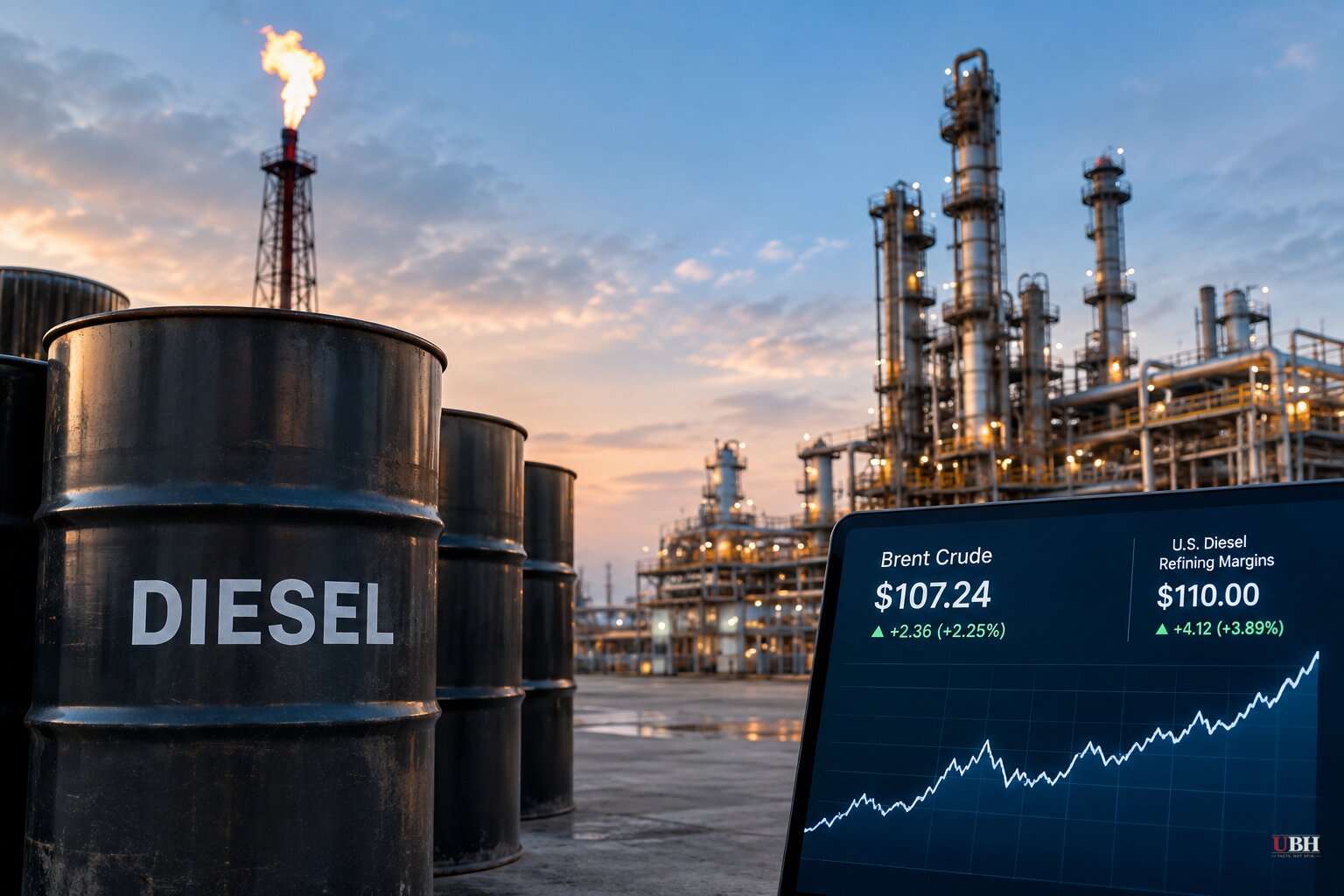
Brent crude has climbed above $107 a barrel. Jeff Currie, the former Goldman Sachs commodities chief who now heads Real Macro, told CNBC on Thursday, September 10, that the move looks less like a one-off shock and more like the start of a structural inflation cycle.
"The old economy is taking its revenge," Currie said on CNBC's The Exchange, according to ZeroHedge. "You see it in the rates markets. You see it in the commodity markets."
Asked directly whether the Gulf conflict explained this week's jump in Brent, Currie said no, not primarily. "Actually, I put a bigger weight on China coming back to the market," he said, pointing to renewed buying interest after trading picked back up in Singapore and Hong Kong.
Currie's explanation: China had cut refinery runs and export volumes earlier this summer as crude access tightened. But U.S. diesel crack spreads, the refining margin between crude and diesel rather than the diesel price itself, have reportedly hit around $110 a barrel. That's an enormous incentive to restart idled capacity.
"That's a pretty big profit," Currie said. "They start chasing it, brought those refineries back online, and it was just like an earthquake going through here."
The Bull Case, and Who's Making It
Currie argues traders are underpricing years of underinvestment in the capacity to produce and move raw materials, a theme he's pushed since summer. He says equities and longer-dated oil futures are starting to reflect a more durable disruption rather than a passing spike. "People are starting to go, 'This is not transient,'" he said. "It has a different flavor to it."
HSBC's chief economist for global commodities, Paul Bloxham, echoed the theme in a note this week, describing what ZeroHedge characterized as a "super-squeeze" building across physical commodity markets.
Currie is not a neutral observer. He now leads Real Macro, and a structural-inflation, higher-for-longer commodity thesis is directly relevant to that role. That doesn't make him wrong. It does mean his framing deserves the same scrutiny you'd give any market participant with a stake in the outcome.
The Case for Skepticism
The strongest counter to Currie's own account is embedded in his own account. If the diesel squeeze is mainly a refining-margin arbitrage story, Chinese refiners chasing a fat $110 spread by restarting idled plants, that's exactly the kind of imbalance markets are supposed to correct. More refined product hitting the market from restarted Chinese refineries should, over time, compress crack spreads back down, not sustain them.
That's a different mechanism than the underinvestment-in-drilling story Currie is layering on top of it. A temporary refining bottleneck closing as capacity comes back online is not the same claim as permanent structural scarcity in crude production. Currie's interview blends both without fully separating which one is doing the work in this week's price move.
There's also the Gulf conflict itself. Currie downplayed it as a secondary factor this week, crediting Chinese demand instead. Both things can be true at once, but they point to different durability: a geopolitical flare-up could ease with a ceasefire or de-escalation, while a demand-driven refinery restart is a market mechanism that could self-correct once margins normalize.
No inflation data released since these remarks confirms a structural shift in consumer prices tied to fuel costs. The open question is whether diesel crack spreads stay elevated once Chinese refiners fully ramp back up, or whether the current $110 margin proves to be exactly the kind of transient profit opportunity that corrects itself within a quarter.
Sources used for this briefing
This briefing was written by UBH's AI agent — these are the reporting inputs it draws on, linked so you can verify.


