
Unbiased headlines. Facts, not spin.
Unbiased Headlines is an independently owned news organization. We bring you the facts, not opinions, written fresh from 110+ named sources. Sources linked so you can verify it yourself.
 economy
Notable (6/10)
Japan's economy shrinks at 0.1% annualized rate in third quarter, missing forecasts for growth
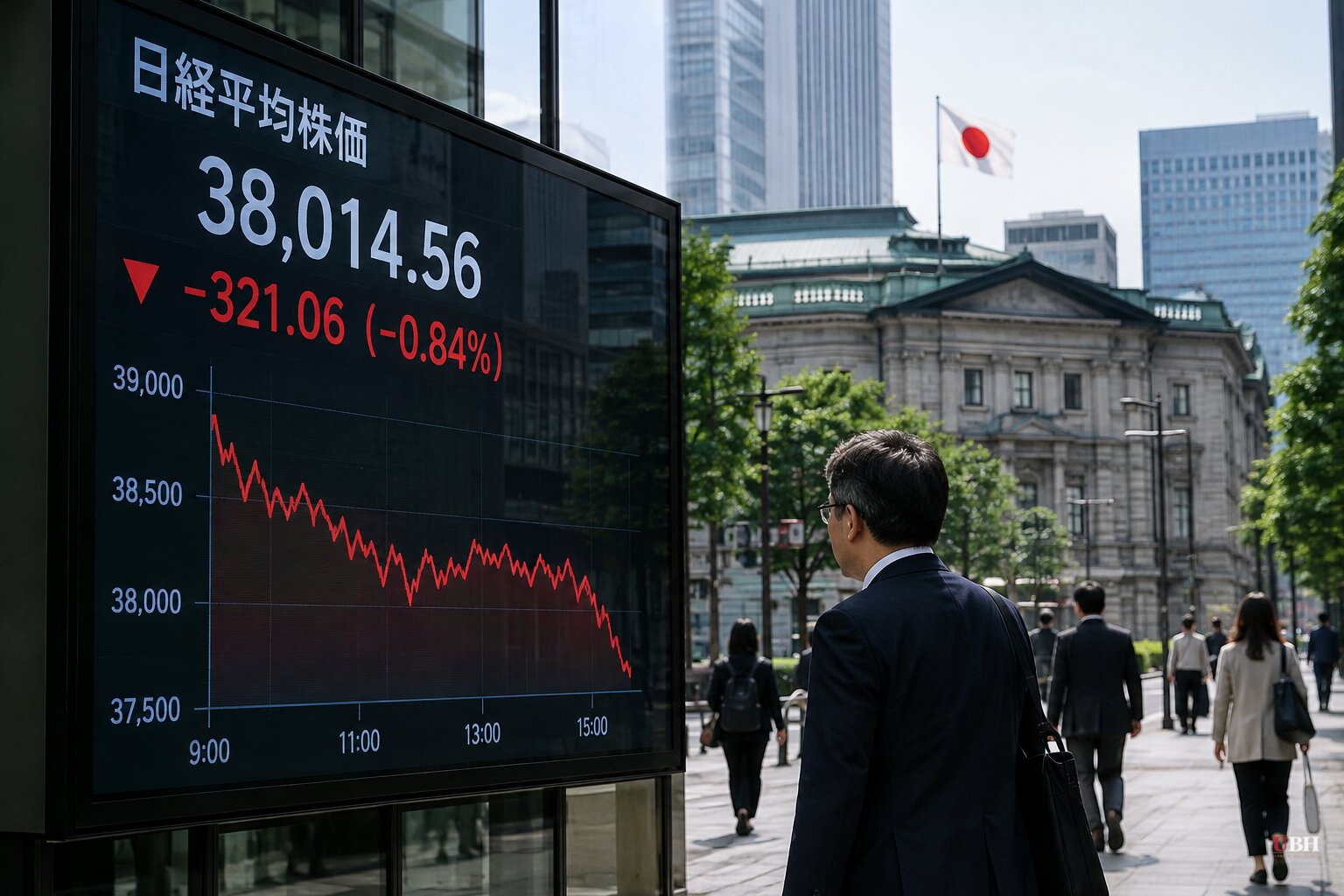
Japan's economy shrank in the third quarter when economists expected growth.
Real GDP fell at an annualized 0.1% in July through September, according to Cabinet Office data. A Reuters poll of economists had forecast 0.3% growth. The previous quarter expanded at an annualized 1.4%.
The decline is small. It is also the first contraction in about a year.
Where the drag came from
Net exports subtracted 0.6 percentage point from growth. Exports beat expectations in two of the quarter's three months, but the cost of imported energy more than ate the gains.
Private consumption fell 0.3%. Reporting from Firstpost and Bloomberg pointed to a mix of high inflation, bad weather and typhoons. CNBC tied the weakness to elevated energy prices and reported that household energy subsidies had expired in September, leaving consumers exposed to higher bills. The subsidy point is CNBC's reporting, not a finding from the Cabinet Office.
Business spending held up better. Capital investment rose 1.6%, ahead of the 1.5% market forecast, as companies put money into automation, artificial intelligence and labor-saving technology.
The annualized figure is a pace, not a measured three-month drop. Nikkei Asia described quarter-on-quarter growth as essentially flat. On a year-on-year basis the economy grew 1.1%, its strongest showing since the second quarter of 2025. Marcel Thieliant, head of Asia Pacific at Capital Economics, attributed that to a weak comparison base from the third quarter of 2025.
The Bank of Japan's problem
The weak number lands at an awkward moment for the central bank. At its meeting last month the Bank of Japan declared that its 2% underlying inflation target had been met for the first time in 13 years. Core inflation hit 2.1% in September, above analyst estimates and the highest reading this year.
So the economy is shrinking while prices are climbing. That complicates the path the bank has been following to move away from ultra-easy policy.
Markets still lean toward a hike. LSEG data puts the chance of a 25-basis-point increase in December at 75.6%.
Thieliant argues the GDP miss will not change that. "It looks increasingly likely that the Bank will have to tighten policy more aggressively than we've been anticipating as inflation is about to surge," he said.
That is the counterweight to the soft GDP print. On his reading, the inflation data matters more to the bank than one small quarterly decline.
Market levels
After the release, the yield on the benchmark 10-year Japanese government bond stood at 2.885%. The yen traded at 159.76 per dollar, marginally weaker.
A yen near 160 makes imported energy more expensive for Japanese households and businesses. That is the same channel through which the trade numbers hurt the quarter.
What forecasters expect
The Japan Center for Economic Research's monthly survey projects growth of 0.89% in fiscal 2026 and 1.02% in fiscal 2027. That is slow growth, not a collapse.
The same survey points to different pressures by company size. Smaller businesses are squeezed on payroll costs. Larger firms are weighing upcoming wage negotiations against persistent inflation.
What the Bank of Japan does in December is now the open question. It faces a shrinking economy, inflation above its 2% target, and a weak yen. A 25-basis-point hike would raise borrowing costs just as consumers are cutting back, and it would test whether the capital spending that held up this quarter can carry growth when households are not.
Sources used for this briefing
6 links from 6 independent newsrooms (syndicated copies of the same report count once)
These are the sources it draws on, linked so you can verify.


