
Original briefings. Zero spin.
Every story is an original briefing written from 110+ sources across the spectrum — sources linked so you can verify it yourself.
 defense
Notable (6/10)
August 6, 2026 at 08:21 AM
defense
Notable (6/10)
August 6, 2026 at 08:21 AM
Japan Weighs Palantir and Anduril AI to Modernize Military Command Systems
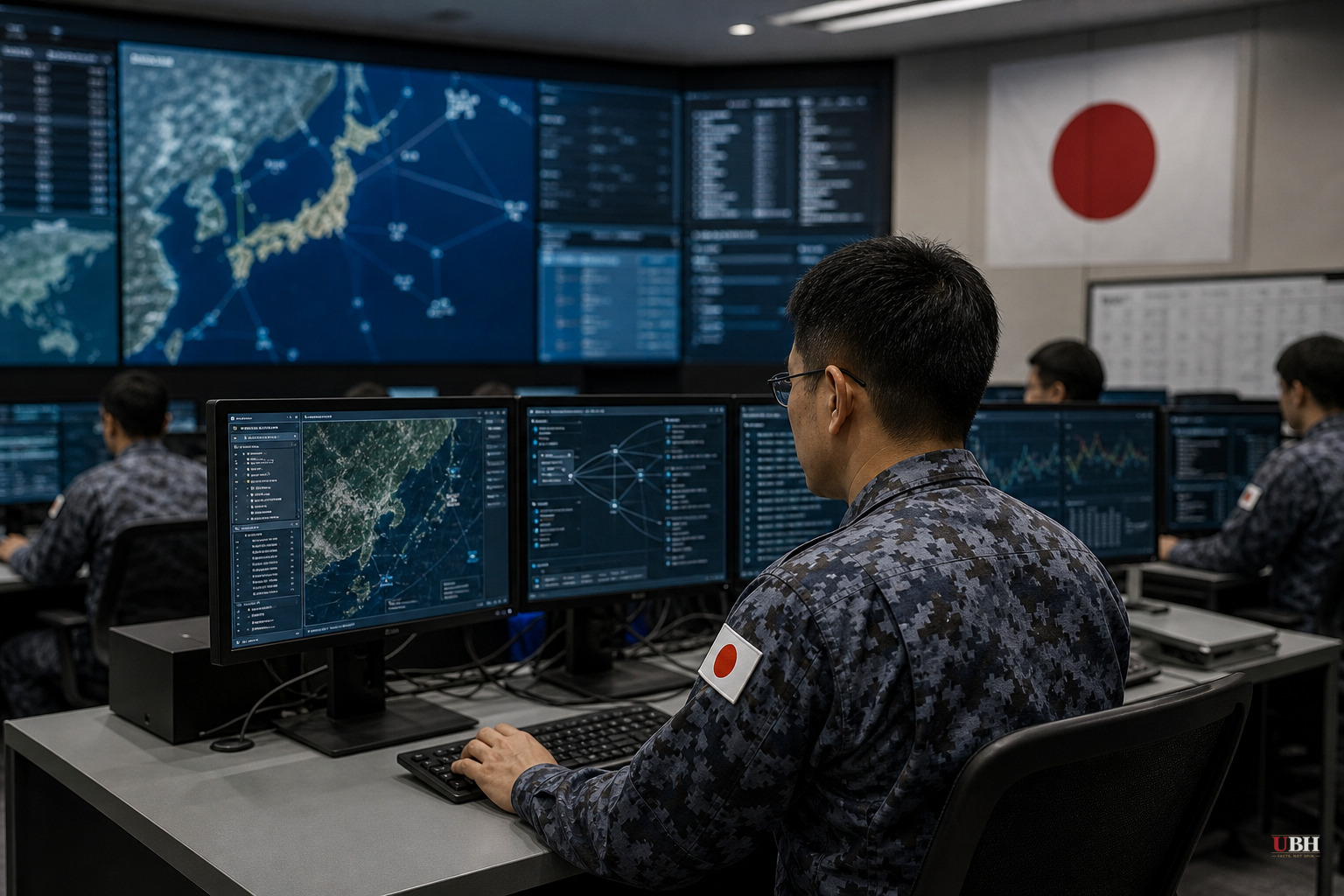
Japan is moving to put artificial intelligence into the command-and-control backbone of its Self-Defense Forces, according to Nikkei. The plan centers on U.S.-developed AI platforms that would help commanders process battlefield data, recommend tactics, and coordinate operations in real time.
Two American companies are reportedly leading candidates. Palantir's Maven Smart System analyzes intelligence and recommends targets and tactics. Anduril's Lattice AI fuses data from sensors into a single operational picture and can help coordinate drones and other assets autonomously in contested environments.
Nikkei reports Japan currently has no AI-enabled command system at all. Modern warfare, from missile defense to drone swarms, moves faster than human staff officers can process manually. Japanese defense officials reportedly see AI-assisted command as no longer optional if they want to keep pace with adversaries and allies alike.
The timing tracks with a broader shift in Japan's defense posture. The Joint Operations Command launched in 2025 to tighten coordination between Japan's Ground, Maritime, and Air Self-Defense Forces and with U.S. forces stationed in the region. Closing the gap in decision-making speed between American and Japanese systems has become a growing priority as that integration deepens.
Tokyo plans to fold the AI initiative into revisions of its national security strategy expected later this year, part of a five-year defense modernization push. Nothing here is finalized. This is a proposal working through Japan's defense bureaucracy, not a signed contract or deployed system.
Japan doesn't want to just bolt American software onto its military and call it done. Officials are reportedly building in a Japanese-developed AI layer that would sit above the U.S. systems and decide which model is best suited for a given task. Sakana AI's Fugu, a Tokyo-based system designed to orchestrate multiple AI models, has emerged as the leading candidate for that role and already works with Japan's Defense Ministry.
A country handing full battlefield decision-support to a foreign vendor's software, with no ability to audit, replace, or override it, is a country that has outsourced a piece of its sovereignty. Japan is trying to avoid that outcome while still getting the speed benefits of proven American tech. The government also plans to host the underlying data infrastructure domestically, inside Japan, rather than relying on foreign cloud systems for sensitive military information.
Handing tactical recommendations and targeting analysis to AI systems, even ones with human commanders theoretically making the final call, raises real questions about accountability when something goes wrong. Who's responsible if an AI-recommended strike hits the wrong target? Neither Nikkei's reporting nor Japan's public planning documents have answered that yet, because the systems aren't deployed. That concern warrants attention. Tokyo should build in clear human-decision checkpoints before any of this goes operational, something officials say they intend to do by keeping commanders in the loop rather than letting AI act unsupervised.
For the U.S., this is a straightforward win on paper. Palantir and Anduril, both companies that have aggressively pursued defense contracts under the Trump administration's push to modernize the Pentagon's tech stack, would gain a foothold with one of America's most important Pacific allies. Deeper AI interoperability between the U.S. and Japan means faster combined response times against a genuine strategic concern: Chinese military buildup in the region, which has accelerated significantly over the past several years according to Pentagon assessments.
But Washington shouldn't assume Tokyo will remain a permanent customer. Japan's insistence on a domestic AI orchestration layer, and on keeping its own data infrastructure at home, signals a country hedging against U.S. dependence even while leaning on U.S. technology in the near term. That's not disloyalty. It's the same instinct that leads any serious government to avoid single points of failure in a system meant to defend the country.
The open question is timing. Nikkei's reporting frames this as part of security strategy revisions expected later in 2026, with no firm date for when any AI system, American or Japanese, would actually go live in an operational command post. Until Tokyo finalizes that strategy and signs actual procurement contracts, this remains a policy direction, not a deployed capability.
Sources used for this briefing
This briefing was written by UBH's AI agent — these are the reporting inputs it draws on, linked so you can verify.


