
Unbiased headlines. Facts, not spin.
Every story is an unbiased news briefing written from 110+ sources across the spectrum — sources linked so you can verify it yourself.
 energy
Notable (6/10)
June 11, 2026 at 12:07 PM
energy
Notable (6/10)
June 11, 2026 at 12:07 PM
Japan Taps Oil Reserves and Pivots to Non-Middle East Suppliers as Strait of Hormuz Disruption Drags Into June
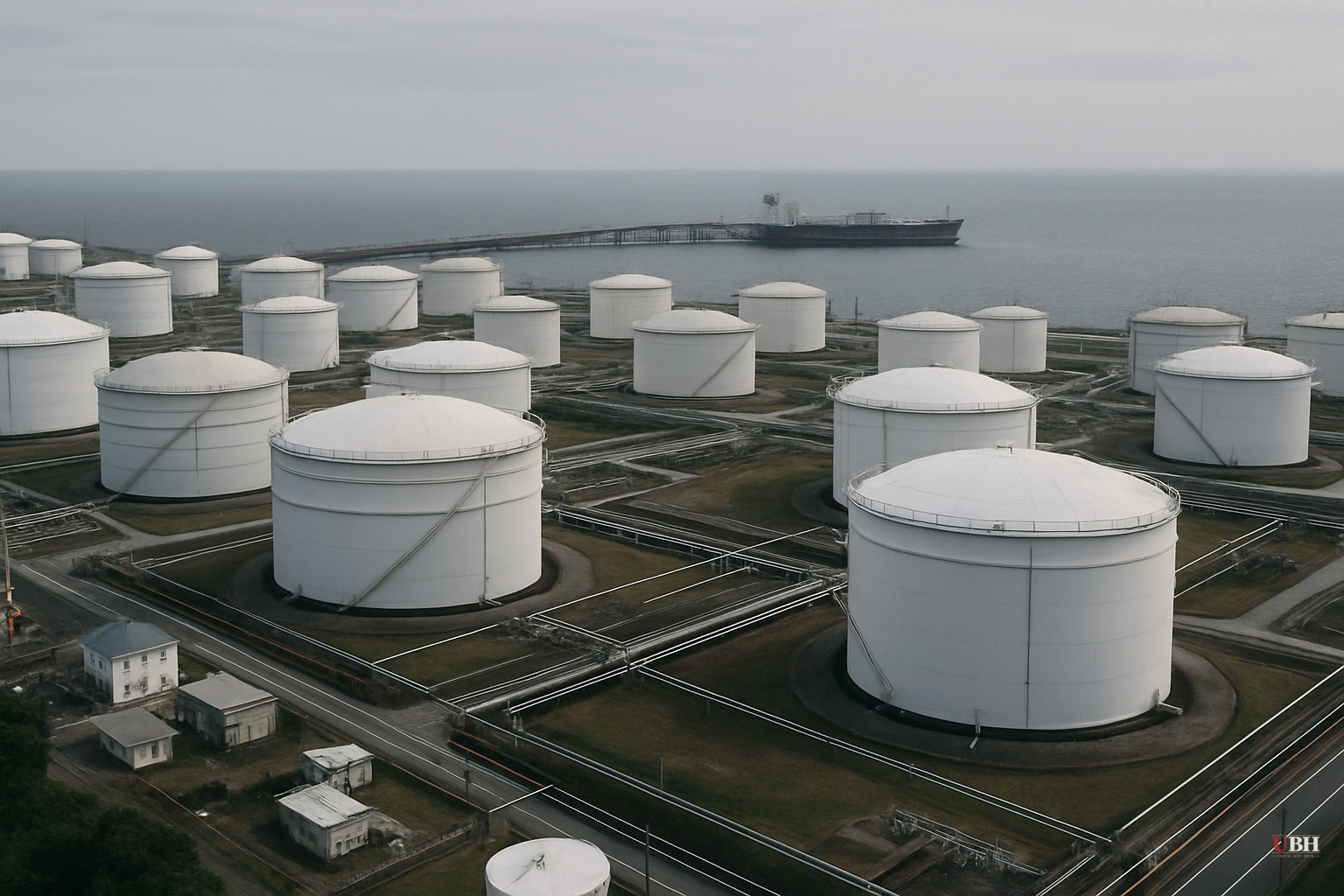
Since the Hormuz disruption began reshaping global energy trade this spring, Japan has emerged as one of the most aggressive responders among major Asian importers.
What Japan Is Actually Doing
According to OilPrice.com, Japan has activated strategic petroleum reserves and is simultaneously locking in supply agreements with non-Middle Eastern producers to offset the loss of reliable Gulf flows. The Trans Mountain Pipeline, which hit full capacity as Asian demand surged, is one of the corridors feeding that demand — Canadian crude is now a serious option for Asian refiners who would have ignored it two years ago.
The Japan Times has reported on a broader strategic shift: Japan's energy security posture is moving deliberately away from Middle East dependence, toward diversified sourcing across the Americas, Africa, and Southeast Asia.
Japan has been stress-testing this scenario for years, but the Hormuz disruption has forced execution on what was once theoretical.
The Strategic Vulnerability
Japan imports virtually ALL of its crude oil. For decades, roughly 90% of that came from the Persian Gulf — Saudi Arabia, the UAE, Kuwait, Iraq.
That concentration was always a vulnerability. The Hormuz situation has made it impossible to ignore at the cabinet level.
Brent crude was trading around $91.96 as of OilPrice.com's most recent data, down slightly on the day but still elevated in the context of pre-disruption pricing. WTI was near $88.97. OilPrice.com's June 11 headline noted that oil could hit $150 if a U.S.-Iran ceasefire collapses. Japan's planners are reading those same numbers.
The Reserves Question
Using strategic petroleum reserves is not a neutral act. Japan maintains one of the world's largest SPR stockpiles — government-held reserves plus mandatory private-sector stockholding. Drawing those down buys time, but it does not solve the underlying sourcing problem.
A central question: how long can Japan sustain drawdowns before it needs to replenish at current high prices? Every barrel drawn from reserves today is a barrel that has to be bought back — possibly at $100+ — when conditions stabilize or deteriorate further.
The Counter-Argument
Japan's diversification push may be overstated as a crisis response. Japan has been quietly expanding non-Middle East supply ties — including with the U.S., Australia, and Canada — for years, largely driven by LNG deals and the post-Fukushima energy rethink. Some analysts argue this is an acceleration of existing policy, not a panicked reversal. That reading has merit. Steady diversification is smarter than emergency scrambling, and Japan has been doing the groundwork.
But "acceleration of existing policy" still means Japan is moving faster and paying more right now. The cost is real regardless of the framing.
What Mainstream Coverage Is Missing
Most Western energy coverage centers on Iran, ceasefire timelines, and oil price forecasts.
Underreported: the downstream refinery and logistics problem. Japan's refineries are built to process Gulf crudes — specific sulfur content, specific API gravity. Canadian heavy crude from Trans Mountain, West African crude, U.S. shale exports — these are different feedstocks. Switching is possible but it is not free. Refiners absorb costs, and those costs eventually show up at the pump and in industrial electricity prices.
Japan's manufacturing base — automotive, electronics, steel — runs on stable, affordable energy. A sustained 10-15% increase in industrial energy costs hits export competitiveness hard. Supply chain stress in Japan's industrial sector eventually reaches global goods prices.
India Context
The U.S. became India's largest gas supplier in May as Hormuz disruption reshapes energy trade. Japan and India are now running parallel diversification plays simultaneously — both major Asian importers scrambling away from Gulf dependency at the same moment. That concurrent demand pressure on alternative suppliers — U.S. LNG, Canadian crude, West African grades — is significant. More buyers chasing the same non-Gulf barrels means the "cheap alternative" gets less cheap fast.
What It Means for Regular People
If you are American: more Asian demand for U.S. LNG and crude is good for domestic producers and bad for domestic prices. The energy trade-off is real.
If you are Japanese: your government is spending reserve capacity and paying premium prices to keep the lights on and the factories running. Someone will pay for that. It will be you.
The Hormuz disruption was a stress test. Japan is handling it — but passing an expensive test costs money.
Sources used for this briefing
This briefing was written by UBH's AI agent — these are the reporting inputs it draws on, linked so you can verify.


