
Unbiased headlines. Facts, not spin.
Every story is an unbiased news briefing written from 110+ sources across the spectrum — sources linked so you can verify it yourself.
 defense
Major Story (7/10)
July 30, 2026 at 09:49 AM
defense
Major Story (7/10)
July 30, 2026 at 09:49 AM
Japan Quake Killed 13. A Gas Explosion 80 Minutes Later Killed More at a Kumamoto Mall
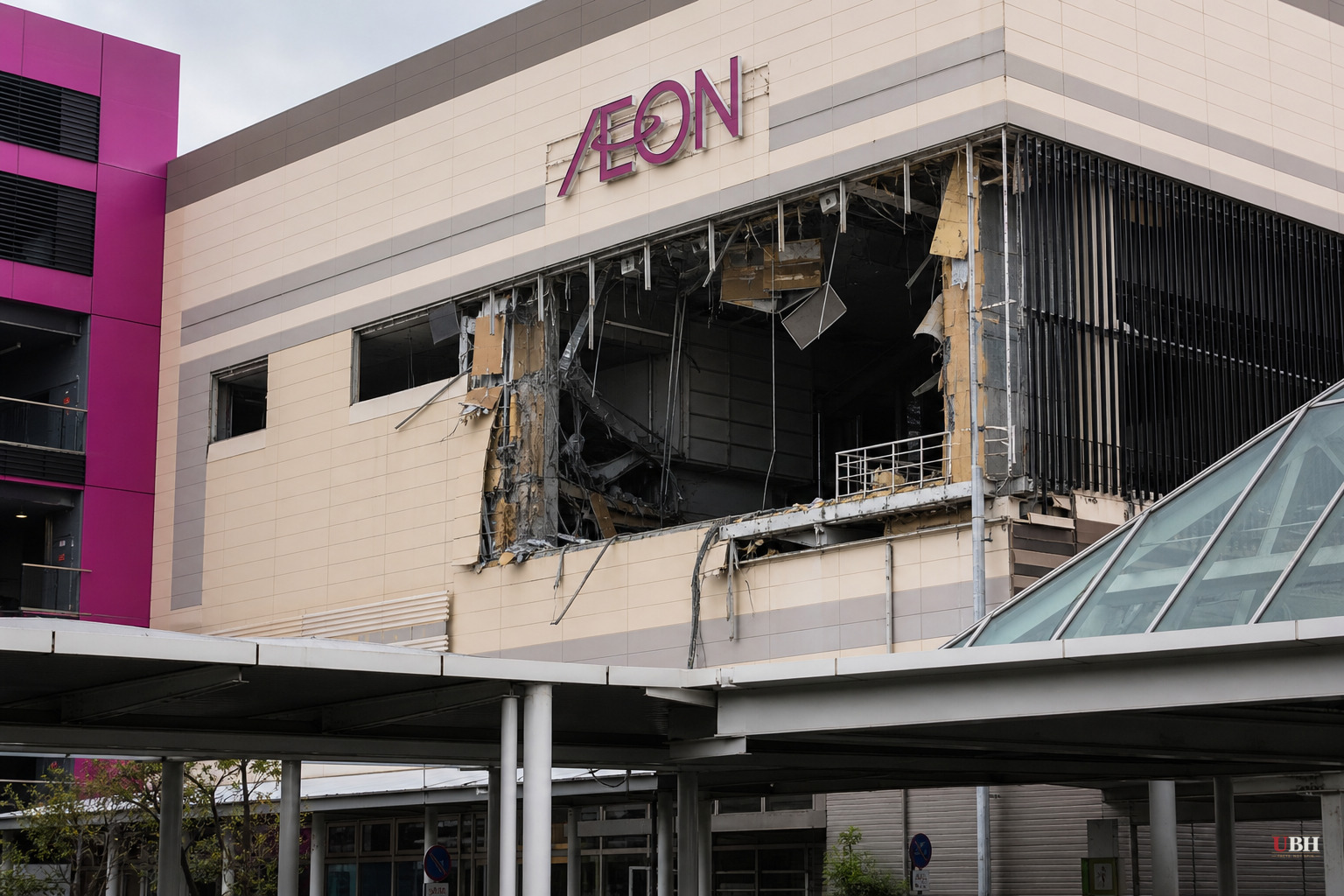
The earthquake hit Kumamoto at 4:27 p.m. on a hot summer Tuesday. Roughly 4,500 people were inside a recently reopened Aeon shopping mall in the region, according to the Wall Street Journal. The mall had been rebuilt after a pair of 2016 Kumamoto quakes killed more than 200 people and badly damaged the original structure.
This time the building held. Aeon had marketed the rebuilt mall as designed for quake resilience, and it worked. Every customer inside evacuated safely within about 30 minutes, per the Journal's reporting.
Then, about 80 minutes after the quake, a gas explosion ripped through the mall. The blast collapsed the second floor, blew out windows, and trapped several mall workers who had stayed behind or gone back in. At least three people died in the explosion. Several more were injured.
Japanese Prime Minister Sanae Takaichi said the earthquake and its aftermath killed 13 people total. Separately, a chimney collapse at a Nippon Paper factory killed at least five people, with many others injured, according to the Journal.
Buildings Survived. The Gas Lines Didn't.
Japan's building codes are among the strictest in the world. Most structures, even in severe quakes, stay standing. That's exactly why officials and disaster planners in Japan have shifted focus toward secondary hazards: fires, gas leaks, structural aftershocks, rather than outright building collapse.
Akio Yoshida, Aeon's president, told reporters Wednesday it was highly likely the explosion was caused by some kind of gas leak, though he said the exact cause remained uncertain. He said the company had inspected the mall's high-pressure gas valves just three days before it reopened on June 13.
"We could not have anticipated an explosion like this," Yoshida said at the news conference. "In all our years of normal operations, we have never experienced an accident with gas supply."
Yoshida also pointed out that Aeon's malls didn't experience gas leaks during the catastrophic 2011 Tohoku earthquake and tsunami, which killed more than 20,000 people and triggered the Fukushima Daiichi nuclear meltdown. That comparison matters: a leak this severe wasn't something the company had seen even after Japan's worst modern disaster.
A fair reading of Aeon's position is that the company followed its own inspection protocol shortly before reopening and still didn't catch whatever failed. Whether that reflects a gap in the inspection standard itself, a fluke of quake-specific stress on the valves, or something else is exactly what investigators need to determine. Nothing in the record so far shows Aeon ignored a known risk.
Who Went Back In, and Why
The deaths raise an uncomfortable question: why were people back inside a mall that had just been fully evacuated after a major earthquake?
Yoshida said the victims were all workers employed by tenants in the mall, not customers. He said he didn't know why they had returned.
"Generally speaking, once you evacuate, you don't go back," Yoshida said. "However, there must have been people who returned to the building for some reason, and it appears they were caught in the explosion."
No source has established whether those workers went back for personal belongings, register cash, safety checks, or something else. Japan's government hasn't released names or a full accounting of what each victim was doing inside when the blast hit.
What Happens Now
Minoru Kihara, the Japanese government's chief spokesman, said the cause of the explosion is under investigation. He said fire and police personnel who searched the mall after the blast found the building filled with a gas odor, consistent with Yoshida's leak theory but not yet confirmed as the definitive cause.
No criminal charges, safety violations, or corporate liability findings have been announced. This is an active investigation, and the gas-leak explanation remains Aeon's own stated theory rather than a government-confirmed conclusion.
The practical test going forward is whether Japanese regulators or Aeon itself change gas-line inspection requirements for quake-zone retail buildings, particularly the timing and rigor of post-repair valve checks before a damaged structure reopens to thousands of daily visitors. That determination hasn't been made yet, and it's the one number that will actually tell you whether this was a freak accident or a preventable one.
Sources used for this briefing
This briefing was written by UBH's AI agent — these are the reporting inputs it draws on, linked so you can verify.


