
Unbiased headlines. Facts, not spin.
Every story is an unbiased news briefing written from 110+ sources across the spectrum — sources linked so you can verify it yourself.
 defense
Notable (6/10)
July 27, 2026 at 10:19 AM
defense
Notable (6/10)
July 27, 2026 at 10:19 AM
Japan Now Hosts 60,000 U.S. Troops and Covers 75% of the Bill. That's Reshaping America's Pacific Strategy.
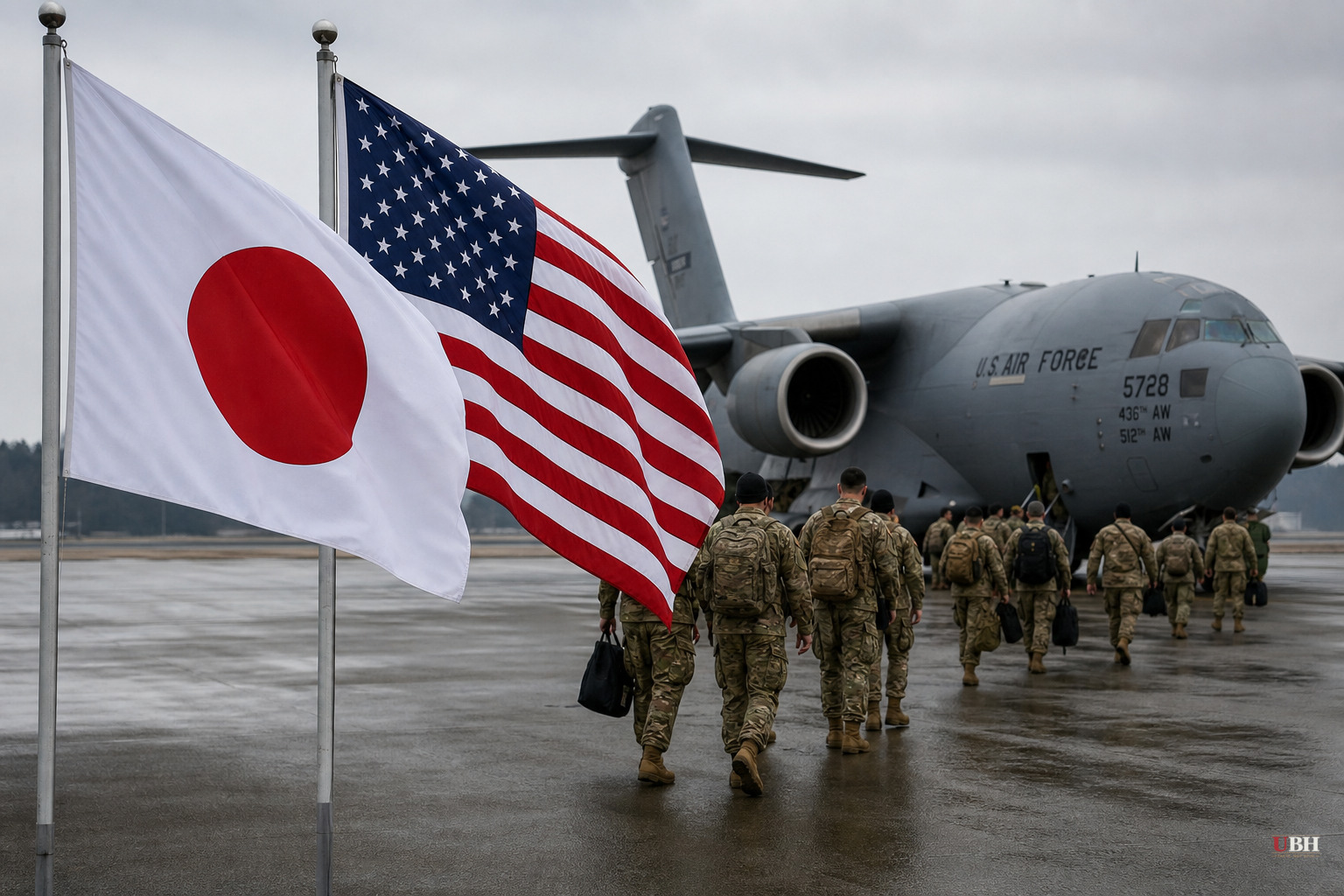
Japan is paying roughly $1.5 billion a year to keep American troops on its soil. That covers about 75% of the cost of stationing approximately 60,000 U.S. service members and contractors, plus another 35,000 American civilians, in the country, according to reporting highlighted by Fox News. That makes Japan the largest U.S. military footprint anywhere outside America itself.
The context matters. China has scrambled jets or sent aircraft near Japanese airspace 366 times in the past year, per the same reporting. No other U.S. ally in the region is absorbing that kind of pressure on a near-daily basis, aside from Taiwan.
Beyond Basing: Weapons Co-Production
This isn't just about real estate and troop levels. Japan and the United States are now co-producing advanced weapons systems, including AMRAAM air-to-air missiles and SM-3 interceptors, at what Fox News described as "massive scale." Japan isn't just hosting American firepower. It's building it alongside American defense contractors, which matters enormously if a Taiwan contingency ever drains U.S. missile stockpiles fast.
The 2026 U.S. National Defense Strategy names deterrence of Chinese aggression and defense of the First Island Chain, the string of islands from Japan through Taiwan to the Philippines, as core priorities. Japan sits at the center of that chain geographically. Xi Jinping's government has repeatedly signaled ambitions to push American forces out of the Western Pacific, according to the same source material.
The UK Comparison
The Fox News piece makes its sharpest argument here. It argues Japan has effectively become the new "special relationship" for the United States in the world's most important region. Shared intelligence architecture, shared history, family and cultural ties remain intact, and America's intelligence-sharing relationship with London remains unmatched anywhere in the world.
But in raw military and economic terms relevant to the fight that actually matters right now, containing China, Japan outweighs the UK. Japan's naval forces have surpassed the UK's, according to Fox News. London has also drawn criticism for continuing economic engagement with Beijing even as tensions rise across the Indo-Pacific, which the outlet frames as making Britain a less dependable partner on China-specific matters.
Britain remains a nuclear power and NATO anchor whose intelligence cooperation with Washington through the Five Eyes alliance has no Pacific equivalent. Critics of overstating the Japan pivot would argue that swapping out the UK as America's primary strategic partner ignores that Europe and the Indo-Pacific are different theaters entirely, and that Japan's rise doesn't have to come at Britain's expense. The two relationships serve different purposes, and framing it as a competition may oversimplify what is really parallel, not substitute, partnerships.
Taiwan Posture Sets Japan Apart
On Taiwan specifically, Japan has taken a more public stance than most U.S. allies. Tokyo has engaged openly with Taipei, coordinated with Washington on deterrence planning, and positioned itself as the most forward-leaning ally on preserving the cross-strait status quo, according to Fox News. Most other regional partners, and most European ones, avoid that kind of visible engagement with Taiwan for fear of provoking Beijing.
What's Unresolved
The reporting frames this as an alliance built on Japan making an "existential bet" on America. But that bet cuts both ways. If Washington's attention or resources shift, whether toward Europe, the Middle East, or domestic priorities, Tokyo's calculus about how much further to invest in joint production and basing costs could change too.
No figures in the available reporting break down what percentage of the $1.5 billion annual figure goes toward specific facilities versus personnel costs, and no timeline was given for how the AMRAAM and SM-3 co-production scale-up will proceed. Those are the numbers that will determine whether this alliance can actually backstop a Taiwan contingency if one arrives, or whether it remains for now mostly a statement of intent.
Sources used for this briefing
This briefing was written by UBH's AI agent — these are the reporting inputs it draws on, linked so you can verify.


