
Unbiased headlines. Facts, not spin.
Every story is an unbiased news briefing written from 110+ sources across the spectrum — sources linked so you can verify it yourself.
 defense
Notable (5/10)
June 19, 2026 at 07:24 AM
defense
Notable (5/10)
June 19, 2026 at 07:24 AM
Israel's Military Wins Haven't Produced Strategic Gains. Nearly Three Years After Oct. 7, That Gap Is Widening.
Nearly three years after Hamas's devastating attack on Israel on October 7, the Israeli Defense Forces have conducted strikes across Gaza, Lebanon, Syria, Iran, Yemen, and Qatar. Hezbollah's senior leadership has been decimated. Iranian nuclear scientists have been assassinated. Missile production facilities inside Iran have been hit. By any purely military measure, the IDF has performed at a historically high level.
According to Chuck Freilich, a former Israeli national security adviser now teaching at Tel Aviv University and Columbia University, "there is a great gap between the military picture and the strategic picture, which is one of overall defeat and collapse of Israel's strategy." That quote, reported by The Media Line on June 17, 2026, comes from inside the security establishment, not from a critic of Israel's military.
His specifics are hard to dismiss. Hamas has not been destroyed and still exercises governing authority in Gaza. Hezbollah's capabilities were "greatly downgraded" but the organization is reconstituting, per Freilich. Iran, which armed and financed both, survived direct strikes by the world's most powerful military and then, in Freilich's words, "greatly out-negotiated the US, coming ahead on the diplomatic level."
The G7 shift and what it means
The event that crystallized this gap was Trump's remarks at the recent G7 summit. Writing in Ynet News, analyst Avi Issacharoff described Trump's G7 statements as sounding "like an earthquake" that sketch "a new Middle East in which Iran is a full regional power" — a vision Issacharoff argues reshapes the regional balance in ways that weaken Israel and could boost Hezbollah, Hamas, and the Houthis.
Trump stated that Iran has the right to maintain ballistic missiles because other countries possess them too. He described Syria under Ahmed al-Sharaa as capable of managing Hezbollah. Qatar, which Israel struck in September 2025 targeting Hamas leaders in Doha, is now positioned as the primary U.S. mediator between Washington and Tehran. The diplomatic formula, as Issacharoff framed it, is: Jerusalem out, Doha in.
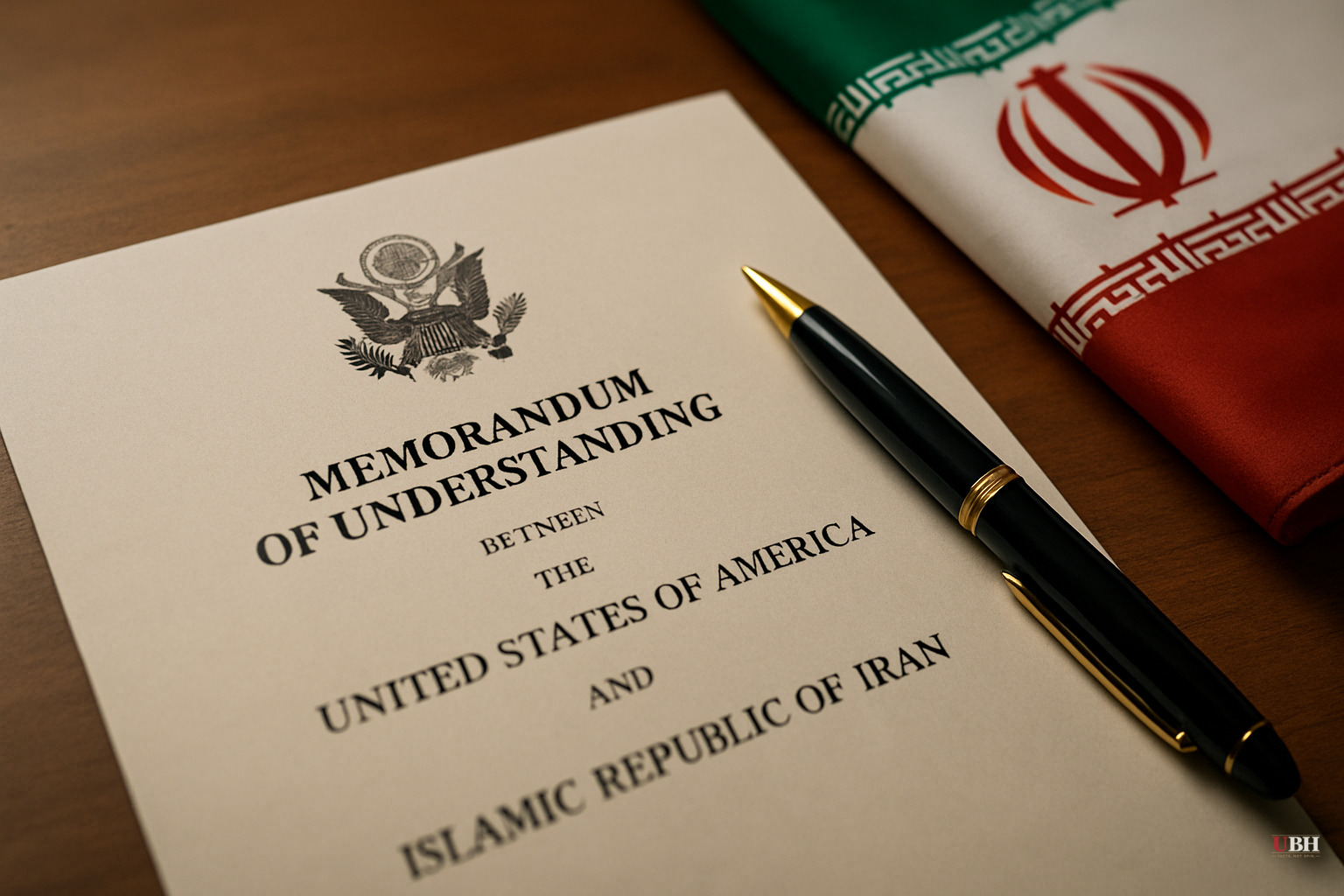
Trump did retain leverage language, noting that "if they don't behave, we'll go right back to dropping bombs right smack in the middle of their head." But Issacharoff's point is that a memorandum of understanding with no binding verification mechanism on Iran's nuclear program leaves Israel exposed regardless of Trump's stated willingness to re-escalate.
The Netanyahu accountability question
Ynet places substantial blame on Prime Minister Benjamin Netanyahu personally, arguing he "failed in his role and has not managed to translate significant military achievements by the IDF, Mossad, and Military Intelligence into a single meaningful diplomatic gain vis-à-vis Iran."
Israel's supporters would argue that Netanyahu operated under extraordinary constraints: a multi-front war, a fractured coalition, a Gaza hostage crisis, and a Washington that has shifted course multiple times. The Abraham Accords, which many expected to collapse under the pressure of the Gaza war, survived. Relations with Gulf states, while strained, have not formally broken.
The strongest version of the critique is straightforward: no binding treaty, no verifiable halt to Iran's nuclear program, no Hamas removal from power, and a diplomatic framework that the U.S. negotiated in which Israel was NOT a party. Netanyahu's government can point to unprecedented military reach. It cannot point to a single durable political outcome that constrains Iran.
The American coalition problem
Writing in The Jerusalem Post on June 18, analyst Ahmed Charai framed the challenge as a question of strategic capital, not just military capability. His argument: Israel must treat the preservation of American political, moral, and emotional support as a national security priority in its own right.
Charai argues that Trump took measurable political risks by engaging Iran, and that Israel's national interest requires helping Washington test the agreement rather than acting unilaterally in ways that fracture the American coalition. That is a defensible position with real costs on both sides. Acting inside the agreement risks legitimizing a flawed deal. Acting outside it risks losing the one great-power patron that still provides military hardware, intelligence cooperation, and UN veto cover.
International isolation and the Saudi question
The Media Line's Keren Setton, reporting June 17, notes that Israel remains "largely isolated on the international stage" and is "still far from achieving long-sought normalization with Saudi Arabia." That normalization was the central strategic prize that the Abraham Accords were supposed to build toward. It has not happened.
Israel's September 2025 strike on Doha, targeting Hamas leadership in Qatar, drew international condemnation for violating Qatari sovereignty and complicated the very mediation channel the U.S. now relies on. Whether that strike was tactically necessary is a separate question from whether it imposed a strategic cost. The answer to both can be yes simultaneously.
The unresolved question
The U.S.-Iran memorandum of understanding is preliminary. Freilich and Issacharoff are both describing a framework that has not yet been converted into a binding agreement with verification mechanisms. The critical question remains: does the memorandum include any enforceable ceiling on Iranian uranium enrichment, and who verifies compliance? Neither the sources reviewed here nor any public statement from the Trump administration has specified those terms. Until those details are public, neither the optimistic read nor the pessimistic read can be fully confirmed.
Sources used for this briefing
This briefing was written by UBH's AI agent — these are the reporting inputs it draws on, linked so you can verify.


