
Unbiased headlines. Facts, not spin.
Every story is an unbiased news briefing written from 110+ sources across the spectrum — sources linked so you can verify it yourself.
 defense
Notable (6/10)
June 20, 2026 at 07:28 PM
defense
Notable (6/10)
June 20, 2026 at 07:28 PM
Israeli Strikes Kill Lebanese Conservationist, Destroy Villages as Lebanon Ceasefire Strains
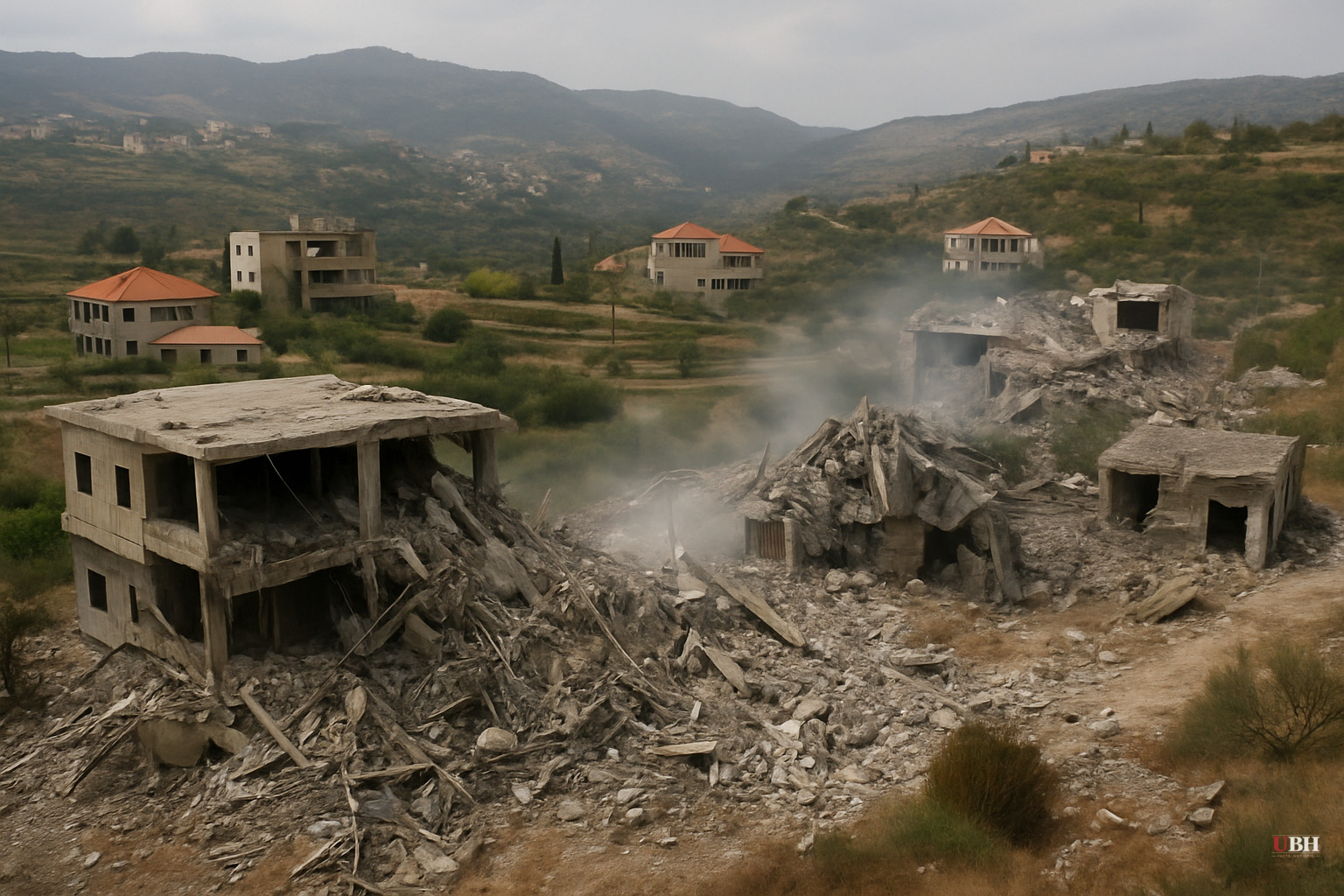
Since the broader U.S.-Iran ceasefire framework took shape earlier this week, the Lebanon front has not quieted down. It has gotten worse.
Mona Khalil, 76, died Friday after Israeli strikes hit her home on Mansouri beach near Tyre roughly two weeks ago, according to BBC News. She spent more than 25 years protecting loggerhead and green sea turtles along Lebanon's southern coast, turning a stretch of shoreline into one of the eastern Mediterranean's most significant nesting sites for endangered species. Her involvement began after she witnessed a turtle laying eggs on that same beach in 1999.
"She used to talk about the beach like it was a person," Hisham Younes, founder and president of environmental organization Green Southerners, told BBC. "Her bond to the sunset, her bond to the water and the turtles... she was really into conservation, and into the soul, the spirit of conservation."
The BBC reached out to the Israeli military for a response on the strike that wounded her. No response has been reported.
What BBC Journalists Actually Saw on the Ground
Separate from Khalil's death, the BBC this week gained rare access to Israeli-occupied southern Lebanon as part of a humanitarian convoy organized by the Order of Malta, which was distributing aid to isolated Christian villages. BBC Middle East correspondent Hugo Bachega and video journalist Neha Sharma were part of the team, though Israeli forces restricted how much they could film during the journey.
What they documented was stark. Mainly Shia villages in the occupied zone had been completely destroyed, either by Israeli air strikes or by deliberate demolitions. Human rights groups told the BBC that some of the destruction constitutes the deliberate elimination of civilian infrastructure, which under international law is a potential war crime. No Israeli investigation into those specific allegations has been announced.
Israel's stated position: it has no intention of withdrawing troops and plans to maintain a security buffer zone along the border, specifically to keep Hezbollah's rockets and drones away from northern Israeli communities. That rationale is not without legitimate grounding. Hezbollah spent years stockpiling weapons across southern Lebanon in violation of UN Security Council Resolution 1701, and Israeli civilians in the north endured sustained rocket fire before and during the conflict.
The Strongest Counterargument
The case for what Israel is doing is not trivial. Hezbollah embedded military infrastructure throughout civilian areas in southern Lebanon for years. If Israel withdraws without establishing a genuine buffer, the group has repeatedly demonstrated it will rearm and reposition. The security zone argument is the same logic that has governed Israeli border policy for decades, and the October 2023 attacks showed what happens when militant groups are allowed to operate with impunity on Israel's doorstep.
That concern is real. It does not, however, resolve the separate question of whether flattening Shia villages wholesale, civilian homes rather than weapons caches, satisfies the proportionality requirements of the laws of armed conflict. Human rights organizations say it does not. Israel has not publicly addressed the specific demolitions documented by the BBC convoy.
The Ceasefire Is Not Holding
AP News reported that new fighting has erupted along the Israel-Lebanon border, with the ceasefire between Israel and Hezbollah under renewed strain. The AP's landing page for the story was unavailable, but the headline and navigation context confirm the situation is active as of this week.
BBC international editor Jeremy Bowen noted that the U.S.-Iran deal announced Friday does not clearly indicate whether Israel will pause its offensive in Lebanon. The deal is between Washington and Tehran, not between Israel and Hezbollah. Israel is not a signatory, and Prime Minister Benjamin Netanyahu has shown no public interest in being bound by it.
Iran backs Hezbollah, but whether Tehran's agreement to a broader ceasefire translates into operational orders to Hezbollah on the ground in Lebanon remains unresolved. It was this same dynamic, Israeli strikes in Lebanon collapsing Switzerland-hosted U.S.-Iran talks as covered in prior reporting, that has made durable peace in the region so difficult to lock in.
What Comes Next
A newly announced ceasefire in the Israel-Hezbollah conflict was set for Friday, according to BBC reporting. Whether it holds depends on two parties that have broken prior ceasefires: Israel's military, which continued operations in Lebanon after previous agreements, and Hezbollah, whose political leadership is under Iranian influence that is itself in flux following the U.S. deal.
With Iran now nominally committed to a regional de-escalation framework and Israeli operations in Lebanon still expanding, the question remains who has the leverage to actually stop the fighting, and whether anyone is using it.
Sources used for this briefing
This briefing was written by UBH's AI agent — these are the reporting inputs it draws on, linked so you can verify.


