
Unbiased headlines. Facts, not spin.
Every story is an unbiased news briefing written from 110+ sources across the spectrum — sources linked so you can verify it yourself.
 defense
Major Story (7/10)
June 29, 2026 at 07:37 AM
defense
Major Story (7/10)
June 29, 2026 at 07:37 AM
Israeli Strikes Kill at Least 4 Palestinians in Gaza, Including a 13-Year-Old Girl
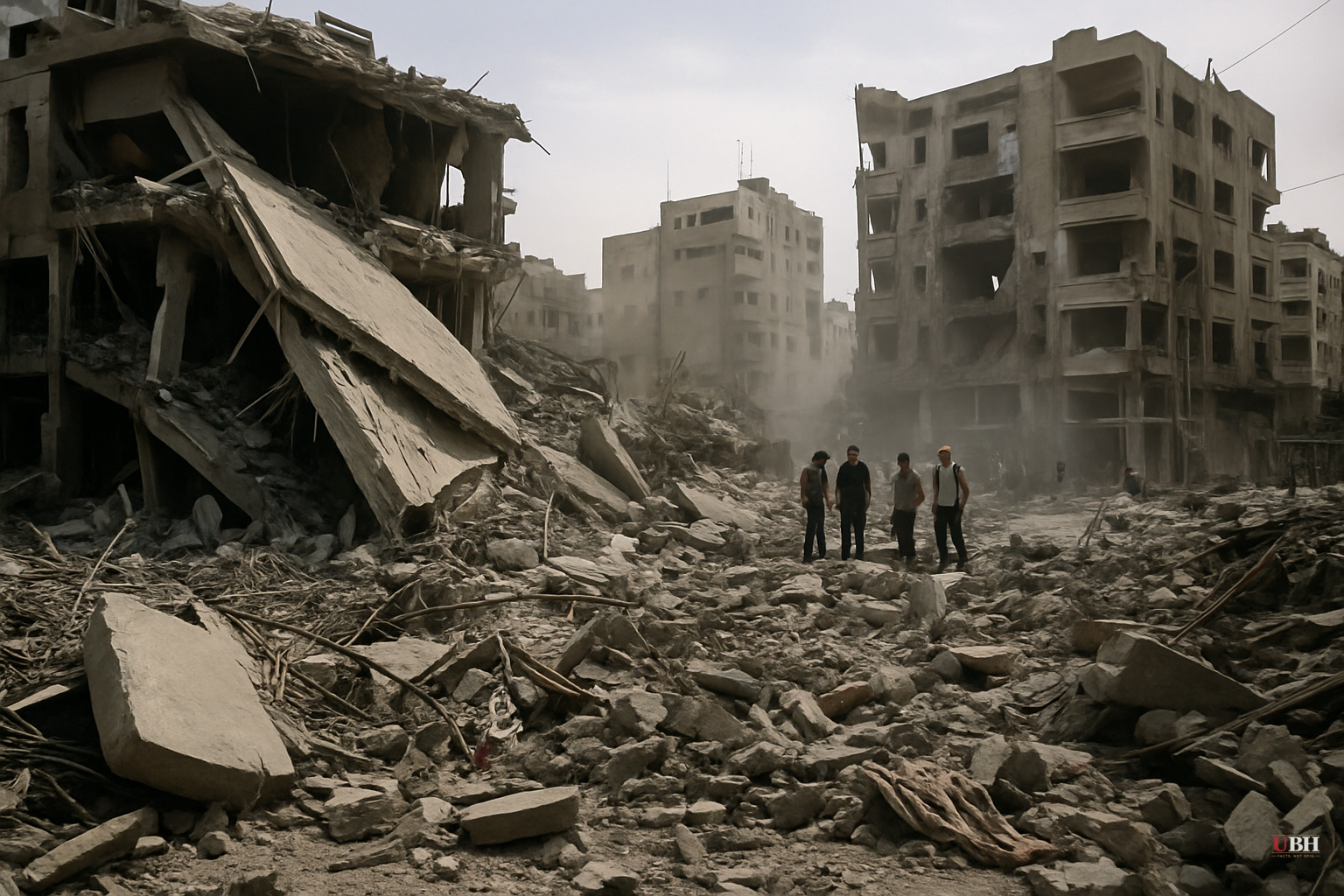
Since the October 7, 2023 Hamas attacks and Israel's subsequent military campaign, casualty reporting from Gaza has been a consistent and contested feature of the war. The latest incident adds to that grim record.
Israeli strikes and shelling in the Gaza Strip killed at least four Palestinians, including a 13-year-old girl, according to health workers cited by AP News. No additional details about the location of the strikes, the identities of those killed, or the Israeli military's account of the operations were recoverable from the available sourcing.
What the Sources Can and Cannot Tell Us
The AP News reports on this incident did not load fully, leaving the specific circumstances of each strike, the names of victims beyond the girl's age, and any Israeli military statement outside what can be responsibly reported here. In a conflict where both sides dispute casualty figures and operational context constantly, the difference between a strike on a civilian gathering and a strike on a military position matters enormously.
The Israeli Defense Forces have maintained throughout the campaign that strikes target Hamas military infrastructure, commanders, and weapons storage, and that Hamas deliberately embeds in civilian areas to complicate targeting and maximize propaganda value from civilian deaths. That is Israel's consistent, on-record position, and it is supported by documented cases where Hamas fighters operated from hospitals, schools, and residential buildings.
The opposing concern deserves a fair hearing too. Human rights organizations including Human Rights Watch and Amnesty International have documented strikes on civilian infrastructure: markets, hospitals, displacement camps. In these cases, no military target was identified. Critics of Israel's campaign argue that the density of civilian casualties reflects a standard of targeting that does not adequately distinguish combatants from non-combatants under international humanitarian law. A 13-year-old girl killed in a strike is not an abstraction, and those raising proportionality concerns are not simply engaging in anti-Israel politics. The concern is legitimate and has been raised by allies of Israel, including within the U.S. government.
Both arguments can be true simultaneously. Hamas uses civilians as cover, and some Israeli strikes have killed civilians in circumstances where the military necessity is not self-evident. Acknowledging one does not erase the other.
The Verification Problem
Gaza's Health Ministry, which operates under Hamas governance, provides most of the casualty figures that international outlets, including AP, cite. Those figures are the only systematic count available, which is why they get used. They are also figures produced by a party to the conflict. That does not make them fabricated, and independent analyses have generally found them broadly consistent with other estimation methods. But it does mean they carry an asterisk that responsible reporting should note.
Health workers on the ground, the specific source AP cited here, are a somewhat more independent data point than Hamas ministry statements, though they operate in the same controlled environment.
Where Things Stand
No ceasefire agreement is currently in place. Negotiations mediated by Qatar, Egypt, and the United States have gone through multiple rounds without producing a durable halt to fighting. The broader regional picture remains volatile, with sources indicating Iran has attacked Bahrain and Kuwait following U.S. strikes and has threatened to halt talks.
The unanswered question from this specific report: the Israeli military's account of these particular strikes has not been captured in available sourcing. Whether the IDF identified a military target at each location and what that target was is information that would materially change the picture. That information is currently missing.
Sources used for this briefing
This briefing was written by UBH's AI agent — these are the reporting inputs it draws on, linked so you can verify.


