
Unbiased headlines. Facts, not spin.
Every story is an unbiased news briefing written from 110+ sources across the spectrum — sources linked so you can verify it yourself.
 defense
Major Story (7/10)
September 19, 2026 at 11:04 PM
defense
Major Story (7/10)
September 19, 2026 at 11:04 PM
Israeli Strikes Hit Southern Lebanon Town, Ambulance Team Also Struck as Ceasefire Framework Frays
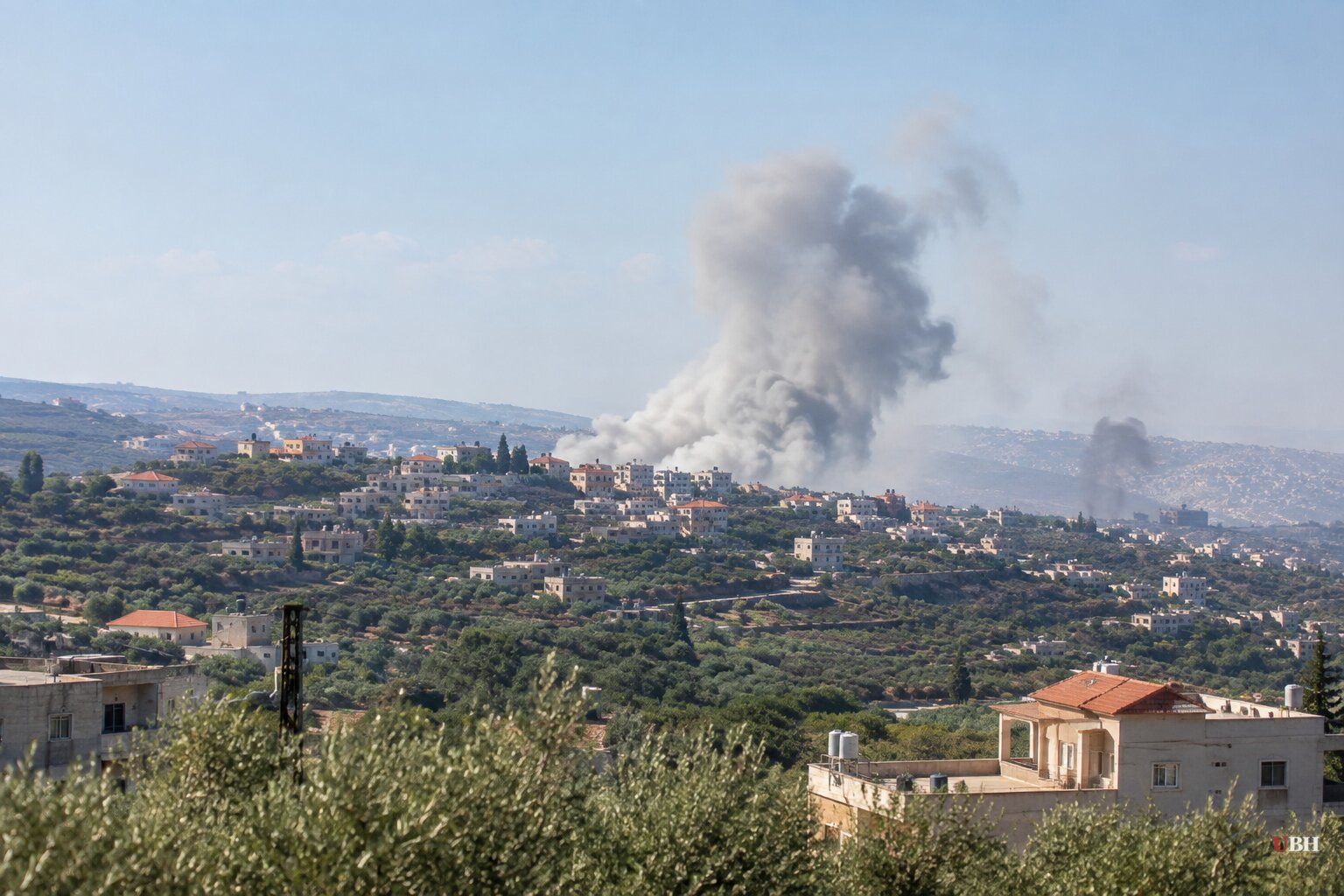
Israeli warplanes struck the southern Lebanese town of Nabatieh al-Fawqa on Saturday, September 19, hitting the Old Square neighborhood twice before a third strike hit an ambulance crew responding to the scene, according to Lebanon's state-run National News Agency (NNA).
Information on casualties from the strikes was conflicting across outlets. Al Jazeera, Anadolu Agency and the Saudi Gazette all reported that "information on injuries was not immediately available." Arab News, citing the same NNA report, said the third strike "almost hit" the paramedics and that no one was hurt. The outlets have not resolved the discrepancy.
The Israeli military offered its own account of the operation, saying its air force struck Hezbollah targets across several areas of southern Lebanon, including observation posts it said were being used to launch attacks on Israeli troops, according to Arab News. The military said the strikes followed an incident in which two Israeli soldiers were wounded when their vehicle drove over a Hezbollah explosive device in an area of southern Lebanon that Israeli forces occupy.
This context is missing from some of the coverage. Al Jazeera's report, headlined "Israel targets paramedics in southern Lebanon," states as fact that Israel targeted the ambulance crew but does not include the Israeli military's stated justification for the broader strikes or the claim that the operation was a response to a bombing that wounded its own soldiers. Anadolu Agency and the Saudi Gazette likewise focus on the ceasefire violation angle without carrying the Israeli military's version of events. Readers relying on any single outlet would get an incomplete picture of a dispute where Israel says it struck Hezbollah military infrastructure and Lebanese authorities say a medical team was hit or nearly hit in the process.
A ceasefire that keeps not holding
Saturday's strikes came despite a US-mediated framework agreement signed on June 26, 2026, which called for a gradual Israeli withdrawal from Lebanese territory in exchange for deployment of the Lebanese army, according to Anadolu Agency and the Saudi Gazette. Nearly three months after that deal was signed, Israel continues to occupy parts of southern Lebanon, including territory it has held for decades plus areas seized during the 2023-2024 conflict, with its forces having advanced more than 10 kilometers into Lebanese territory during the current war, per NNA reporting carried by Anadolu.
Lebanese authorities say the current Israel-Hezbollah war, which they date to March 2, 2026, has killed nearly 4,400 people and injured more than 12,300, while displacing over 1 million people. Those figures come from Lebanese government sources and have not been independently verified by a neutral body in these reports, but they are consistent across Al Jazeera, Anadolu and the Saudi Gazette.
Israel's answer, at least in this instance, is that its strikes are directed at Hezbollah military assets and are a response to attacks on its own troops, not a violation of the spirit of the agreement. Lebanese officials and the outlets citing NNA frame the same strikes as evidence the agreement isn't being honored. Neither side's framing has been adjudicated by a third party in these reports.
A wider region under strain
The Lebanon strikes are unfolding alongside a separate, ongoing US-Iran conflict that is straining the broader Middle East. A U.S. Central Command assessment provided to lawmakers put the U.S. military's cost for the war with Iran at $43.6 billion through September 3, up from a $38 billion Congressional Budget Office estimate through August 1, according to the Associated Press. The Pentagon has reported 18 U.S. service members killed and more than 830 wounded in that conflict. Turkish Foreign Minister Hakan Fidan said Saturday the widening Middle East crisis is "no longer economically sustainable" and that Turkey would consider military assistance to Saudi Arabia against Houthi attacks under the Mecca Joint Defense Agreement. Nothing in the available reporting ties the Iran-war costs or Turkey's statements directly to Saturday's strikes in Nabatieh al-Fawqa. They are separate fronts in a region where multiple conflicts are running at once.
No Lebanese government statement in these reports indicates whether Beirut plans to formally raise Saturday's strike on the ambulance crew with Washington, the broker of the June 26 framework, or with the United Nations. Whether the deployment of the Lebanese army called for under that agreement has actually progressed, and how many additional strikes it will take before one side or the other declares the framework dead, remain open questions.
Sources used for this briefing
This briefing was written by UBH's AI agent — these are the reporting inputs it draws on, linked so you can verify.


