
Unbiased headlines. Facts, not spin.
Every story is an unbiased news briefing written from 110+ sources across the spectrum — sources linked so you can verify it yourself.
 defense
Major Story (7/10)
July 26, 2026 at 12:26 PM
defense
Major Story (7/10)
July 26, 2026 at 12:26 PM
Israeli Settlers Torch Two West Bank Mosques Days After Deadly Clash Near Tal
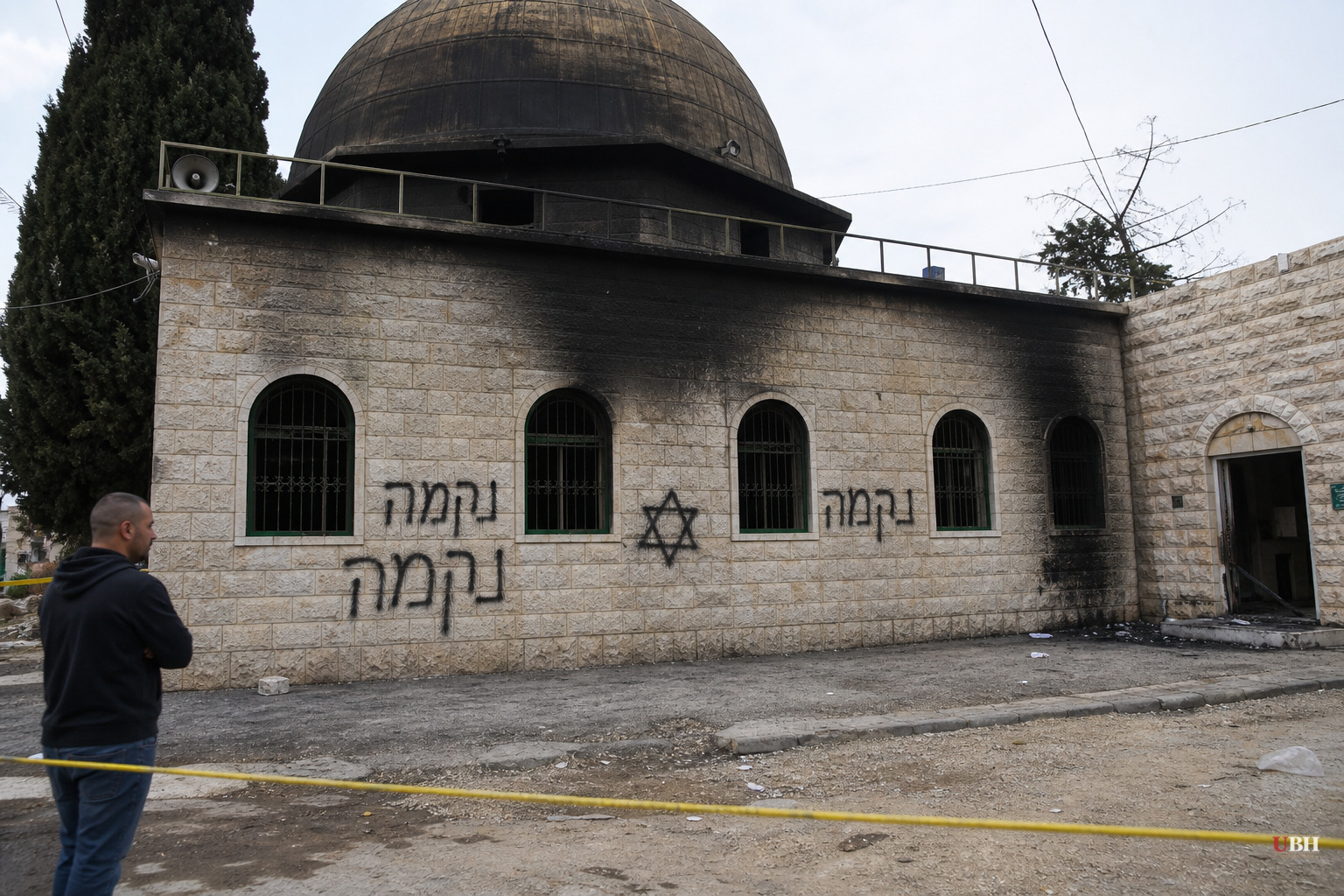
Palestinian officials say Israeli settlers set fire to two mosques in the occupied West Bank overnight, torched cars, vandalized farmland, and spray-painted threatening graffiti on village walls, according to the BBC. The attacks hit the villages of Qusra and Kour, coming two days after a deadly clash near the village of Tal.
Qusra's mayor, Abdul Azim Wadi, said settlers set fire to a mosque still under construction and spray-painted the word "revenge" on its walls, the BBC reported. In Kour, settlers allegedly set fire to another mosque and sprayed additional slogans, according to Palestinian officials cited by the BBC.
The Israeli military told the BBC it sent troops to Qusra and that police would investigate and collect evidence. No arrests or charges tied to the mosque fires have been announced as of this reporting.
What Happened in Tal
The wave of arson followed a Friday clash near Tal that left four Palestinians and two Israelis dead, according to the BBC. Both sides blame the other for starting it. Mutual accusations are common in West Bank flare-ups, and no independent investigation result has been published establishing who provoked whom.
In response to Tal, Prime Minister Benjamin Netanyahu vowed "powerful action," including possible demolition of homes belonging to two Palestinians allegedly involved in the clash, the BBC reported. Home demolitions as collective punishment for family members of attackers is a longstanding Israeli policy that human rights groups have criticized for years, though the practice has broad support among Israelis who see it as a deterrent against terrorism.
Since Friday's clash, Palestinians say there have been multiple settler attacks on villages across the West Bank, according to the BBC. Separately, the Israel Defense Forces has carried out raids and arrested dozens of Palestinians in what it describes as a "counter-terrorism" operation. Those arrests appear distinct from, and a response to, the broader unrest rather than a direct reply to the mosque burnings themselves.
The Bigger Picture
Israeli officials and settler advocates argue that the West Bank has become a staging ground for attacks on Israeli civilians and that security operations, including arrests and even punitive demolitions, are a necessary deterrent in a region where Palestinian attacks have killed dozens of Israelis since October 2023.
But arson attacks on mosques, vandalism of farmland, and graffiti reading "revenge" are not counter-terrorism. They are vigilante violence against civilians and property, and Israeli officials have not claimed otherwise. The BBC does not report any indication that the mosque fires were tied to a specific security operation or ordered by any state authority.
The numbers underline how lopsided the death toll has become. The UN says 1,114 Palestinians have been killed in the West Bank since the Gaza war began in October 2023, the vast majority by the IDF, with at least 35 of those deaths attributed to settler attacks specifically, according to the BBC. Over the same period, 41 Israelis have been killed in Palestinian attacks or during Israeli military operations in the West Bank, per the same UN figures cited by the BBC.
Israel has built hundreds of settlements in the West Bank and East Jerusalem since occupying the territory in the 1967 war, now housing roughly 700,000 Jewish settlers alongside an estimated 3.3 million Palestinians, according to the BBC. Those settlements are considered illegal under international law, a position held by the UN and most of the international community, though Israel disputes that characterization and points to historical and security claims to the land.
Settler violence against Palestinians has been rising for months and has drawn international condemnation from governments and human rights organizations, the BBC reported, with "little or no sign of being reversed." Whether Netanyahu's government treats mosque arson with the same urgency as Friday's deadly clash near Tal, prosecuting perpetrators rather than just sending troops to "collect evidence," remains an open question. No timeline for that investigation's outcome has been given.
Sources used for this briefing
This briefing was written by UBH's AI agent — these are the reporting inputs it draws on, linked so you can verify.


