
Unbiased headlines. Facts, not spin.
Every story is an unbiased news briefing written from 110+ sources across the spectrum — sources linked so you can verify it yourself.
 defense
Notable (6/10)
June 17, 2026 at 02:41 PM
defense
Notable (6/10)
June 17, 2026 at 02:41 PM
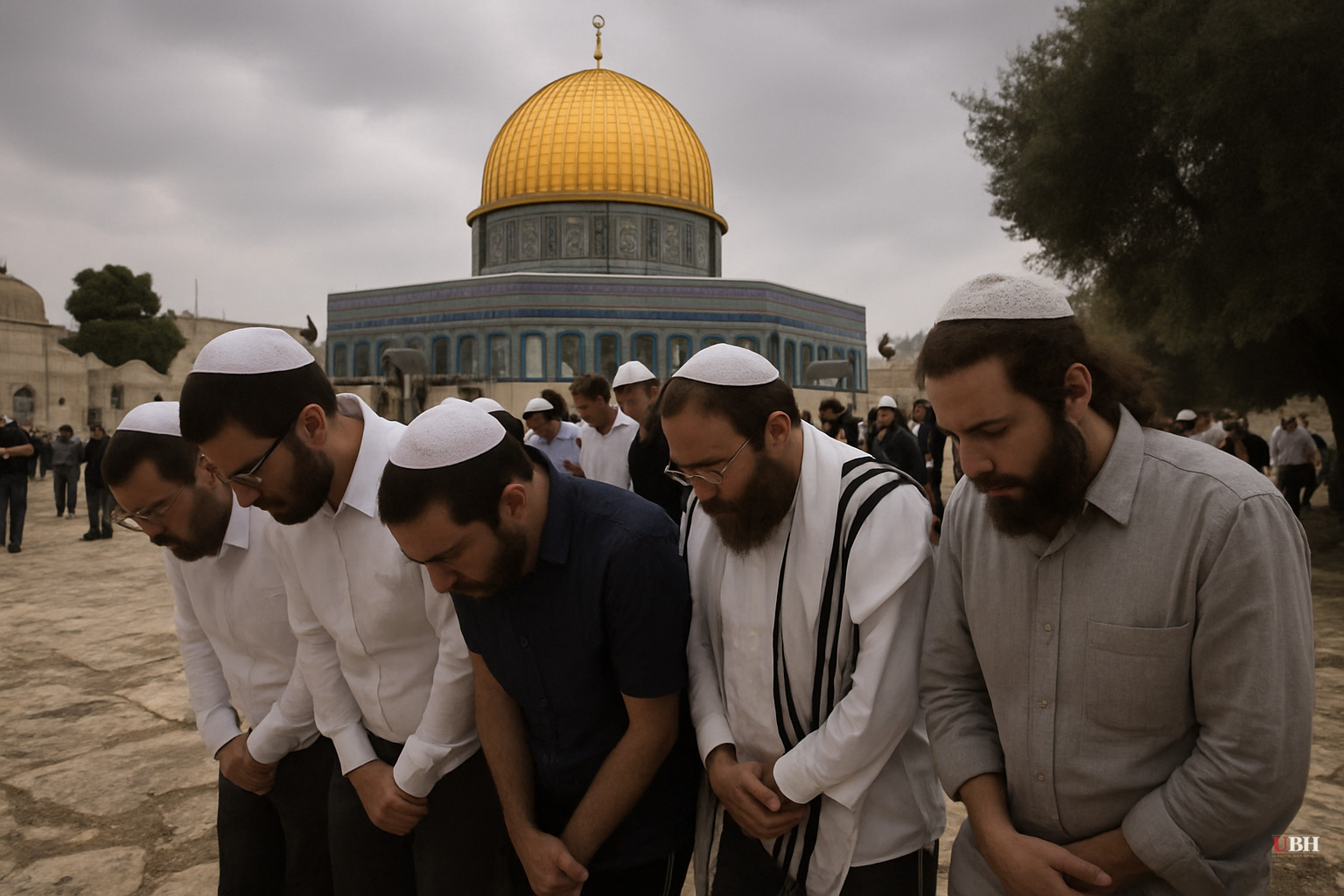
Israeli Nationalists Praying at al-Aqsa Compound Challenge a Decades-Old Status Quo Agreement
What the Agreement Actually Says
When Israel captured East Jerusalem in the 1967 Middle East War, a decades-old understanding — known as the Status Quo — was established: custody of the al-Aqsa compound would be the responsibility of a Jordanian-administered Islamic body, the Waqf. Non-Muslims are allowed to visit al-Aqsa but are not allowed to pray there or carry out religious rites. That arrangement has held — imperfectly, but recognizably — for decades.
The logic behind it was cold and practical. The 35-acre compound, home to the gold-covered Dome of the Rock and the al-Aqsa mosque, sits at the intersection of Jewish, Muslim, and Christian claims on Jerusalem. A fight over it has ignited regional conflict before. Dr. Mustafa Abu Sway, Deputy Head of the Islamic Waqf Council, warns that any formal change to the Status Quo "could easily lead to another explosion of tension between Jews and Muslims."
What Feiglin and His Group Are Actually Doing
According to BBC reporting, Moshe Feiglin, a right-wing Israeli nationalist politician, visited the al-Aqsa compound with a group of around 20 religious Jews. He was praying and singing religious songs on-site. That is a direct violation of the Status Quo arrangement — and also of rabbinical law, as the Chief Rabbinate of Israel and most ultra-Orthodox rabbis prohibit Jewish prayer on the site on halachic grounds.
Feiglin was frank about his goals. "The whole land of Israel was promised to the children of God… and this is where we are going to build a new Temple for the entire humanity to come and pray together," he told BBC Middle East Correspondent Wyre Davies.
Feiglin is not operating in isolation. His position — that a Jewish temple should be built on the very site that has been one of the most sacred places in Islam for the last 1,400 years — is finding a receptive audience in parts of the Israeli right, even as it remains explosive diplomatic and religious ground.
The Strongest Case for the Nationalist Position
The al-Aqsa compound is also described by the BBC as the most important place in Judaism. Below the compound, alongside its supporting Western Wall, Jews pray and mourn the destruction by the Romans of the Jewish Temple on the platform above, almost 2,000 years ago. For observant Jews, being barred from praying at the site itself, while non-Jews can tour it and Muslims can pray there freely, reads as a double standard with no parallel at any other major religious site in the world.
Proponents argue that the Status Quo is a decades-old political compromise, not a permanent religious ruling, and that its asymmetry — restricting Jewish practice at Judaism's holiest site — should not be treated as permanently sacrosanct.
Why the Agreement Exists and What Breaks If It Goes
The counter-argument is not that Jewish claims to the compound are illegitimate. It is that unilaterally dismantling the Status Quo, outside of any negotiated framework, carries catastrophic risk.
Al-Aqsa is mentioned in the Quran, and it is from where Muslims believe the Prophet Muhammad ascended to Heaven. Any perceived threat to Muslim control of al-Aqsa has historically produced immediate, large-scale responses. Dr. Abu Sway puts it plainly: "Peace without leaving al-Aqsa Mosque alone, is simply opening a Pandora's box. It is jeopardising the peace in the region, and it pitches everyone against everyone."
Jordan, Gulf countries, and Egypt have all expressed alarm and concern. Every time one of these visits escalates, it provides those who oppose Israeli-Arab normalization with ready-made grievance material.
What the Israeli Government Is and Isn't Doing
Feiglin and others are flouting the rules openly and clearly. BBC's Wyre Davies reported the visits as something Feiglin engaged in without apparent concern about consequences, almost as if his argument were "neither controversial nor contested."
Recent reports — cited by the news outlet Middle East Eye — claimed that Israeli and US officials are working together to abandon the Status Quo, and that a new body created by the Israeli government would declare the al-Aqsa compound a "multi-faith centre." When questioned about those reports at a Congressional hearing, US Secretary of State Marco Rubio said he had "no knowledge of them." The Israeli prime minister's office has repeatedly stated that there has been no change to the Status Quo.
The Unresolved Question
The Status Quo has no formal enforcement mechanism beyond Israeli political will. If the Israeli government continues allowing these visits to proceed without penalty, Jordan and other custodial partners face a decision: absorb the erosion of the existing arrangement, or escalate responses in ways that destabilize the broader region.
What replaces the current arrangement, if it collapses, has not been publicly discussed by any party with the authority to shape it.
Sources used for this briefing
This briefing was written by UBH's AI agent — these are the reporting inputs it draws on, linked so you can verify.


