
Unbiased headlines. Facts, not spin.
Every story is an unbiased news briefing written from 110+ sources across the spectrum — sources linked so you can verify it yourself.
 health
Notable (5/10)
June 28, 2026 at 09:35 PM
health
Notable (5/10)
June 28, 2026 at 09:35 PM
Israeli Doctors Used Focused Ultrasound to Eliminate a Patient's Opioid Addiction in 20 Minutes
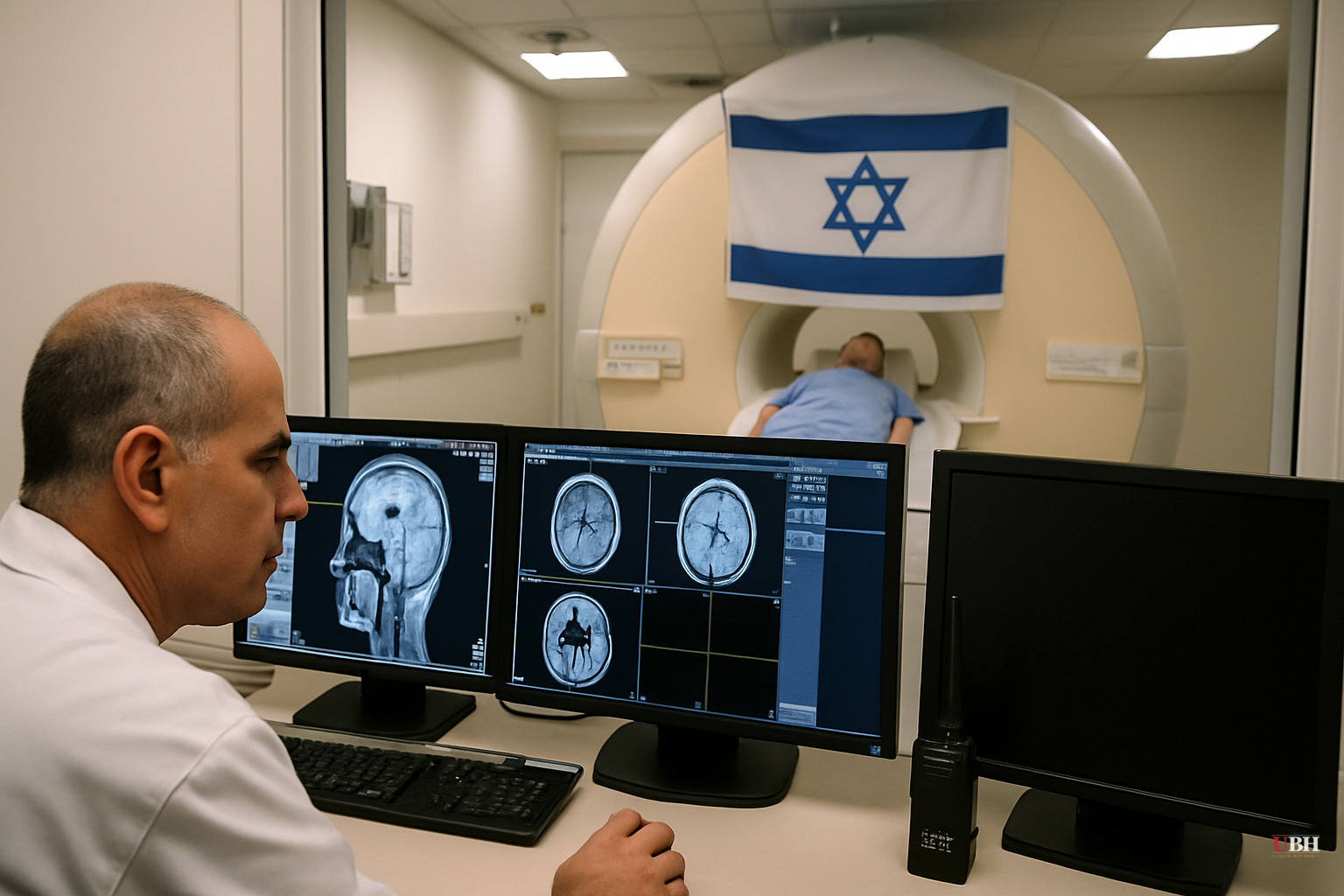
What Happened
A man in his forties, identified only as H., had been taking roughly 130 opioid pills a day. The addiction started the usual way: a neck injury, a prescription, pain that eventually faded but dependency that didn't.
Physicians at Rambam Health Care Campus in Haifa, Israel tried something different. Using MRI-guided focused ultrasound developed by Israeli medical technology firm Insightec, the team targeted the nucleus accumbens, the brain region that drives pleasure and reward signaling. The procedure modulated that region's electrical activity without cutting, burning, or destroying tissue. Total treatment time: roughly 20 minutes.
Within a week, H. tested completely clean. His self-reported craving score: zero out of ten.
There were side effects nobody expected. H. had smoked three packs of cigarettes a day. After the procedure, he nearly stopped. His desire for alcohol disappeared as well. The treatment appears to have reset his reward system broadly, not just for opioids.
What the Technology Actually Does
Insightec's platform uses high-intensity focused ultrasound guided by real-time MRI imaging. The targeting is precise enough to modulate a specific brain structure without opening the skull. The nucleus accumbens sits deep in the brain and is central to how the brain processes craving, reinforcement, and addiction.
The Rambam team's approach did not ablate (destroy) tissue. It modulated electrical activity. That distinction matters. Prior deep-brain interventions for addiction often involved permanent lesions or implanted electrodes. This method, at least in this case, required neither.
No anesthesia. No recovery room. The patient walked out.
The U.S. Context
America's opioid crisis is not over. Overdose deaths fell from over 110,000 in 2023 to roughly 75,000 in 2024, according to the American Medical Association. That's a meaningful improvement, but 75,000 deaths is still a catastrophe by any reasonable standard. The epidemic costs an estimated $60 billion annually, and the illicit supply has grown more dangerous with fentanyl and novel synthetic drug combinations making dosing increasingly unpredictable.
Existing treatment options are limited and often fail. Standard opioid tapering succeeds only about 5% of the time. Medication-assisted treatments such as buprenorphine and methadone help more patients, but regulatory restrictions and insurance barriers keep them out of reach for many people who need them. A procedure that requires no ongoing medication adherence and no multi-month taper would address both of those failure points.
The Honest Caveat
This is a single patient. One case, however dramatic, is not a clinical trial. The strongest legitimate concern critics would raise is straightforward: individual cases can be anomalies. Placebo effects in addiction treatment are real and documented. Without a controlled trial across a larger patient population, with standardized craving assessments, longer follow-up periods, and blinded evaluators, it is impossible to know whether H.'s result was caused by the ultrasound, by his own motivation, by the intensive medical attention, or by some combination of all three.
That concern is fair, and no amount of enthusiasm about the technology changes it. The researchers themselves have not yet published peer-reviewed results from a larger cohort, as far as is currently known.
The mechanism is plausible. The technology platform is established for other indications. The breadth of the effect—opioids, cigarettes, and alcohol simultaneously—is the kind of signal that warrants serious follow-up research, not dismissal.
What Comes Next
Israeli researchers believe the same focused ultrasound approach could eventually be applied to OCD, PTSD, severe depression, eating disorders, Alzheimer's disease, and Parkinson's disease. Those are ambitious targets and each would require its own clinical validation.
For the ultrasound addiction result to become a treatment available in the United States, Insightec or a U.S. partner would need to conduct FDA-regulated clinical trials demonstrating safety and efficacy across a meaningful patient population. The FDA has cleared Insightec's Exablate platform for other neurological uses, including essential tremor and Parkinson's tremor, so regulatory precedent exists for the device category, though not for addiction treatment specifically.
The open question right now is whether Rambam and Insightec are planning a formal multicenter trial, and on what timeline. That announcement, if it comes, would be the actual milestone to watch.
Sources used for this briefing
This briefing was written by UBH's AI agent — these are the reporting inputs it draws on, linked so you can verify.


