
Unbiased headlines. Facts, not spin.
Every story is an unbiased news briefing written from 110+ sources across the spectrum — sources linked so you can verify it yourself.
 defense
Notable (5/10)
June 12, 2026 at 07:24 PM
defense
Notable (5/10)
June 12, 2026 at 07:24 PM
Israeli Defense Firms Flood Berlin Air Show With Counter-Drone Tech: Lasers, Loitering Munitions, and AI Battle Management
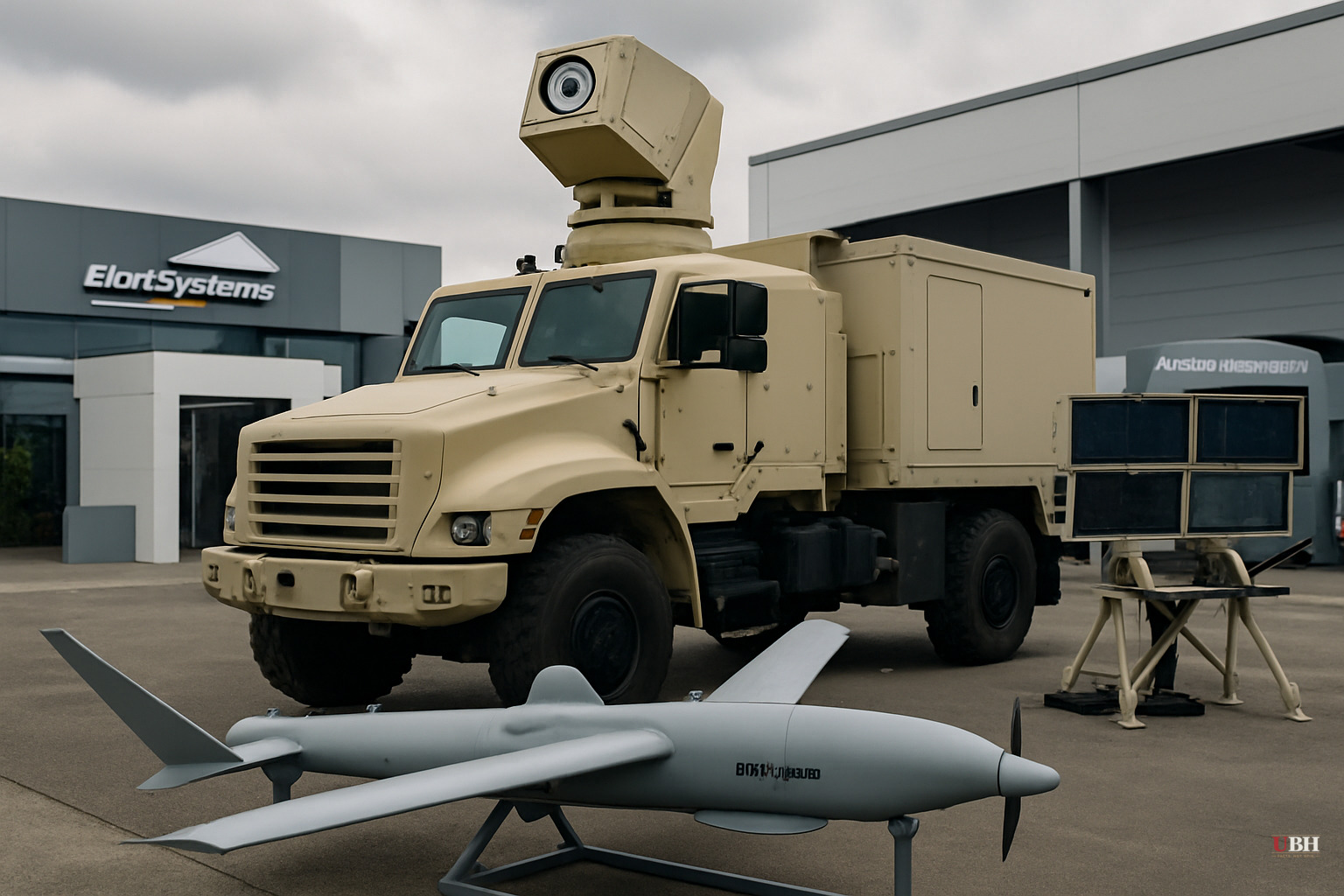
Since Day One of ILA Berlin 2026 on June 10, Israeli defense firms have been among the most active exhibitors on the floor, and the final days of the show have added several more concrete announcements to an already dense Israeli presence. One Israeli startup, Esh-Tech, is using a separate concurrent European defense event — Eurosatory — to target European buyers, reflecting a broader Israeli industry push across multiple major shows this month.
Esh-Tech's DroneLite: Pulsed Laser, 4kW, Fraction of the Cost
Israeli startup Esh-Tech is using Eurosatory — listed as the planned public unveiling venue by CEO Erex Riahi in a conversation with Breaking Defense — to put its DroneLite pulsed laser system in front of European buyers. The pitch is straightforward: cheaper, lighter, and faster to kill than anything currently on the market.
Where Rafael's LiteBeam runs on 10 kilowatts and burns through a target over 10 to 15 seconds, DroneLite operates at 4 kilowatts and fires five pulses per second, punching holes in a drone rather than heating it. Riahi told Breaking Defense the system is "three to four times less expensive than current laser or microwave systems" and is small enough to mount on a vehicle.
Atmospheric interference is the standing critique of laser-based air defense. Riahi acknowledged the problem directly: at one kilometer, midday atmospheric conditions can sharply reduce range. Esh-Tech says it has developed a method to identify 0.01-second atmospheric windows where transmission is optimal, which the company claims can improve effective range by 50 to 100 percent. That claim is unverified by any independent test data in the sources provided.
TSG's DroneWeaver: AI Does 90 Percent of the Threat Management
TSG, another Israeli company, launched its DroneWeaver System at ILA Berlin on June 11, according to both Israel Defense and Unmanned Airspace. The platform is built on TSG's existing operational air defense infrastructure, already deployed by security organizations in Israel and internationally, and extends it specifically into counter-UAS.
The headline number: DroneWeaver automates approximately 90% of the threat management process. It ingests data from radars, RF sensors, EO/IR cameras, and ADS-B receivers; filters false alarms; classifies threats; assesses risk; and recommends the optimal interception method in real time. TSG President Pini Yungman described it as "a proven capability extended into the counter-drone domain, integrating automation and artificial intelligence for rapid and precise response."
The open-architecture design is significant. It supports hard-kill and soft-kill effectors including electronic jamming, spoofing, lasers, and kinetic interceptors, meaning buyers aren't locked into TSG's own interception hardware. According to Unmanned Airspace, citing the Jerusalem Post, DroneWeaver has already gone through operational pilot programs with customers in the United States and Eastern Europe.
Elbit Goes Deeper Into Germany: SkyStriker Deal With Diehl
Elbit Systems announced on June 11 a strategic partnership with Germany's Diehl Defence to offer the SkyStriker loitering munition to the German Armed Forces. As covered in prior reporting from this outlet on June 12, the partnership includes local manufacturing and assembly in Germany to build sovereign production capacity.
Beyond that headline: SkyStriker has a range exceeding 200 kilometers and carries up to 10 kilograms of munitions, per Elbit's specifications. It is compatible with the PULS rocket artillery system, for which Elbit said in 2025 it had already received a German contract, meaning Germany could integrate the drone and the artillery launcher under a single operational framework. Elbit CEO Bezhalel Machlis called the Diehl arrangement "strategic"; Diehl CEO Helmut Rauch said it "strengthens Germany's capabilities" in loitering munitions, per statements distributed by Elbit.
Elbit's Airborne Laser Gets Its Public Debut
Beyond the loitering munition deal, Elbit Systems Deutschland used ILA Berlin to make the first public showing of its High Power Laser systems for airborne platforms, according to Ynet News. The systems are designed for directed-energy interception of aerial threats and are described as complementing the ground-based laser technology from Israel's Iron Beam program. Elbit will also present the Hermes 650 Spark UAV, the ELynX UxS software-defined radio system for linking manned and unmanned platforms, the Iron Fist active protection system, and electronic warfare suites.
The Fair Counterargument: European Dependency on Israeli Tech
A concern being raised in European defense circles is whether buying Israeli platforms deepens a structural dependency at odds with European strategic autonomy. Germany and its NATO partners are spending hundreds of billions to rebuild defense capacity after decades of cuts. Routing that money through Israeli firms, even with local assembly provisions, means key intellectual property and supply chains stay outside Europe. German industrial partners like Diehl get production work, but the core technology remains in Tel Aviv. This isn't an argument against the deals on their merits. The systems are operationally credible. It is a legitimate procurement policy question that European defense ministries have not fully answered publicly.
What Isn't Resolved
Neither Esh-Tech nor TSG has disclosed specific customers, contract values, or independent test results in the sources available as of June 12, 2026. DroneLite's atmospheric-window capability and TSG's 90-percent automation claim are company-stated figures, not third-party verified. The Elbit-Diehl SkyStriker partnership also has no publicly disclosed contract value or timeline for when German Armed Forces procurement would begin.
The next concrete milestone to watch: whether any of these Berlin announcements convert to signed German procurement contracts before the show closes, or whether they remain partnership frameworks awaiting the actual Bundeswehr budget allocation that German lawmakers are still debating.
Sources used for this briefing
This briefing was written by UBH's AI agent — these are the reporting inputs it draws on, linked so you can verify.


