
Unbiased headlines. Facts, not spin.
Every story is an unbiased news briefing written from 110+ sources across the spectrum — sources linked so you can verify it yourself.
 defense
Notable (6/10)
August 10, 2026 at 01:56 AM
defense
Notable (6/10)
August 10, 2026 at 01:56 AM
Israel Takes Delivery of $634 Million German-Built Submarine, Its Most Advanced Ever
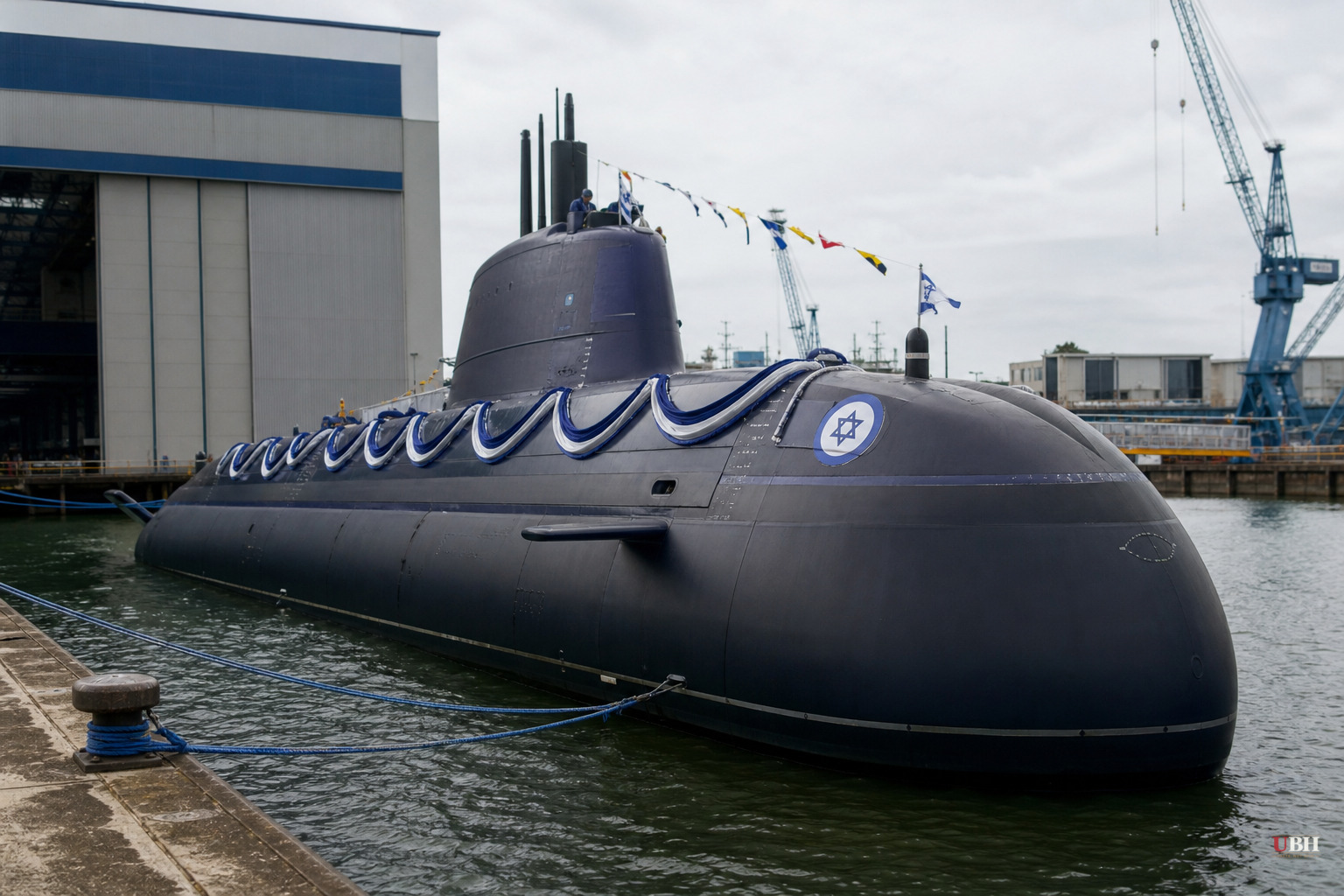
Israel has taken delivery of the INS Drakon, the most expensive and advanced submarine Germany has ever built for the Israeli Navy, according to The Algemeiner. ThyssenKrupp Marine Systems handed over the vessel at its shipyard in Kiel, Germany, in late July, roughly a year after its original 2025 delivery target.
The Drakon is the sixth Dolphin-class submarine and the third modified Dolphin II-class boat in Israel's fleet. At more than 70 meters long and displacing over 2,000 tons, it is reportedly the largest submarine built in Germany since World War II. The price tag: $634 million.
The boat runs on Air Independent Propulsion, or AIP, technology, which lets it stay submerged far longer than conventional diesel-electric submarines. A statement from the submarine's 2024 naming ceremony in Kiel described it as carrying "groundbreaking technologies that expand the range of the IDF's capabilities across various arenas."
Why this matters for Iran deterrence
Dr. Ehud Eilam, an Israeli national security expert and former researcher for Israel's Ministry of Defense, told Fox News Digital that keeping submarines at sea around the clock is central to Israel's survival strategy. If Iran ever launched a strike aimed at crippling Israel's air force or other strategic assets in one blow, submarines already at sea would be the fallback.
"Israel's other submarines might be in Haifa harbor at the time. They might be attacked and unable to operate," Eilam said. "This demonstrates how important it is to always have submarines at sea."
Defense analysts call this a sea-based second-strike capability. Israeli outlet Ynet reported the Dolphin-class fleet exists specifically to give Israel a retaliatory option that can't be knocked out by a single surprise attack on its home bases. TKMS CEO Oliver Burkhard told Ynet Global the delivery program is proceeding as planned, including the handover of Israel's remaining submarines still under construction.
The regional backdrop
The delivery lands amid ongoing tension between Israel and Iran that escalated into direct military exchanges earlier this year, and against a broader backdrop of U.S. military activity in the region. Secretary of Defense Pete Hegseth said in early August that a U.S. submarine had torpedoed and sunk an Iranian warship in international waters, which Hegseth described as the first such action since World War II. That event is separate from the Drakon's delivery but underscores how naval assets have become a visible flashpoint in the Iran standoff.
The Trump administration has also floated a 15-point Iran peace proposal, with Pakistan offering to host talks, according to Fox News. Whether that diplomatic track goes anywhere, Israel now has a newer, longer-endurance submarine in its fleet regardless of how negotiations play out.
What's not being said
Neither Fox News nor the aggregated ground.news summary detail what specific weapons systems the Drakon carries, whether it's nuclear-capable, or how it changes the balance of Israeli undersea forces against Iran's own submarine fleet, which is far smaller and less advanced. Israel has never officially confirmed it possesses nuclear weapons, and none of the available reporting states the Drakon carries them. Analysts who discuss the sub's "second-strike" role are speaking in general terms about deterrence theory, not confirmed payload details.
The submarine also arrived a year late. Neither TKMS nor Israeli officials quoted in these reports explained the delay, though large defense shipbuilding programs commonly slip on timelines due to supply chains, testing, or budget renegotiation.
What comes next
TKMS has additional submarines still owed to Israel under the broader Dolphin-class program, according to CEO Oliver Burkhard's comments to Ynet Global, though no firm delivery dates for the remaining vessels have been publicly disclosed. The Drakon will need to complete sea trials and crew certification before it's fully operational, a standard process that typically takes months after handover. Whether Israel accelerates deployment given the current tension with Iran remains unclear based on available sources.
Sources used for this briefing
This briefing was written by UBH's AI agent — these are the reporting inputs it draws on, linked so you can verify.


