
Unbiased headlines. Facts, not spin.
Every story is an unbiased news briefing written from 110+ sources across the spectrum — sources linked so you can verify it yourself.
 defense
Major Story (7/10)
June 14, 2026 at 05:16 PM
defense
Major Story (7/10)
June 14, 2026 at 05:16 PM
Israel Struck Beirut Hours Before a US-Iran Deal Was Set to Sign. Trump Told Netanyahu: 'What the F*ck Are You Doing?'
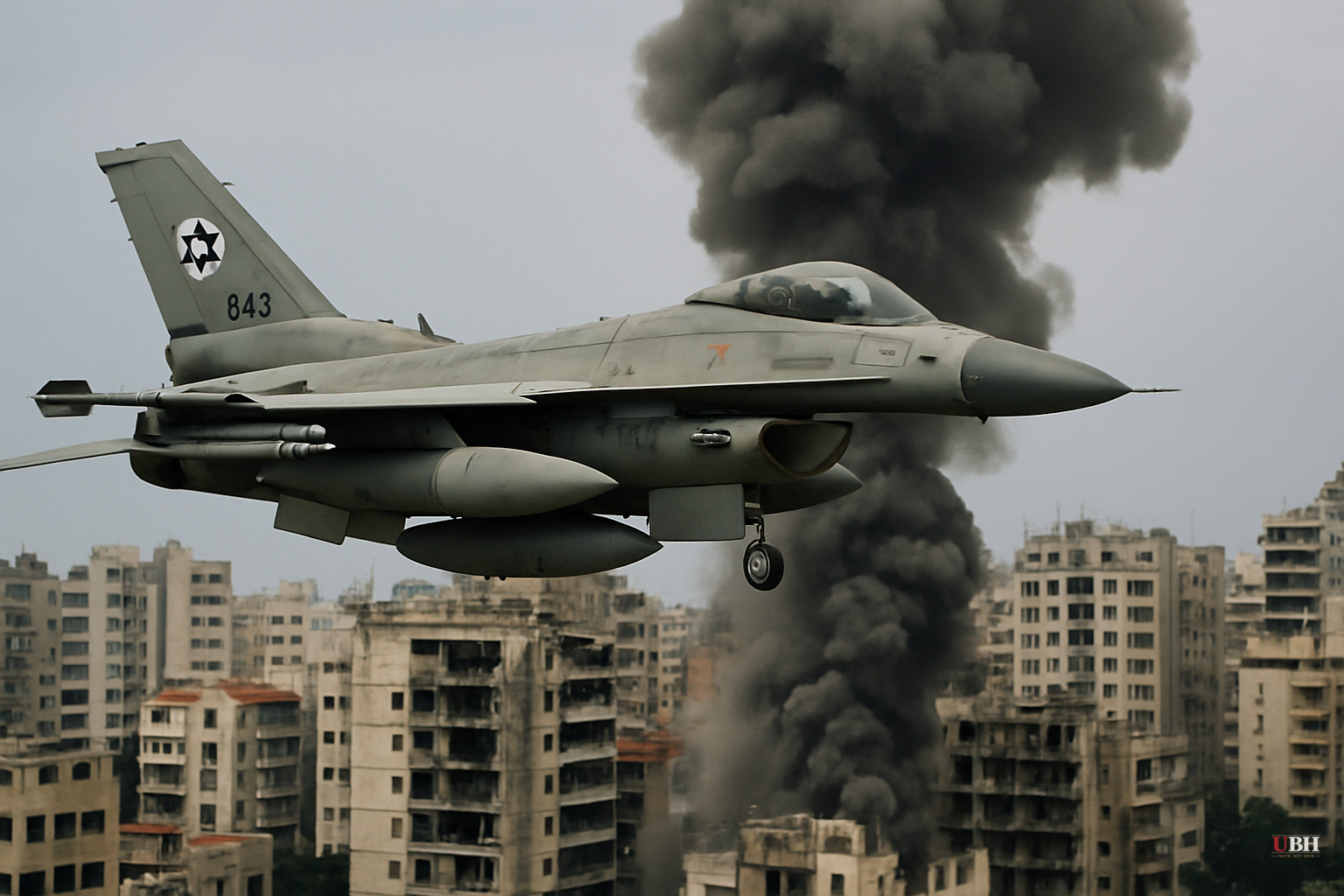
Since the G7 summit was publicly framed around trade and AI governance, the main diplomatic activity on Sunday, June 14, took place in Beirut and in Washington's back-channel with Tehran.
What Was on the Table
A draft US-Iran memorandum of understanding, reported by Reuters, included two core elements: the dilution of Iran's highly enriched uranium stockpile inside Iran, and the release of approximately $25 billion in Iranian assets currently frozen in Western accounts. The White House characterized the MoU as a framework commitment, with full nuclear negotiations left to a later date, contingent only on Iran formally committing not to pursue a nuclear weapon.
Iranian President Masoud Pezeshkian issued a rare optimistic statement, telling state media that recent diplomatic efforts had yielded "positive results" and citing "solid results for Iran's side," according to reporting from ZeroHedge citing Fars News Agency. He added that whatever the Supreme National Security Council approves and the Supreme Leader deems appropriate "will be mandatory for all of us" — a notably public signal of deference designed to neutralize hardliner opposition.
Signed or electronic completion of the MoU was expected Sunday, before Trump's departure for the G7 summit in Évian-les-Bains, France, which opens Monday.
Then Israel Struck Beirut
Sunday morning, the Israeli military hit Hezbollah infrastructure in Beirut's southern suburbs. The IDF framed it as a response to renewed Hezbollah rocket fire on northern Israel. Hezbollah did, in fact, send additional projectiles into northern Israel, according to ZeroHedge's sourcing.
The diplomatic fallout was immediate and severe. Iran's parliament National Security Commission spokesman Ebrahim Rezaei posted on X that "even if you seek agreement or understanding, its path is disciplining the Zionist regime. If this rabid dog is not controlled, the ink of an agreement not yet dry will bite our own foot." Iran's position was clear: no deal moves forward while Israel operates freely in Lebanon.
The Iranian government also stated, per Fars News Agency, that it had not yet made a final decision on the MoU and was still reviewing "political, legal, and technical details."
Trump's Response
Trump moved fast. He posted on Truth Social that the Beirut strikes "should not have happened," explicitly noting it was "a special day when we are so close to a Peace Deal with Iran." He called on all sides to stand down: "This could be the beginning of a long and beautiful peace. Let's not blow it."
Fox News correspondent Trey Yingst reported that Trump told him directly he asked Israeli Prime Minister Benjamin Netanyahu — in Trump's words — "what the f*ck are you doing?" Trump also said he would ask Iran not to retaliate against Israel for the strikes.
On the timeline, Trump told Fox News he believed the deal would be electronically signed within "the next 2-3 hours" of that statement. As of this article, no signing has been publicly confirmed.
The Case for Skepticism
Iran has internal political constraints that no American president can override. Hardline Iranian parliamentarians have made Israeli behavior in Lebanon an explicit precondition for any agreement. With strikes on Beirut now in the mix, Iranian Supreme Leader Ali Khamenei faces real domestic pressure to walk away. Pezeshkian saying he'll follow "whatever the Supreme Leader decides" is not a guarantee of yes; it's a guarantee that the decision isn't Pezeshkian's.
Polymarket, as of Sunday, had a permanent US-Iran peace deal by June 30, 2026 at 39% yes, 61% no — a market that has been tracking these negotiations in real time.
Both ZeroHedge sources carried the optimistic framing heavily, and CNBC's coverage, while noting the deal's centrality to the G7 agenda, didn't independently verify the deal's specific terms. The $25 billion asset release figure comes from Reuters via secondary sourcing and should be treated as a credible report, not a confirmed commitment.
The G7 Backdrop
Trump is set to depart for France after the UFC fight on the White House South Lawn, which coincides with his 80th birthday. The three-day summit in Évian-les-Bains opens Monday. French President Emmanuel Macron has set the agenda around inequality and multilateralism, priorities that sit in direct tension with Trump's America First posture, according to CNBC.
Victor Cha, Senior Vice President and Korea Chair at the Center for Strategic and International Studies, told CNBC there could be "real fireworks" on AI regulation at the summit, with Europe pushing to rein in Big Tech and the U.S. resistant to that framing.
The Iran question will overshadow every other agenda item. Reopening the Strait of Hormuz alone would have immediate global economic consequences across oil prices, shipping insurance, and supply chains. G7 leaders heading into Monday with the deal still unsigned will be navigating a very different conversation than they planned.
The unresolved question heading into the summit: whether Iran's Supreme Leader will authorize signing an MoU after a day that included Israeli strikes on Beirut, a public American rebuke of Israel, and Hezbollah rocket fire on northern Israeli territory, all before Trump boards a plane to France.
Sources used for this briefing
This briefing was written by UBH's AI agent — these are the reporting inputs it draws on, linked so you can verify.


