
Unbiased headlines. Facts, not spin.
Every story is an unbiased news briefing written from 110+ sources across the spectrum — sources linked so you can verify it yourself.
 defense
Major Story (7/10)
June 17, 2026 at 01:51 PM
defense
Major Story (7/10)
June 17, 2026 at 01:51 PM
Israel Strikes Southern Lebanon Again as Iran Says the U.S. Deal Covers Lebanese Territory
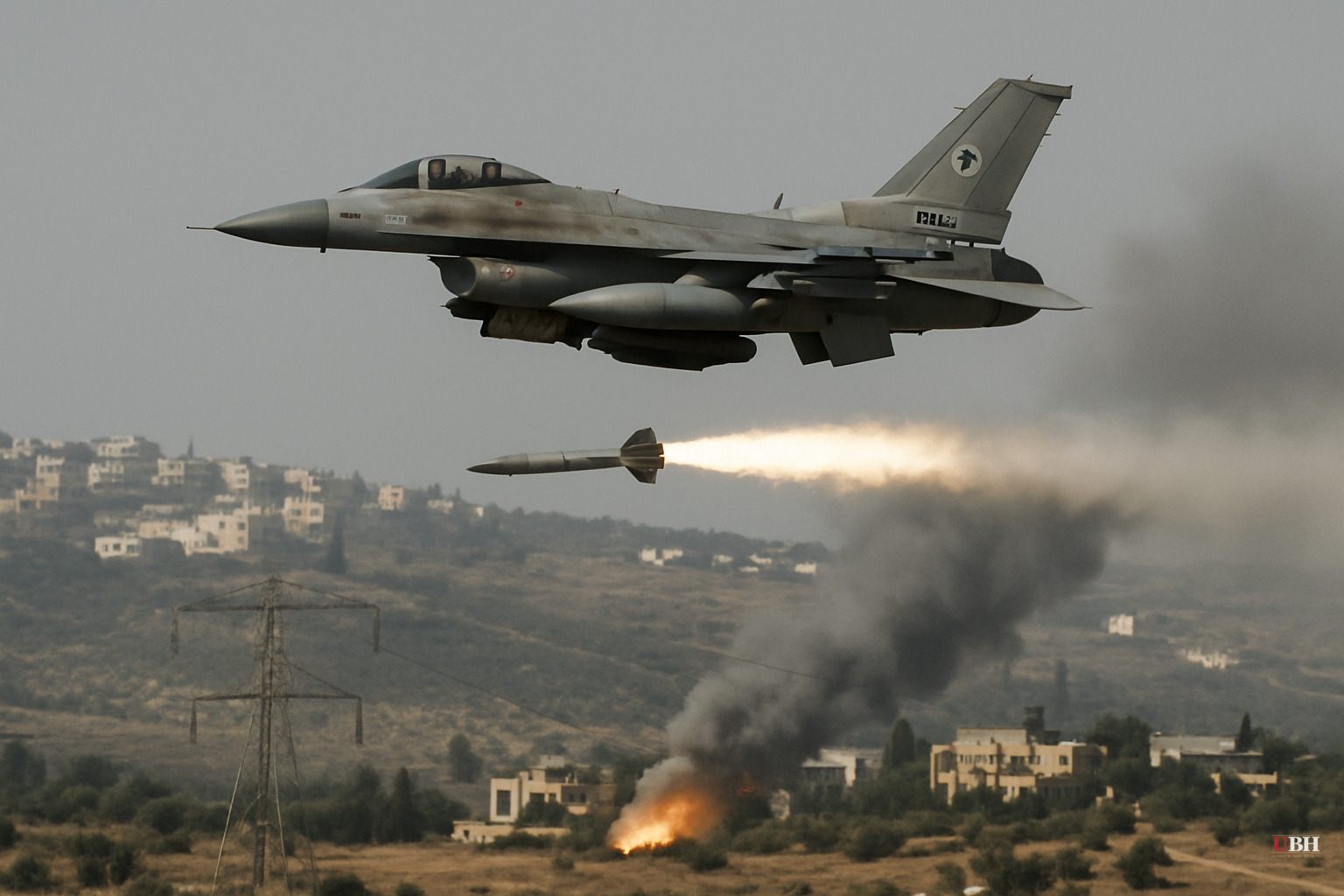
Since the U.S.-Iran memorandum of understanding was announced Sunday, both Israel and Hezbollah have continued trading fire across the Lebanese border, putting the fragile agreement under immediate stress.
What Happened Overnight
Israeli warplanes struck the Nabatieh al-Fawqa area and the outskirts of the neighboring town Kfar Tebnit early Wednesday morning, according to Lebanon's National News Agency. A drone strike also hit the town of Ansariyeh in the Zahrani area. The Israeli military had not commented on the strikes as of the time of those reports, though it has previously said its operations in Lebanon target Hezbollah.
This follows an Israeli airstrike on Beirut earlier this week, which Trump said publicly had gone too far.
Trump's Rebuke of Netanyahu
At the G7 summit on Tuesday, Trump delivered an unusually direct public criticism of Israeli Prime Minister Benjamin Netanyahu. Per Channel News Asia's reporting on the remarks, Trump said it was unnecessary to bomb entire apartment buildings to hunt Hezbollah militants, and that too many civilians were being killed.
"Without the United States, there would be no Israel. Without me, there would be no Israel because no other president was willing to do what I did," Trump said, according to BBC News. He added that he has a "great relationship" with Netanyahu but that he "didn't like that he did an attack... that was too much."
Trump also said Israel has been fighting Hezbollah for "too long and too many people are being killed."
Trump publicly tying U.S. support to Israeli restraint represents a shift in tone, even if it has not yet translated into a policy consequence.
The Core Dispute: Does the Deal Cover Lebanon?
Iran's Foreign Minister Abbas Araghchi said Tuesday that any Israeli forces remaining in southern Lebanon, or any Israeli strikes on the country, constitute a violation of the U.S.-Iran agreement. According to CBS News, Araghchi's position is that the deal explicitly covers Lebanon, a claim backed by mediator Pakistan, which has stated Lebanon is included in the memorandum's terms.
Israel's position is the opposite. Israeli officials said Monday that troops would remain in a wide section of southern Lebanon that they have effectively occupied over the last three and a half months, forcing tens of thousands of residents to evacuate. Far-right National Security Minister Itamar Ben-Gvir was blunt: "Trump's agreement does not bind us," he said, per CBS News. Netanyahu separately said on Monday that his country's forces would remain in Lebanon "for as long as necessary."
The text of the memorandum of understanding has NOT been publicly released, which is the root of this dispute. No one outside the negotiating parties can independently verify what the deal actually says about Lebanon.
The Strongest Case for Israel's Position
Israel's argument deserves a fair hearing. Hezbollah is an Iranian proxy that has built a missile network pointed at Israeli towns. Israel did not start this cycle — an Israeli airstrike on Beirut earlier this week came in response to a cross-border rocket attack by Hezbollah, according to BBC News. Israeli officials argue that pulling forces from southern Lebanon before a credible enforcement mechanism exists for Hezbollah's disarmament would simply allow Iran's proxy to rearm and reposition.
The counterpoint is that continued Israeli strikes while a deal is supposedly being finalized hands Iran a narrative win and risks blowing up negotiations before they formally begin.
What Happens Friday
A signing ceremony is expected Friday at Switzerland's Burgenstock mountain resort, where the memorandum of understanding between the U.S. and Iran will be formally signed, per CBS News. That signing is supposed to kick off a second phase of direct talks on Iran's nuclear program and other issues.
In a parallel development, CBS News and the TankerTrackers monitoring service reported that at least two Iranian supertankers, named DIONA and HERO2, exited the U.S. naval blockade zone in the Strait of Hormuz on Wednesday. This marks the first Iranian crude exports in two months, according to TankerTrackers' satellite-corroborated tracking data. That suggests some sanctions relief is already moving ahead of the formal signing.
The Open Question
The memorandum's language on Lebanon is the hinge point. Until the full text is released, Iran and Israel will keep arguing past each other about what the deal requires, and Israeli jets will keep flying. Whether the Friday signing in Switzerland goes forward as planned depends significantly on whether those strikes escalate further before then, and whether Trump decides his public criticism of Netanyahu carries any actual consequences.
Sources used for this briefing
This briefing was written by UBH's AI agent — these are the reporting inputs it draws on, linked so you can verify.


