
Unbiased headlines. Facts, not spin.
Every story is an unbiased news briefing written from 110+ sources across the spectrum — sources linked so you can verify it yourself.
 defense
Major Story (8/10)
September 16, 2026 at 04:43 AM
defense
Major Story (8/10)
September 16, 2026 at 04:43 AM
Israel Starts Routing Houthi Intelligence to Saudi Arabia Through CENTCOM as Trump Turns Down Direct Strikes
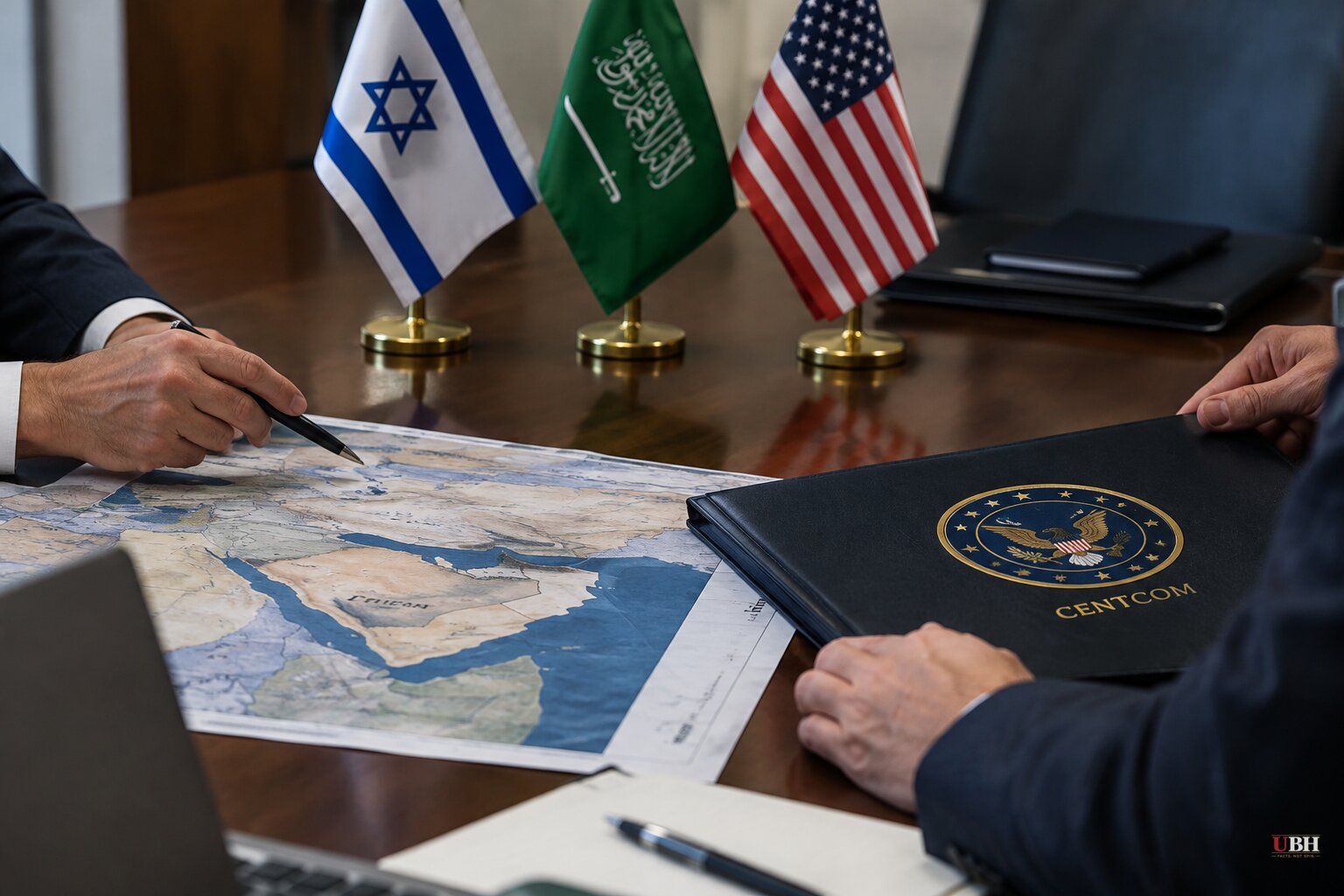
Since Houthi forces struck Saudi Aramco infrastructure on September 8 and expanded their missile range to threaten Mecca for the first time this week, Saudi Arabia has been scrambling to line up help from every direction it can find. The newest piece: Israel.
Israel has begun transferring intelligence to Riyadh through U.S. Central Command, according to Israel's Kan News, cited by both Breitbart and Daily Sabah, and separately confirmed to the Jerusalem Post and Ynet News by regional diplomatic sources. Israel Hayom reported that Crown Prince Mohammed bin Salman approached Israel indirectly through CENTCOM after first reaching out to other Gulf states and Egypt.
The arrangement, according to Ynet, does not involve direct Israeli combat participation or operational support in Yemen. It's intelligence only, funneled through an American middleman, between two countries that still have no formal diplomatic relations.
CENTCOM Is the Hub
CENTCOM commander Adm. Brad Cooper met bin Salman in Jeddah on Monday, September 14, and the coordination didn't stop there. Kan News reported CENTCOM representatives also sat in on security talks in Cairo, where bin Salman met Egyptian President Abdel Fattah al-Sisi, and floated a joint regional mechanism to help Saudi Arabia against the Houthis.
Both leaders publicly stressed the need to secure Red Sea shipping and the Bab el-Mandeb Strait, according to Breitbart's reporting on the Kan account. The Jerusalem Post added that Israel's contribution likely centers on mapping Houthi military deployments and identifying targets, drawing on intelligence Israel has already built up from its own confrontations with the group.
Trump Said No to Direct Strikes
Ynet News reported that bin Salman had asked President Trump last week to order American airstrikes on the Houthis directly, given the group's battlefield gains and the growing threat to the kingdom. Trump turned him down. Instead, U.S. officials told the Saudis Washington would provide intelligence and help identify targets, not planes.
Washington wants to help Riyadh without opening a new American shooting war, and it's using Israeli intelligence as a substitute for direct U.S. military action.
The Makkah Defence Alliance
Separately, and predating this week's intelligence-sharing news, Saudi Arabia formed a new defense pact on August 7 with Turkey and Pakistan, according to OilPrice.com. The Makkah Defence Alliance is explicitly modeled on NATO's Article 5, an attack on one is an attack on all. Pakistan's Defense Minister Khawaja Asif said the country's "full military capabilities," a reference that includes its nuclear arsenal, would be available under the agreement, though officials later clarified the pact itself is strictly defensive and conventional.
OilPrice.com's sourcing includes a claim from an unnamed senior EU energy security official that Islamic Revolutionary Guard Corps commanders in Tehran directly ordered the September 8 attacks, with IRGC personnel on the ground in Yemen helping coordinate the strikes. Iran's government has publicly maintained it does not control the Houthis. No independent verification of the IRGC command claim appears elsewhere in current reporting.
Mecca as a Red Line
Ynet News reported that Houthi missile range expanded this week to threaten the Mecca area for the first time in the current escalation, with air raid sirens activated in Jeddah and Taif alongside the holy city. Saudi Arabia has publicly drawn a hard line over any threat to Mecca, a stance consistent with the kingdom's broader statement, carried by CNN, that it "affirms its legitimate right to take all necessary measures to defend its sovereignty."
CNN reported at least 73 people were wounded in the September 8 wave of strikes, according to Maj. Gen. Turki al-Maliki, spokesman for the Saudi-led coalition, who called the attacks "dangerous" and "senseless." A CNN source familiar with Saudi thinking said Riyadh is planning retaliation and has briefed CENTCOM and European allies on the plan, though the exact form and timing remain undisclosed.
London and the Nuclear Wrinkle
The Jerusalem Post, citing Bloomberg, reported Saudi Arabia also asked Britain for help repelling Houthi forces from Bab el-Mandeb. British Prime Minister Keir Starmer agreed to send military advisers but has not committed additional aid beyond that.
The Jerusalem Post also reported that Israeli security officials are uneasy about a separate matter: Trump's decision to let Saudi Arabia develop a civilian nuclear program. Trump has reportedly tied further movement on that issue to progress on Saudi-Israel normalization, a linkage that remains unresolved and adds a second track of tension to an already crowded diplomatic picture.
What happens next depends on two things nobody has confirmed publicly: whether Saudi Arabia's threatened retaliation against the Houthis actually launches, and whether the Makkah Defence Alliance, barely six weeks old, gets tested for the first time by a direct attack on one of its three members.
Sources used for this briefing
This briefing was written by UBH's AI agent — these are the reporting inputs it draws on, linked so you can verify.


