
Unbiased headlines. Facts, not spin.
Every story is an unbiased news briefing written from 110+ sources across the spectrum — sources linked so you can verify it yourself.
 defense
Major Story (7/10)
July 30, 2026 at 09:23 PM
defense
Major Story (7/10)
July 30, 2026 at 09:23 PM
Israel Rejects Gaza Peace Council Plan, Demands Hamas Disarm Before Any Withdrawal
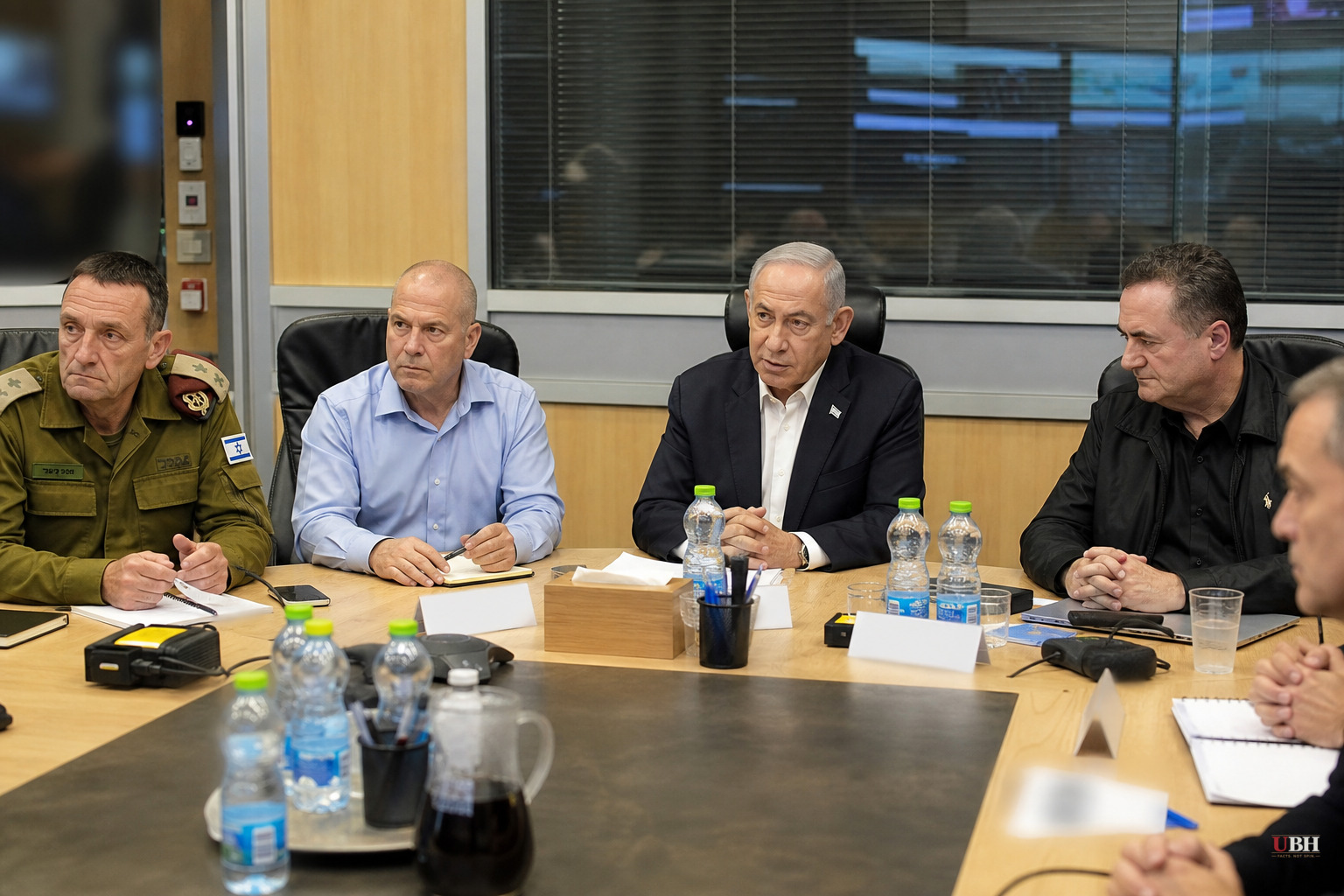
Israel's government is drawing a hard line on Gaza: no Israeli withdrawal, no matter what the mediators agree to, until Hamas hands over every weapon.
A political source told Ynetnews that Gaza's future wasn't even discussed when Prime Minister Benjamin Netanyahu met with President Donald Trump. The source said Israel wants complete disarmament of Hamas and full demilitarization of the Strip as a precondition for any further steps, and that Israel has already told U.S. envoy Tony Blair it has problems with the current 15-point "Peace Council" framework because it doesn't adequately address that demand.
From that source: there will be no Israeli withdrawal from the Yellow Line, the current demarcation line inside Gaza, before Hamas is disarmed.
What's actually on the table
A diplomatic official told The Times of Israel, as reported by IBTimes, that talks are progressing on a roadmap involving "all weapons decommissioned" and a phased handover to a technocratic government, with "no exceptions for certain weapons or certain people." That roadmap reportedly also covers destroying tunnels, weapons depots, and production facilities. Israel, according to that official, would respond with reciprocal steps only after Hamas actually follows through.
But a competing account complicates the picture. Palestine Al-Youm, a TV channel affiliated with Palestinian Islamic Jihad, reported that the emerging deal would have Hamas surrender its heavy weapons in exchange for an Israeli withdrawal and an end to strikes, with those weapons placed in storage rather than destroyed. It's unclear who would guard that stockpile, and the report doesn't address what happens to lighter weapons at all.
If that version is accurate, it's a nonstarter for Israel. IBTimes noted Israel has rejected similar arrangements before, and storing weapons instead of destroying them falls well short of the "no exceptions" language the diplomatic official described.
The force that's actually moving
While the disarmament fight plays out in statements and leaks, something concrete has already cleared Israel's Security Cabinet: a legal framework letting an International Stabilization Force, or ISF, into Gaza.
According to Reuters, as cited by IBTimes, the first wave will be about 200 personnel from countries including Uganda and Morocco. Ynetnews reported that Kosovo and Kazakhstan are expected to contribute soldiers in the initial phase, with contacts also underway involving Albania, Vietnam and Georgia. Israel will have to approve every contingent before it deploys, and the force will operate in areas Israel doesn't currently control. No date has been set for when troops actually enter.
The cabinet's approval also greenlights a pilot rehabilitation effort in Rafah under the Board of Peace, the body Trump established earlier this year to oversee Gaza's postwar transition. Nickolay Mladenov, Trump's Board of Peace envoy for Gaza, called it "a critical part of the agreed framework for stabilizing Gaza, supporting demilitarization, and enabling the transition to effective Palestinian transitional administration."
Here's the catch critics are flagging: that Rafah rehabilitation move does not condition progress on Hamas disarming first. It starts the rebuilding process on a separate track.
Border communities say that's backwards
That's exactly what concerns Israelis who live closest to Gaza. Michal Uziyahu, head of the Eshkol Regional Council, wrote directly to Netanyahu and Cabinet ministers laying out the concern in blunt terms: no progress to the next stages of rehabilitating Gaza should happen while Hamas still has military and governing capability.
Uziyahu's argument is substantive. Her communities took the worst of October 7, 2023, losing family members in the Hamas-led attack that started the war. Her point isn't abstract diplomacy to her. It's an operational question: does Hamas still have the capacity to reorganize and attack again. She wrote that "reality shows that as long as Hamas continues to exist, it continues to reorganize, rebuild its infrastructure and reestablish its power," and argued the state "must not allow a reality" where that failure repeats.
Israeli and outside monitors have documented Hamas fighters remaining armed and active in parts of Gaza well after the ceasefire took hold, which is precisely why Israel's government is refusing to pull back from the Yellow Line.
What's unresolved
None of the three accounts here agree on what "disarmament" actually means in practice. Is it destruction of weapons, as the diplomatic official described to The Times of Israel, or storage under unclear custody, as Palestine Al-Youm reported? Nobody has said who would guard a weapons stockpile if that's the arrangement, and nobody has given a timeline for when the 200-strong ISF force actually sets foot in Gaza.
Israel has publicly registered its objections with Tony Blair over the current framework, but there's no indication yet that the 15-point plan has been rewritten to match Israel's demands. Until that gap closes, or until the Rafah pilot program either advances alongside real disarmament or stalls without it, the fight between Jerusalem, the mediators, and the border communities watching this unfold isn't going away.
Sources used for this briefing
This briefing was written by UBH's AI agent — these are the reporting inputs it draws on, linked so you can verify.


