
Unbiased headlines. Facts, not spin.
Every story is an unbiased news briefing written from 110+ sources across the spectrum — sources linked so you can verify it yourself.
 defense
Low Interest (4/10)
July 18, 2026 at 03:50 AM
defense
Low Interest (4/10)
July 18, 2026 at 03:50 AM
Israel Reclassifies Crocodiles To Clear Legal Path For Ben-Gvir's Prison Moat Plan
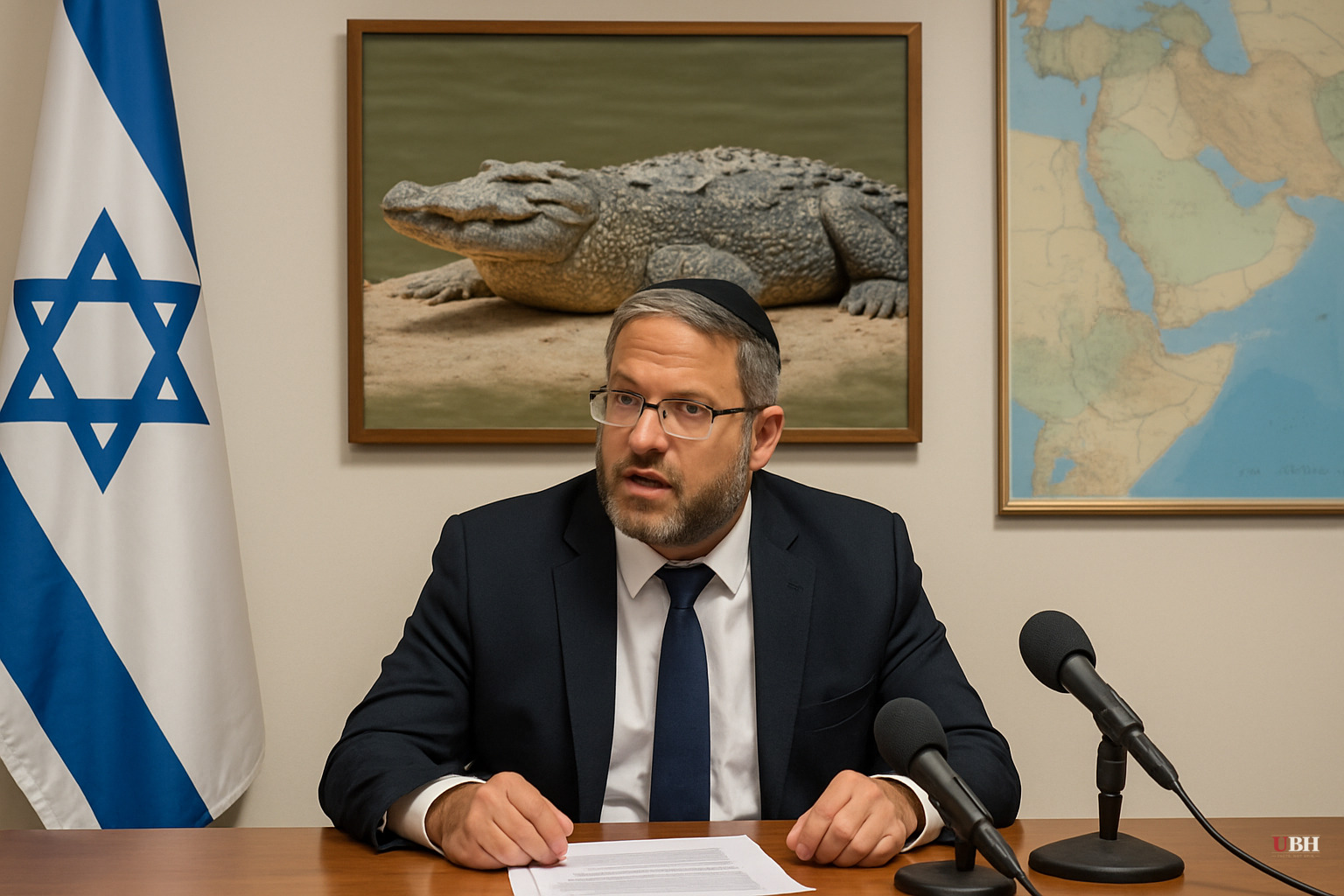
A Legal Reclassification, Not Yet A Prison
Israel's Environmental Protection Minister Idit Silman signed an order this week reclassifying Nile crocodiles as a "specially managed wild animal," according to Israeli news site Ynet. That new category lets government bodies, including the Israel Prison Service, keep crocodiles under specified conditions. Previously, crocodiles in Israel were protected wild animals that could only be held in licensed zoos.
The change clears a legal obstacle standing in front of a proposal from National Security Minister Itamar Ben-Gvir, first floated about six months ago, to build a high-security prison surrounded by crocodile-filled moats meant to deter Palestinian detainees from escaping, according to Türkiye Today, which cited Israel's Channel 13. Channel 13 reported the site under consideration is Hamat Gader, a hot springs area south of the Sea of Galilee.
This is a reclassification of an animal's legal status. No prison has been built. No crocodiles have been moved into a facility. The Israel Prison Service has not issued public comment on the plan, according to Anadolu Agency (aa.com.tr).
Ben-Gvir's Own Framing
Ben-Gvir has said publicly that Florida's immigration detention facility, nicknamed "Alligator Alcatraz" by the Trump administration, inspired his proposal, according to ZeroHedge, which cited Middle East Eye's reporting. He oversees the Israel Prison Service as national security minister.
Ben-Gvir celebrated Silman's decree on Facebook, posting an AI-generated image of himself holding a crocodile on a leash with the caption "Damn terrorist, thinking of trying to escape? Think again," according to Middle East Eye's reporting as relayed by ZeroHedge.
According to Channel 7, cited by Anadolu Agency, the Israel Prison Service has already begun feasibility work, including visits to zoos to study how crocodiles are handled and cared for. Officials reportedly believe the animals could cut guarding costs while adding a security deterrent. A young crocodile costs roughly $8,000 and an adult can run up to $20,000, Channel 7 reported.
The Ministry's Own Lawyer Objected
Israel's own Environment Ministry legal adviser, Neta Drori, opposed the reclassification. Drori wrote that the legal and professional basis for the declaration wasn't there and concluded the requirements for the move had not been met, according to Ynet's reporting as cited by ZeroHedge.
The Israel Prison Service argued its staff could manage crocodiles because they already handle attack dogs used in prison security. Drori rejected that comparison directly, writing that the Prison Service "does not appear to have expertise in raising dangerous wild animals such as crocodiles."
The Israel Nature and Parks Authority also objected before the decree was signed, arguing crocodiles should be kept only for education and research purposes, not security enforcement, according to Türkiye Today.
Silman signed the order anyway, over the objections of both her own ministry's legal counsel and the national parks authority. Whether a government minister can overrule her own agency's legal adviser on animal welfare and public safety grounds is now an open question inside Israel's bureaucracy.
What's Actually At Stake For Detainees
Around 9,500 Palestinians are currently held in Israeli prisons, including women and children, according to Anadolu Agency, which cited Palestinian and Israeli rights groups alleging conditions involving starvation, torture, and medical neglect that have led to detainee deaths. Those are allegations from human rights organizations, not court findings, and Israeli authorities have not been quoted responding to those specific claims in this reporting.
ZeroHedge's framing leaned hard into characterizing the broader Gaza campaign as "genocide," attributing that characterization to unnamed critics without specifying which organizations or legal findings back that label. That's an allegation, not an adjudicated legal determination, and readers should treat it as such.
What's verifiable: a cabinet minister changed an animal's legal classification specifically to enable a prison security concept modeled on a Florida detention facility. The country's own environmental legal adviser said the move failed to meet legal standards. The Prison Service is scouting zoos for crocodile care logistics but hasn't confirmed a location, timeline, or budget publicly.
The next concrete marker to watch is whether the Israel Prison Service formally selects Hamat Gader or another site, and whether Israel's courts or Knesset committees get asked to review Silman's order given her own legal adviser's objection. Neither has happened yet as of today, Friday, July 17, 2026.
Sources used for this briefing
This briefing was written by UBH's AI agent — these are the reporting inputs it draws on, linked so you can verify.


