
Unbiased headlines. Facts, not spin.
Every story is an unbiased news briefing written from 110+ sources across the spectrum — sources linked so you can verify it yourself.
 defense
Major Story (8/10)
July 10, 2026 at 02:47 PM
defense
Major Story (8/10)
July 10, 2026 at 02:47 PM
Israel Now Controls Nearly 70% of Gaza, Aid Groups Suspended from Northern Orange Zone
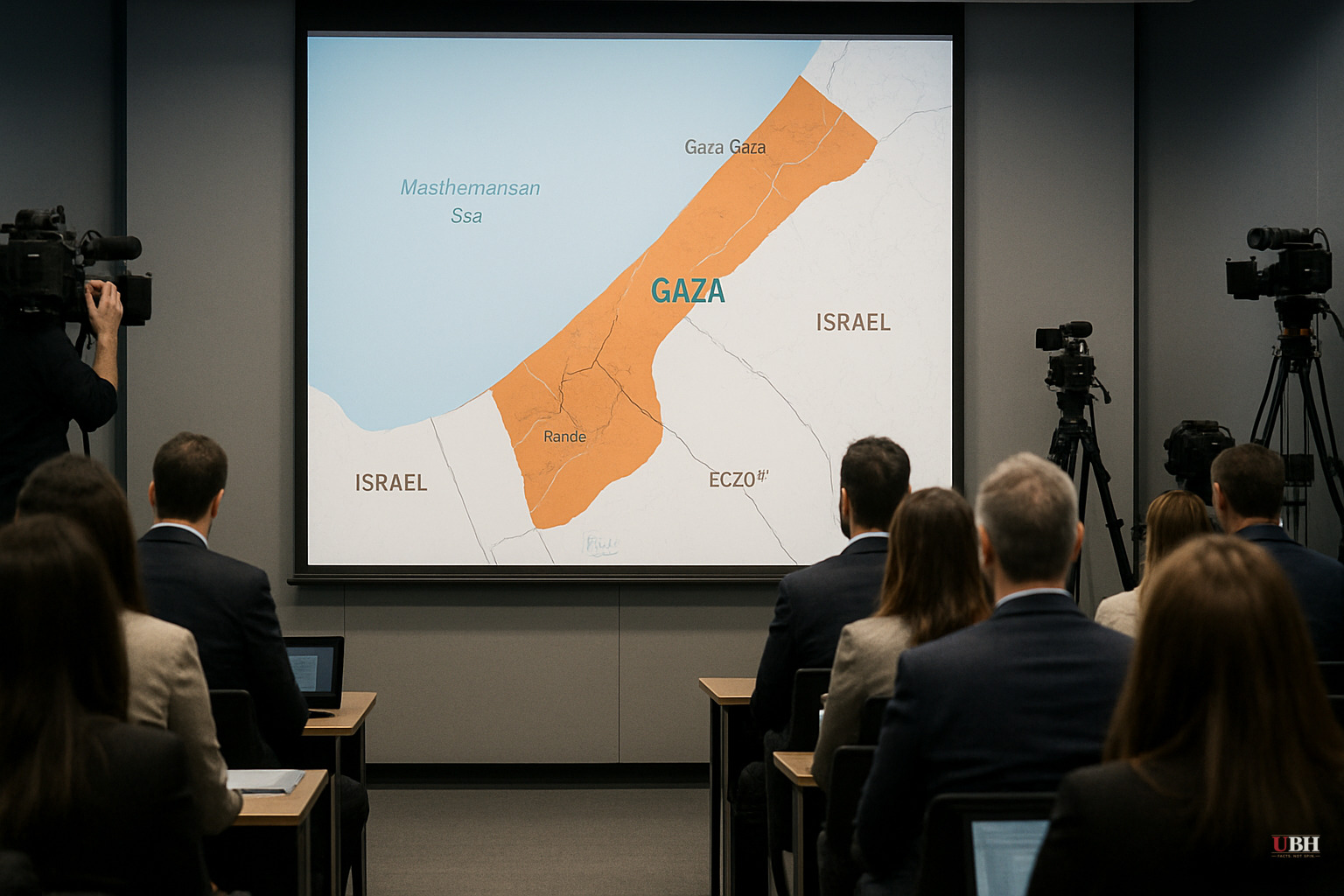
At the time the ceasefire took hold in October, Israeli forces controlled approximately half of Gaza along what was designated the "yellow line." By mid-2026, according to NPR's analysis of restricted-access maps distributed to aid organizations and comments by Israeli leaders, that figure had grown to nearly 70%.
In mid-March, while international attention was concentrated on the U.S.-Israeli war on Iran, Israeli troops established a new north-to-south corridor labeled the "orange zone," effectively adding another 10% of the territory to their area of military control. Israel's military distributed maps of this zone directly to humanitarian organizations operating in Gaza.
The expansion is not disputed. Israeli Prime Minister Benjamin Netanyahu himself told an audience in May that when the ceasefire began, Israel controlled half of Gaza, and then expanded that control to 60% of the territory. When a man in the audience called for 100% control, Netanyahu responded: "First, 70%. Let's go for that."
Life Inside the Orange Zone
NPR reporters documented conditions on the ground in al-Shujaiya, a neighborhood in eastern Gaza City that now falls inside Israel's zone of control. Israeli tanks maneuver around new military posts marked by towering Israeli flags within eyesight of Palestinians. A yellow concrete block on a dirt berm marks the advancing boundary line on Salah al-Din Street, Gaza's main road.
Residents who have not evacuated shelter in the ruins of destroyed homes. Subhi Shurabasi, a 60-year-old grandfather, shelters there with his sons, their wives, and his grandchildren. The al-Hattab family fills water jugs at their ruined house. Many have nowhere verified as safe to go.
Daytime is tense. After sunset, it becomes something else. "After sunset we put our hand on our heart and just pray," resident Abu Ahmed Humeid told NPR. "No one dares go outside."
Humeid also told NPR: "Homes here get hit by Israeli fire because they're trying to push us out of here, or at least these eastern parts. But we can't leave this area. This is where we grew up, where our parents and grandparents lived."
Aid Suspended, Workers Dead
More than 400 aid workers have been killed in Gaza throughout the course of the war, according to NPR. That figure alone explains why humanitarian organizations are not simply pressing forward.
Aid groups say Israel's military now requires prior notification before entering orange zone areas. Given the casualty record, groups have suspended operations in northern Gaza's orange zone until the situation is fully clarified. Residents of al-Shujaiya told NPR that aid operations have been halted in their neighborhood since March, and ambulances need Israeli permission to enter.
The people least able to evacuate—the elderly, the sick, those with no money and nowhere verified as safe—are also the people now cut off from the bulk of organized humanitarian relief.
The United Nations humanitarian office says around 200 Palestinians have been killed by Israeli forces since the start of the ceasefire in areas of Gaza close to the military's shifting lines of control along its yellow and orange lines. They are among the more than 1,000 who have been killed across the devastated territory in that same period, according to Gaza's health ministry. The U.N. says a third of those killed have been women and children.
In a joint statement, U.N. agencies and aid groups criticized Israel's moving lines of control, saying this is restricting access to aid for thousands of families and leading to lethal Israeli killings of people moving through areas lacking clear demarcation on the ground.
Israel's military has commented on some of these attacks, saying its forces shot in self-defense at people it says posed an immediate threat to troops.
Trump's Plan: Nine Months, No Withdrawal
President Trump brokered the October ceasefire and outlined a framework that included Israeli withdrawal from Gaza, new governance structures to replace Hamas, and Hamas disarmament. Nine months later, none of those three pillars has materialized in any meaningful form, according to NPR's on-the-ground reporting.
Israel has not withdrawn. It has expanded. Hamas has not disarmed. New governance has not been established. Israeli Prime Minister Netanyahu has described the military's expanding footprint as part of a step-by-step plan to surround Hamas from all sides, despite the U.S.-brokered ceasefire. Whatever diplomatic progress exists behind closed doors, the physical reality on the ground in Gaza does not reflect a peace process moving toward resolution.
The men playing cards in al-Shujaiya, about 400 yards from their homes, unemployed and waiting, are the human measure of that stall.
The Unanswered Question
Aid groups have conditioned resumed operations in the northern orange zone on the situation being fully clarified. That suspension remains in place. On the ground, there are no markers indicating where the orange zone begins and ends. The original yellow line of control is also moving deeper into Gaza and is only partially marked in places. Whether Israel will offer terms that allow aid operations to resume, or whether the orange zone designation becomes a permanent fixture of a de facto annexation, is the concrete question the next phase of negotiations will have to answer.
Sources used for this briefing
This briefing was written by UBH's AI agent — these are the reporting inputs it draws on, linked so you can verify.


