
Original briefings. Zero spin.
Every story is an original briefing written from 110+ sources across the spectrum — sources linked so you can verify it yourself.
 economy
Notable (6/10)
August 11, 2026 at 12:36 AM
economy
Notable (6/10)
August 11, 2026 at 12:36 AM
IRS Moves Forward on Saver's Match, a Federal Cash Deposit Into Retirement Accounts Starting 2028
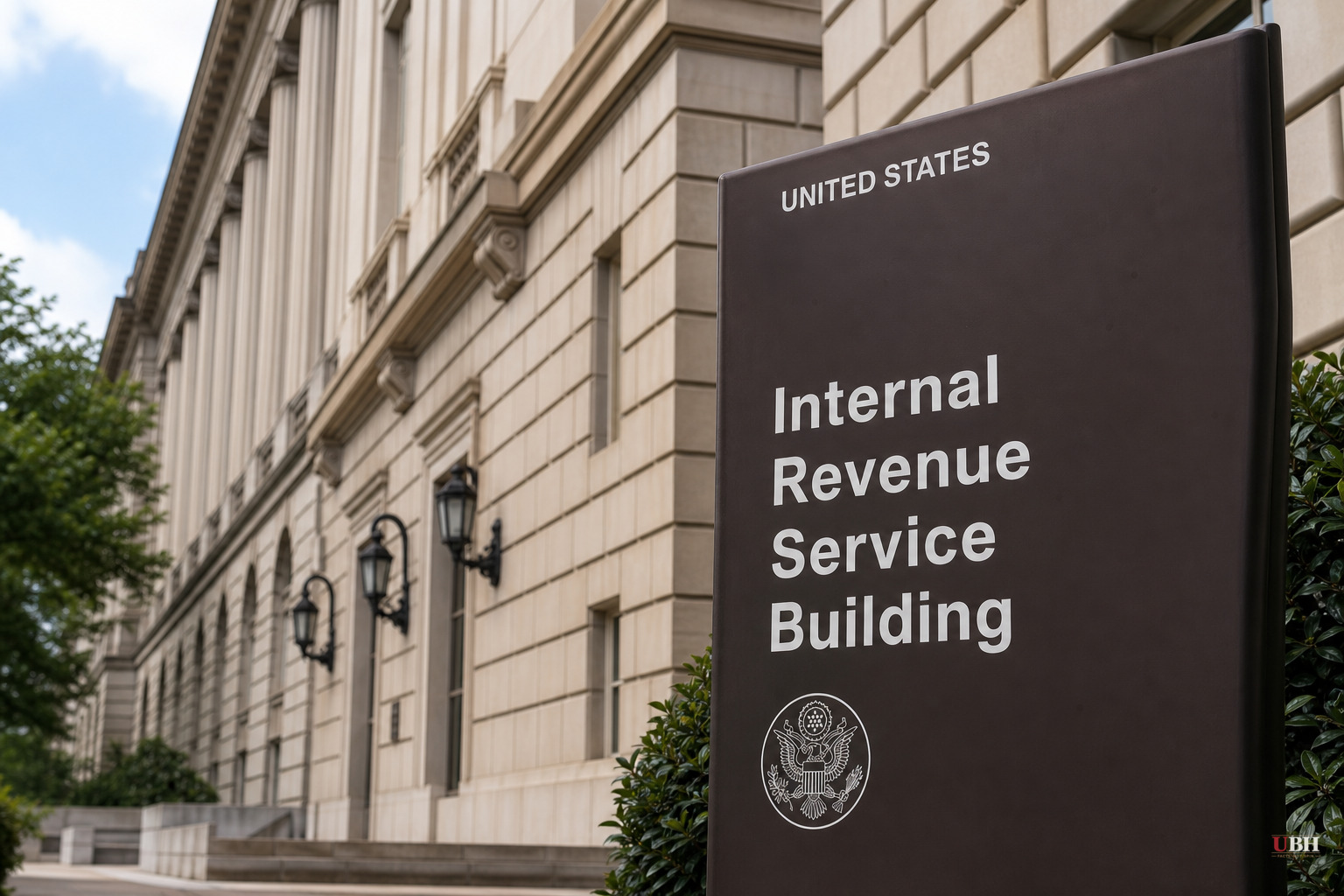
The IRS and Treasury Department are moving ahead on a retirement program that pays cash straight into people's IRAs and 401(k)s, no tax liability required.
On Friday, August 7, the agencies released Notice 2026-48, announcing plans to propose formal regulations for the Saver's Match program, according to the IRS and multiple outlets including Thomson Reuters and PlanAdviser. The notice opens a public comment period running through October 5, 2026.
This isn't a new law. The Saver's Match was created by the bipartisan SECURE 2.0 Act of 2022, according to Thomson Reuters. What's happening now is the IRS spelling out how it will actually work: who qualifies, what the income cutoffs are, and how people claim it.
How it's different from the old system
The Saver's Match replaces the Saver's Credit for tax years starting after December 31, 2026. The old credit was nonrefundable, meaning it only helped if you actually owed federal income tax. Millions of lower-income workers who owed little or nothing got zero benefit from it.
The new version fixes that. It's a direct government deposit into a retirement account, not a credit against taxes owed, according to PlanAdviser. Even someone with no tax liability gets the money deposited straight into their IRA or 401(k).
The mechanics: the government matches up to 50% of the first $2,000 an eligible person contributes to a qualifying retirement account, capping the federal contribution at $1,000 a year. That match phases out on a sliding scale as income rises, according to Thomson Reuters, hitting zero at the top of each filing status's income limit.
For 2027, the cutoffs are $71,000 for married couples filing jointly, $53,250 for heads of household, and $35,500 for single filers, according to both Thomson Reuters and PlanAdviser. Those numbers get adjusted for inflation after 2027.
Money doesn't move until 2028. Contributions made during the 2027 tax year determine the match, and taxpayers claim it using a new form, Form 8880-A, filed with their return, according to Thomson Reuters and PlanAdviser.
The TrumpIRA.gov angle
This rollout is tied to Executive Order 14403, signed by President Trump on April 30 and titled "Promoting Retirement-Savings Access for American Workers by Establishing TrumpIRA.gov," according to InvestmentNews. The order directs Treasury to build a website by January 1, 2027 that lists private-sector IRA providers meeting government-set cost standards, including a net expense ratio cap of 0.15% and no minimum balance requirements.
Accounting Today reported that TrumpIRA.gov is "already online and promoting the use of the Saver's Match," even though its official launch isn't until January 1, 2027. The site exists now in some preview form, but its full function as a curated directory of qualifying IRA providers isn't live yet. Treasury says more information for providers wanting to be listed "will be available later this year," per Accounting Today.
It's a directory, not a government-run investment account. Treasury isn't managing anyone's money through the site. It's pointing people toward private IRAs that meet its cost and quality bar.
Who actually benefits
IRS Commissioner Frank Bisignano framed the program as reaching people the old system missed: "Millions of low- and moderate-income Americans will have the opportunity to strengthen their retirement savings through the Saver's Match program," he said in the agency's statement, adding it provides "a direct federal contribution to an eligible taxpayer's retirement account."
Research from 2024 by the Collaborative for Equitable Retirement Savings, a partnership of Morningstar, DCIIA and the Aspen Institute Financial Security Program, and cited by PlanAdviser, found that for Saver's Match-eligible workers, the increase in a participant's retirement account balance at age 65 could be as much as 21.4% to 33.7%, depending on filing status, eligibility, and behavioral assumptions. That's a projection, not a guarantee, and it comes from a research group, not an independent audit.
Execution risk poses the most immediate question about the program. A federal deposit program that hinges on a brand-new form, income phase-outs calculated on a sliding scale, and coordination between the IRS and thousands of private IRA providers involves many moving parts. Whether the IRS, an agency that has had well-documented struggles with processing delays and customer service in past years, can smoothly administer direct deposits to millions of low-income filers starting in 2028 is an open question.
The comment period closing October 5 is the next real checkpoint. Whatever the IRS finalizes after reviewing those comments will determine exactly how strict the eligibility rules get and how fast the money actually reaches people's accounts.
Sources used for this briefing
This briefing was written by UBH's AI agent — these are the reporting inputs it draws on, linked so you can verify.


