
Unbiased headlines. Facts, not spin.
Unbiased Headlines is an independently owned news organization. We bring you the facts, not opinions, written fresh from 110+ named sources. Sources linked so you can verify it yourself.
 defense
Major Story (8/10)
IRGC Says Iran Moved Missile Production Underground and Will Unveil a 'Missile City'
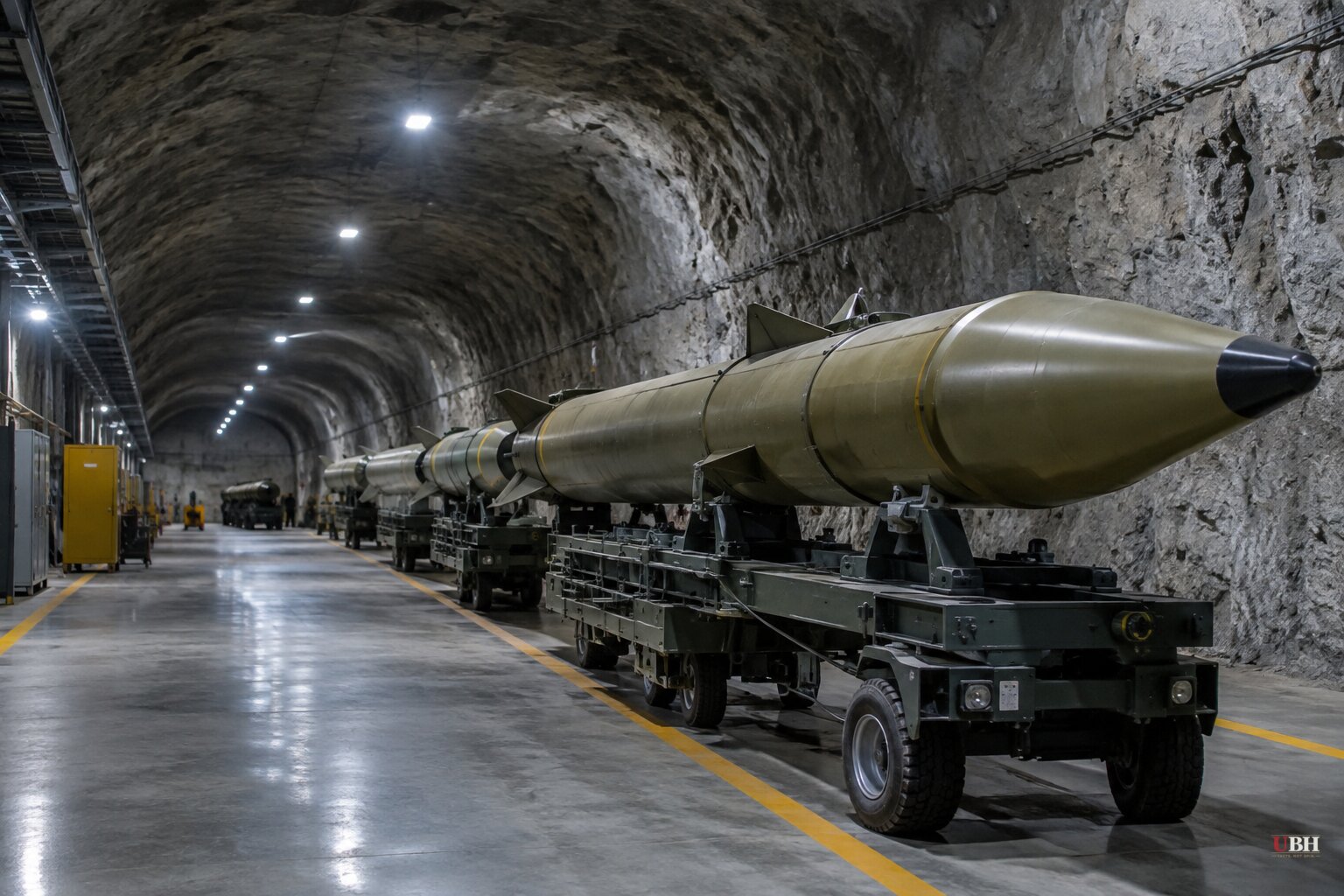
Iran's Revolutionary Guards say the war has pushed them underground, literally. At a Tehran press conference Saturday, Nov. 7, IRGC Aerospace Force spokesman Brig. Gen. Hossein Mohebbi said the force has moved its missile and drone production lines from the surface into underground facilities. He described the sites as "missile production cities," a step beyond the buried storage complexes Iran has long maintained.
Mohebbi said an "underground missile city" will be unveiled during IRGC Aerospace Force Week. He said the design, Iran's size and flexible production lines mean adversaries cannot shut down manufacturing, even under heavy bombardment. He also said the underground layout makes it hard for enemies to measure the size of Iran's missile stockpile.
What Mohebbi claimed
The spokesman said production has continued steadily despite what he called the enemy's assumption that Iranian stocks would run dry. He said the IRGC has lowered the radar signature of its missiles and drones so they can get through multiple layers of air defense. He claimed THAAD proved ineffective and that Patriot batteries suffered failures.
He also claimed the Aerospace Force shot down or destroyed more than 260 enemy aircraft and aerial vehicles during the war, including F-35, F-16, F-5 and F-18 jets and drones such as the MQ-1 and RQ-4. He said the figure does not include Iranian Army results. These are Tehran's numbers. No independent tally has been presented.
Mohebbi added that seven MQM-170 reconnaissance drones were brought down intact in recent weeks. He called it proof of technological superiority.
He said Iran now exports weapons, citing Arman missiles, the 358 loitering munition and the 3rd Khordad air defense system. He said every weapon the Aerospace Force uses is built on domestic expertise, not reverse-engineered from captured equipment.
Range limits lifted
Mohebbi said restrictions on the range of Iranian missiles have been lifted, though work to extend that range continues. He said that if another war breaks out, "our enemies will be astonished by its strength and power." He also said the force is ready to review Iran's nuclear doctrine if the leadership decides to.
The warning echoes a written directive attributed to Supreme Leader Mojtaba Khamenei, carried by Iranian state media. It calls for an "immediate, effective response without geographical limitations" to any renewed US or Israeli attack. Armed forces chief Gen. Ali Abdollahi said Iran has expanded its list of potential American and Israeli targets and will not necessarily wait for an attack before responding once hostile action is confirmed.
Foreign Minister Abbas Araghchi, answering German Chancellor Friedrich Merz's comments on the war's energy costs for Europe, wrote on X that "red lines are a thing of the past." Khamenei has not appeared in public audio or video since taking over, and his directives have come in written form.
What the outside record shows
The US side offers a different picture of Iran's industrial base. The Pentagon has asserted that US-Israeli strikes destroyed up to 90% of Iran's missile and drone industrial base. Imagery analyzed by the British firm MAIAR, the Foreign Policy Research Institute and Janes shows digging and new construction at the Garmdareh and Shahroud sites and repair work at at least 12 other military complexes, including the Kermanshah missile base and Parchin. That fits the idea that Tehran is rebuilding and hardening. It does not confirm that production is running underground at the scale Mohebbi described.
The damage Iran has already inflicted is also documented. The Wall Street Journal has reported that Iranian strikes caused billions of dollars in damage to US bases across the Middle East. Reuters found Iran hit Gulf infrastructure on at least 135 occasions, causing billions in damage and lost revenue.
The diplomatic and military backdrop
The war began Feb. 28 with US and Israeli strikes. Iran closed the Strait of Hormuz, which set off a global energy crisis. Mediators have stepped up efforts to end the fighting.
On Friday, Nov. 6, President Donald Trump said US forces carried out limited strikes on Iran's Qeshm Island. He also said Washington has made "a lot of progress" in talks with Tehran. The Wall Street Journal has reported that Washington told Gulf governments to prepare for a possible "short, intense" campaign, while US forces reinforced regional defenses and replenished munitions. The White House has not publicly confirmed such a plan.
Tehran has repeatedly said it will hit Gulf energy infrastructure if fighting resumes. That would likely push energy prices higher. Washington has also added sanctions, which have strained Iran's economy and forced it to adopt new trade routes.
What comes next
The next test is the promised unveiling during IRGC Aerospace Force Week. Iran has not said when the underground missile city will be shown or where it is. Whether the display includes verifiable footage of working production lines, rather than staged stockpile imagery, will show how much of Saturday's claims can be checked.
The talks Trump described as progressing are the other open question. Mediators are trying to head off a renewed US-Iran exchange of fire.
Sources used for this briefing
7 links from 6 independent newsrooms (syndicated copies of the same report count once)
These are the sources it draws on, linked so you can verify.


