
Unbiased headlines. Facts, not spin.
Unbiased Headlines is an independently owned news organization. We bring you the facts, not opinions, written fresh from 110+ named sources. Sources linked so you can verify it yourself.
 defense
Major Story (7/10)
Israel's Channel 12 Reports Netanyahu Sought Pre-Election Iran Operation That U.S. Halted; His Office Denies It
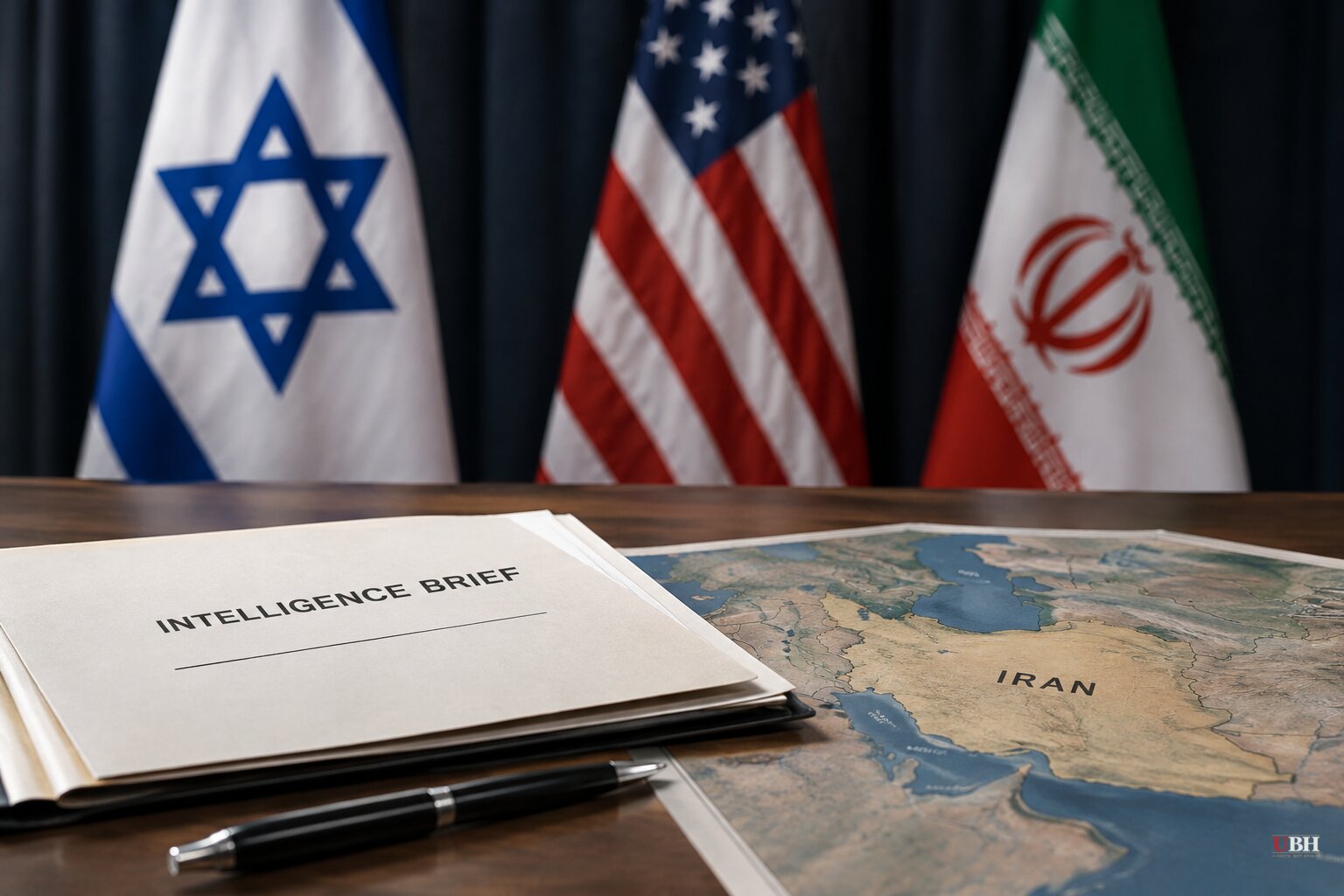
Since Israel's Oct. 27 election and the Nov. 3 U.S. midterms, the question of whether Jerusalem and Washington will hit Iran again has run alongside a second one: whether Benjamin Netanyahu will still be prime minister when it is decided.
A new allegation connects the two. On Friday, Nov. 6, Israel's Channel 12 reported that Netanyahu and Mossad chief Roman Gofman sought to launch an unspecified operation against Iran just before the election. According to the station, senior figures in Israel's security establishment opposed it, fearing escalation that could disrupt the vote. Preparations reportedly continued anyway.
Then, per the report, an Israeli security operative made a mistake that tipped off the United States. Washington moved quickly and the operation never happened. Channel 12 said it aired the story under Israeli military censorship rules.
The account has not been independently verified. It is a single-source claim about named officials, and it should be read that way.
Netanyahu's denial
Netanyahu's office rejected the report outright. "The prime minister himself clarified in real time that an attack before the Israeli elections was not on the agenda," it said.
That denial fits with how Netanyahu handled an earlier story. On Oct. 25, Channel 12 reported an "unprecedented confrontation" between Netanyahu and IDF Chief of Staff Eyal Zamir over an order for unspecified military action. Zamir reportedly pushed back, sought more deliberation and asked for written authorization. Netanyahu called that report "nonsense" in a Channel 14 interview and said there had been "no fight" with Zamir.
On Oct. 26, Channels 12 and 13 reported that Zamir was the only senior security official opposing a plan backed by Netanyahu and Defense Minister Israel Katz.
What Netanyahu has said in public
The denial of a pre-election attack sits next to loud public talk of confrontation. Days before the vote, Netanyahu said Iran's new supreme leader was trying to build what he called "the bombs of death." He said there was only one way to end the threat, overthrowing the regime, and that this was his directive to the military and intelligence agencies.
Trump had endorsed Netanyahu the Sunday before the election. He said the reason was that "we may have to finish the job in Iran," according to NPR's account of the endorsement.
A person briefed on the matter told NPR that the U.S. and Israel were drawing up plans for a possible strike as early as November. That person said Israel had first eyed mid-October and the U.S. ruled it out. Netanyahu has denied those earlier reports, which were first published by the Financial Times and The New York Times.
Washington's position
On the American side, a separate report this week said Netanyahu wanted a joint strike after the midterms while Trump preferred to let negotiations play out. Qatar-mediated U.S.-Iran talks are under way.
Trump said Friday that the U.S. is talking with Iran and that no American soldier has been killed in the last six to seven months. He also claimed Israel and the wider Middle East would not exist today had he not stopped Iran from developing nuclear weapons. Three days after the midterms, no strikes have been launched.
Skeptics of renewed war inside Israel have argued against the logic. Danny Citrinowicz, who once led the Iran branch of Israeli military intelligence, said more attacks will not persuade Iran to abandon its nuclear or ballistic missile programs. He warned Iran could retaliate harder this time, with effects reaching global markets. His question: what would a third campaign achieve that the first two did not?
A coalition fight that could decide it
Netanyahu's own position is shakier than the war talk suggests. With all votes counted, Likud and its far-right and ultra-Orthodox allies won 53 of the Knesset's 120 seats. Gadi Eisenkot's Yashar party (21 seats), B'Yachad (12), the Democrats (8) and Yisrael Beytenu (7) hold 48. Neither side reaches the 61 needed.
The Arab parties, Ra'am and the Joint List, won a record 19 seats. They recommended that Eisenkot form the government, which would bring him to 67. The Joint List said it would do "everything in its power to bring Netanyahu's rule to an end."
That creates friction inside the opposition. Naftali Bennett and Avigdor Liberman have opposed any government that depends on Arab parties, and have not commented since polls closed. Democrats leader Yair Golan has argued the Arab parties should be counted in the bloc and rejected what he called Netanyahu's "racist division between Jewish and Arab votes."
On Friday, Eisenkot said he is standing by his four core principles and working on a "national emergency government." He wrote that the current government poses "a fundamental threat to the very existence of Israeli democracy" and that war fronts "are themselves subject to political and personal whims." He said any party or lawmaker who accepts his principles will be invited in, immediately or later.
Whether Eisenkot can seat a government without breaking his own bloc, or Netanyahu can stall him long enough to act on Iran, is the open question. No strike has been announced, and Israel's coalition talks could run weeks, or force a fresh vote.
Sources used for this briefing
7 links from 7 independent newsrooms (syndicated copies of the same report count once)
These are the sources it draws on, linked so you can verify.


