
Unbiased headlines. Facts, not spin.
Unbiased Headlines is an independently owned news organization. We bring you the facts, not opinions, written fresh from 110+ named sources. Sources linked so you can verify it yourself.
 defense
Major Story (7/10)
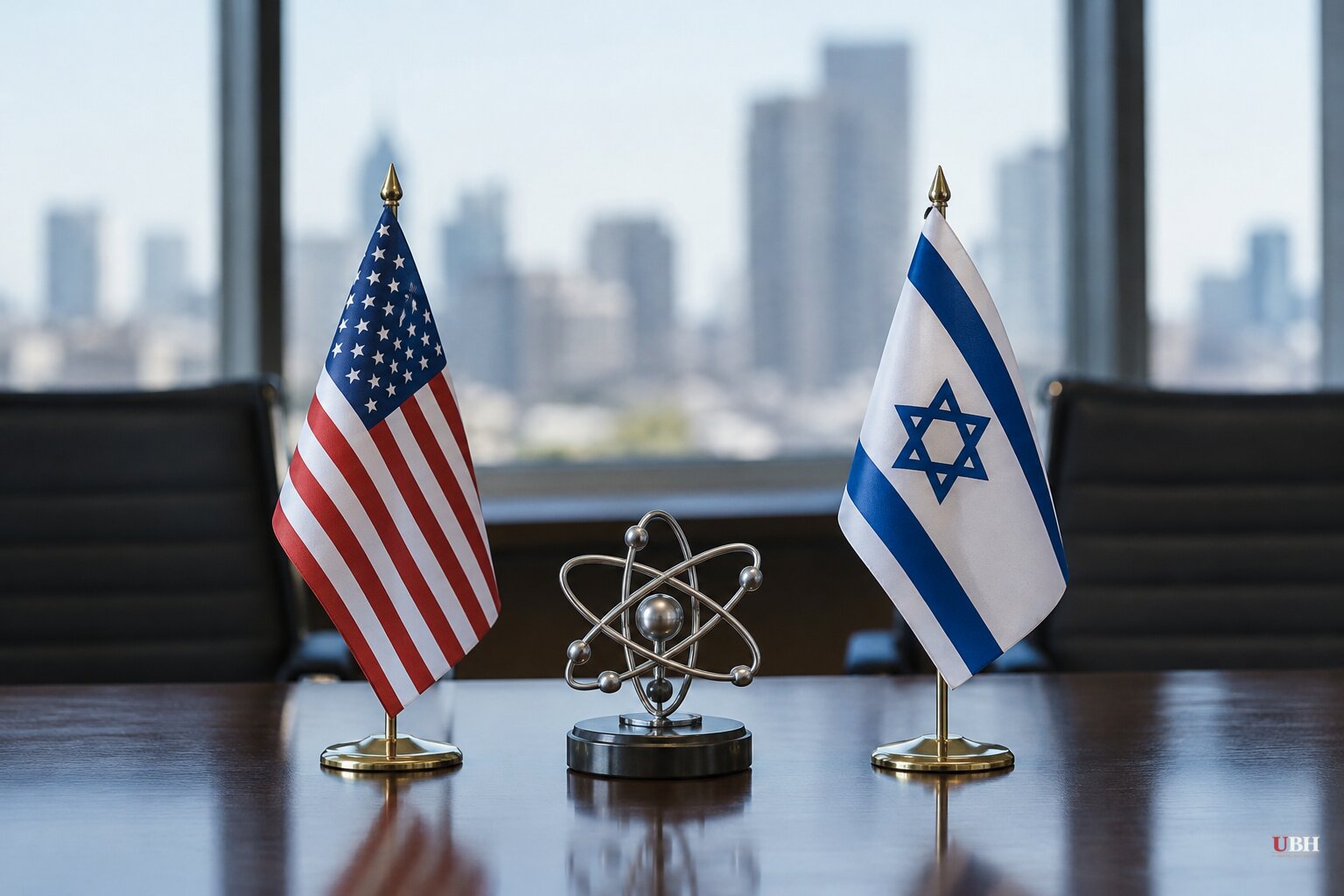
Rubio Says Most of the World Believes Israel Has Nukes, as Iran War and Saudi Deal Strain 60 Years of US Silence
The story starts with a lie about a textile factory.
In early 1960, American diplomats flying over Israel's Negev desert in a helicopter spotted a construction site about 20 miles west of the Dead Sea. They asked their Israeli escort, Addy Cohen of the Finance Ministry, what it was. Cohen called it a "textile factory." One of the Americans was US Ambassador Ogden Reid.
It was the Dimona nuclear facility. Months later, after US intelligence worked out what was being built, Reid demanded a meeting with Cohen. A secret US diplomatic telegram, among declassified records collected by the National Security Archive, says Cohen "at first treated the matter with levity," but left the impression he believed the reactor could eventually be used for weapons.
How the silence became policy
Sixty-plus years later, "textile factory" is Israeli shorthand for the arsenal. Prime Minister Benjamin Netanyahu used it in a July 14 speech, referring to a meeting with the head of Israel's Atomic Energy Commission.
The arrangement has a paper trail, though not a clean one. A declassified July 1969 memo says Henry Kissinger believed Israel was already pursuing weapons. He concluded the US was unlikely to stop it, and that threatening an arms embargo could set off a domestic political crisis. The memo does not record President Nixon's decision, and no official record appears to document when ambiguity became joint policy.
Historian Avner Cohen argues Nixon and Prime Minister Golda Meir must have set ground rules at a private White House meeting that September. Or Rabinowitz, in a study of the origins of Israel's nuclear policy, calls it the "Nixon-Meir understanding." Israel would not test, declare or openly advertise its weapons. The US would not press Israel to join the Nuclear Non-Proliferation Treaty.
The two sides never fully agreed on terms. In 1968, Israeli Ambassador Yitzhak Rabin told US officials Israel would consider a weapon "introduced" only after it had been tested and publicly declared. Washington's concern, a later Kissinger memo says, was that Israel make no visible introduction of nuclear weapons or run a test program.
The NPT's definition of a nuclear-weapon state, one that has "manufactured and exploded" a device, gave Israel a diplomatic hook. Rabinowitz writes the policy has paid off strategically for Israel but has also cost it, limiting its ability to buy civilian nuclear infrastructure from other Western countries.
The US got something out of it too. The policy let Washington keep a public line against other countries getting the bomb, while Israel avoided questions about how, or whether, it built one. Some US intelligence officials have argued that hundreds of pounds of weapons-grade uranium missing from a Pennsylvania plant in 1965 was diverted to the Israeli program. A recent documentary suggested the same. That claim is contested and unproven.
Why it is under pressure now
The US and Israel are at war with Iran, in part to stop Tehran from getting a nuclear weapon. Nonproliferation experts interviewed by CNN argue those efforts may be futile.
In a June congressional hearing, Democratic Rep. Joaquin Castro, who sits on the House foreign affairs and intelligence committees, pressed Rubio on Israel's arsenal. Rubio answered: "I think most of the world assesses that they do, but we've never, they've never, acknowledged that publicly." He added that Washington does not discuss the matter as part of its foreign policy.
Castro and a group of Democratic lawmakers and advocacy groups have argued in recent years that it is time for the US to stop pretending about Israel's weapons. Their objection is that the US cannot credibly demand Iran abandon nuclear ambitions while officially declining to acknowledge a regional arsenal next door. Castro told CNN the policy of ambiguity has become dangerous as the US fights beside Israel.
The defenders' case is the one that has governed since 1969. Ambiguity let Washington and Jerusalem avoid a public break over a program neither could stop. Both governments feared Soviet-backed Arab nuclear programs, and Israel feared the diplomatic fallout of declaring itself a nuclear state.
Saudi Arabia and the aid question
A nuclear cooperation agreement between the US and Saudi Arabia is pending before Congress. Lawmakers weighing it will be doing so while the US still publicly declines to confirm the one arsenal in the region.
The political ground is also moving. President Trump said this week that the US may cut off nearly $4 billion in military aid to Israel at the end of the year because "they no longer need it." That is a sharp turn from decades of near-automatic support, and it comes from a president who has been among Israel's most visible backers in Washington.
None of this has produced a change in policy. Neither government has acknowledged the arsenal, and no formal move to end the arrangement has been announced.
Two near-term markers will show whether the silence holds: how Congress handles the Saudi agreement, and whether Trump follows through on the aid cutoff before the year ends.
Sources used for this briefing
7 links from 6 independent newsrooms (syndicated copies of the same report count once)
These are the sources it draws on, linked so you can verify.


