
Unbiased headlines. Facts, not spin.
Unbiased Headlines is an independently owned news organization. We bring you the facts, not opinions, written fresh from 110+ named sources. Sources linked so you can verify it yourself.
 defense
Major Story (8/10)
CENTCOM Creates 20-Person Task Force Iron Gate to Target Iran's Land and Caspian Sea Trade Routes
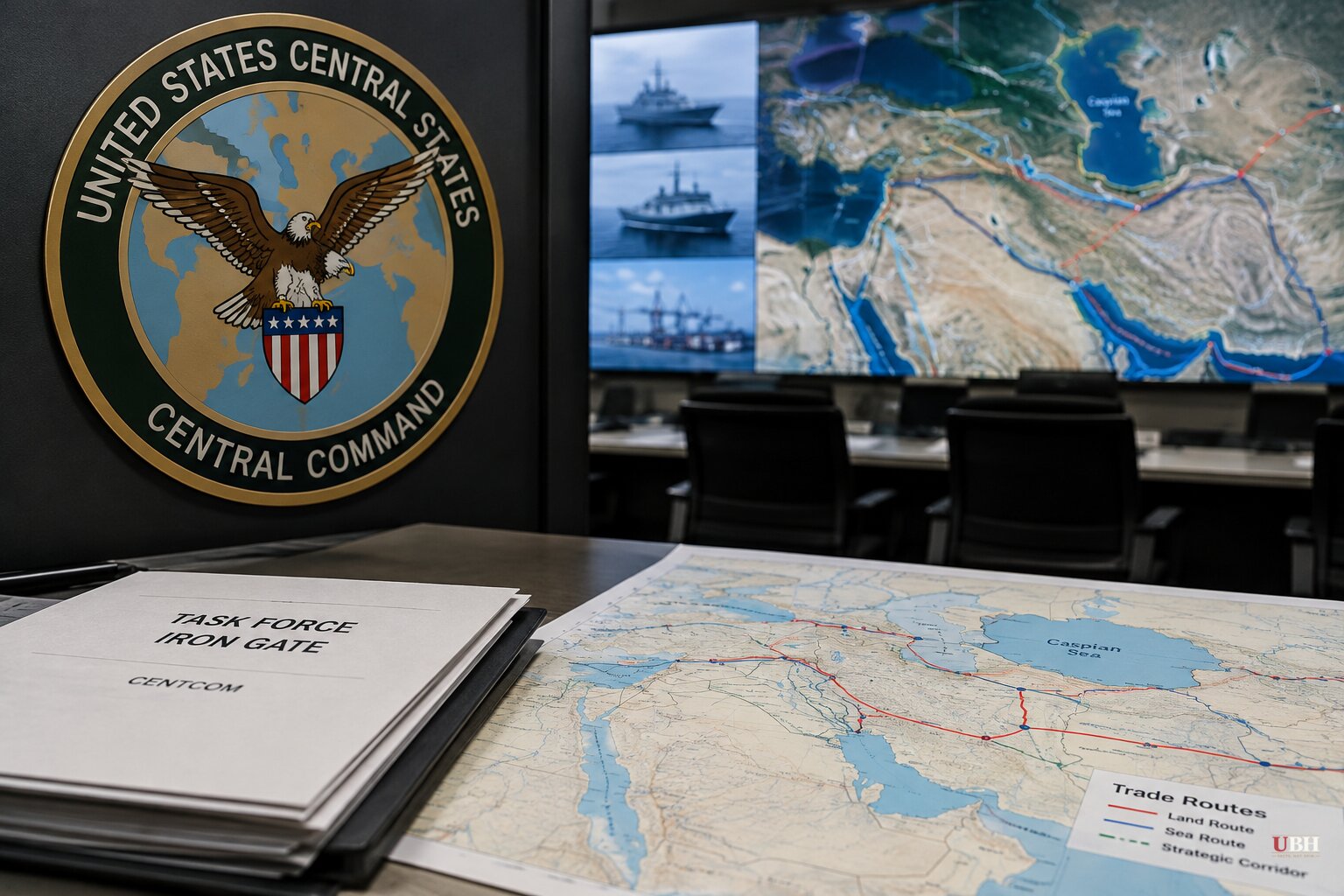
Since the U.S. naval blockade of Iranian ports was announced in July, Iran's trade has shifted toward land and inland-sea routes. On Saturday, Nov. 7, CENTCOM moved to follow it there.
Adm. Brad Cooper, the CENTCOM commander, directed the formation of Task Force Iron Gate. CENTCOM described it as an internal staff of about 20 civilian and military personnel based in Tampa, Florida.
Its stated job is to coordinate with other U.S. agencies to prevent the movement of "advanced weapons systems, dual-use technologies, sanctioned materials, and illegal revenue streams across Iran's land borders and the Caspian Sea."
"The establishment of Task Force Iron Gate reinforces the success of our ironclad blockade against Iran at sea," Cooper said. He said closer work with interagency partners "will further constrain Iran's ability to finance terrorism, rebuild weapons factories, and replenish their military."
What the task force is, and isn't
Twenty people is a staff cell, not a fleet. CENTCOM's announcement describes coordination, monitoring and detection. It does not say how the unit will disrupt anything, and it does not say whether any military operations are involved.
CENTCOM also has not said whether U.S. ships could operate in the Caspian Sea. That is a landlocked body of water bordered by Russia, Azerbaijan, Kazakhstan, Turkmenistan and Iran. Tehran sits roughly 80 miles south of it.
The naval blockade covers Iranian ports on the Arabian Gulf and the Gulf of Oman. It bars imports and exports except humanitarian aid. CENTCOM says enforcement at sea continues against all ships entering or departing those ports.
The $25 billion claim
CENTCOM says the blockade has kept more than $25 billion in Iranian crude oil from being exported. That is the command's own figure, and it has not been independently verified. Much of Iran's crude has gone to Asia.
China, Iran's largest trading partner, has been moving goods by land, especially by train across Central Asia, since the ports were closed. Iran also trades with Russia over land and across the Caspian, where a direct route links southwest Russia and northern Iran.
A June 2026 assessment from the Center for Strategic and International Studies, titled Preventing Iran's Military Reconstitution, flagged the Caspian as a possible channel for military-related components. The same assessment named Pakistan, which shares a land border with Iran, as another potential procurement corridor. Iran's northern ports of Bandar Anzali and Amirabad sit on the Caspian route.
Pressure on several fronts
Iron Gate follows other recent U.S. steps. On Oct. 21, the Treasury Department sanctioned the law firm Karnakis and Karnakis, based in Panama and Greece, along with five people tied to it. Treasury said the firm helped register companies that own shadow-fleet vessels. Roxette Maritime Shipping and Trading S.A. and seven Panama-flagged cargo vessels were also designated, along with shipping agencies in Singapore and Dubai.
"If you are supporting the Iranian regime, we will find you and sanction you," Treasury Secretary Scott Bessent said.
On Friday, CENTCOM publicized a State Department Rewards for Justice offer of up to $20 million, plus possible relocation assistance, for information on Iran's nuclear facilities, equipment and personnel.
Tehran's response
Iran's account of its own strength runs the other way. Iranian Army spokesman Mohammad Akraminia told the state news agency IRNA that the armed forces, "having gained experience from direct confrontation with the United States and the Israeli regime," are "on higher alert and are stronger than they were at the beginning of the war" in February. President Trump said in June that Iran had "been defeated militarily, with no Navy or Air Force."
On missiles, Revolutionary Guard Aerospace Force spokesman Brig. Gen. Hossein Mohebbi said at a Tehran press conference that a self-declared 1,200-mile range limit on Iran's ballistic missiles "has been lifted for us." He did not say whether Iran has missiles that exceed it, only that Iran would "demonstrate these capabilities in practice."
Iran is not known to have missiles beyond that range. A 1,200-mile reach would cover parts of Greece and the Balkans, the Arabian Peninsula, the Levant and most of Egypt. U.S. officials have said technology from Iran's space program could be repurposed for longer-range missiles.
Mohebbi's remarks came days after Supreme Leader Ayatollah Mojtaba Khomeini warned that "any kind and level of threat" from the U.S. or Israel would draw a response without geographic limits.
What to watch
Blockading ports is a visible, enforceable act. Policing thousands of miles of land border, rail lines and a sea shared with Russia is a different problem. It depends on the cooperation of countries that are not part of the U.S. effort.
It is unclear how a 20-person staff in Tampa will turn coordination into interdictions, and whether CENTCOM will say which governments it is working with along those routes.
Sources used for this briefing
7 links from 7 independent newsrooms (syndicated copies of the same report count once)
These are the sources it draws on, linked so you can verify.


