
Unbiased headlines. Facts, not spin.
Every story is an unbiased news briefing written from 110+ sources across the spectrum — sources linked so you can verify it yourself.
 energy
Major Story (7/10)
June 25, 2026 at 08:24 AM
energy
Major Story (7/10)
June 25, 2026 at 08:24 AM
IRGC Declares Only Iran-Approved Hormuz Routes Are Legal, Even as 35 Million Barrels Move Through the Strait
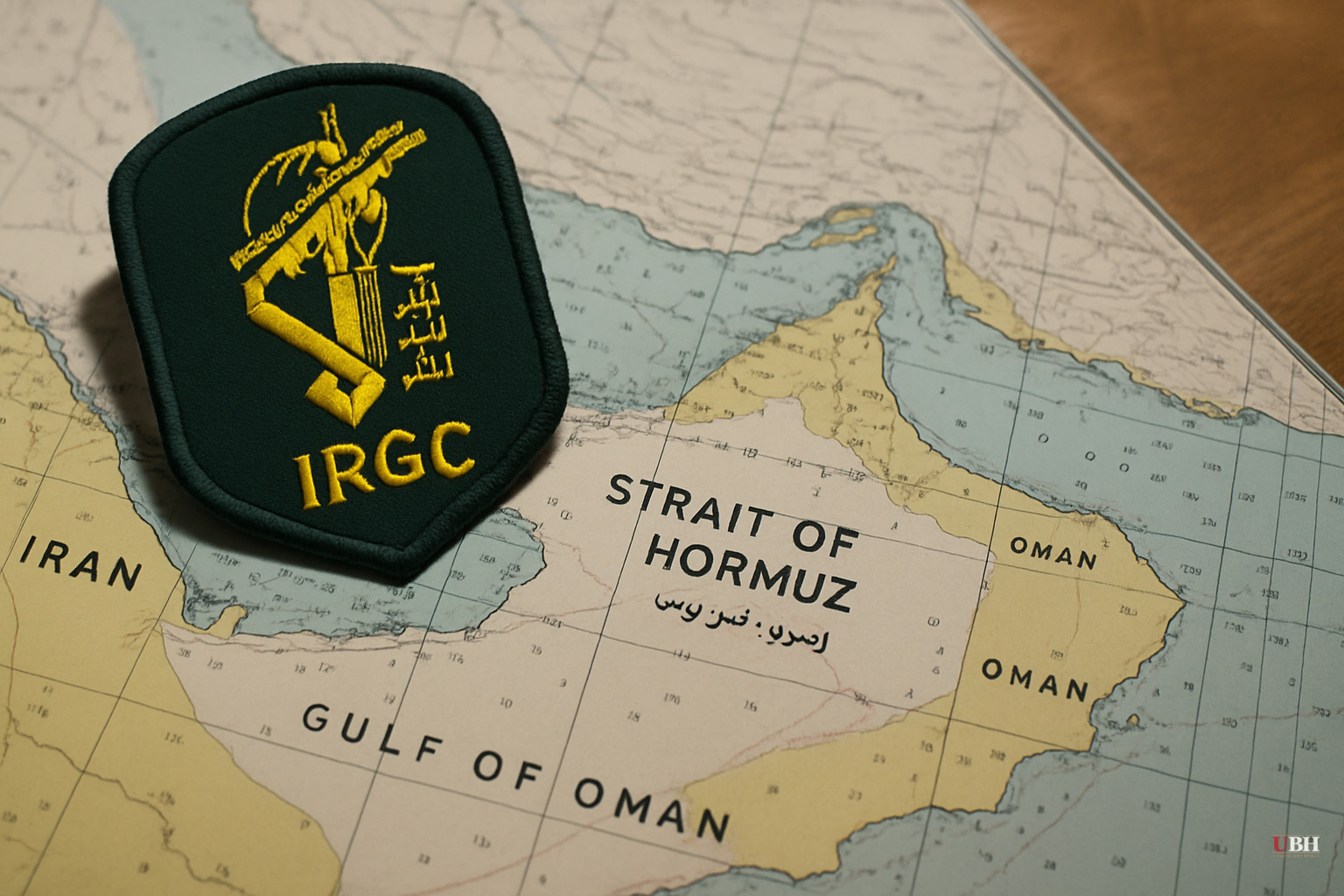
Since the U.S.-Iran MoU was signed and Hormuz traffic began resuming, the core dispute has not been resolved. It has moved from the negotiating table to the shipping lanes.
What Iran Said This Week
The Islamic Revolutionary Guard Corps Navy issued a formal warning, reported by CNBC citing Iranian local media, that navigation outside Tehran's designated corridors is "highly dangerous and prohibited." Any vessel that ignores IRGC instructions, the statement said, will "face action."
The warning came after a naval information group proposed an alternative southern corridor along Omani territorial waters and confirmed it was clear of mines. Iran's response was blunt: coordination with Iranian forces via Tehran's designated communication channel is mandatory.
This is not a fringe position from a rogue IRGC commander. It is the official posture of Iran's naval forces and it directly contradicts what Trump told reporters at the Capitol on Wednesday. "Iran is making very big concessions," Trump said, according to ZeroHedge's coverage. "We're winning by a lot."
Iran's lead negotiator, Parliament Speaker Ghalibaf, told an audience in Baku around the same time that the MoU represents a U.S. defeat. Both governments are claiming the same agreement as a win.
Ships Are Moving. The Dispute Is Not Settled.
The traffic numbers are real. More than 20 oil tankers carrying approximately 35 million barrels of crude have passed through Hormuz since the agreement, according to trade-tracking firm Kpler cited by CNBC. Transits hit 93 over the prior weekend, triple the comparable period before reopening, per ship-tracking firm MarineTraffic. The UN's International Maritime Organization confirmed ships have been transiting under its evacuation framework, though IMO spokesperson declined to name specific vessels.
US Energy Secretary Chris Wright reported roughly 72 ships exited the strait in a single 24-hour window, a figure also reported by ZeroHedge.
But MarineTraffic qualified that number. "Operators are still moving cautiously rather than returning to fully normal traffic patterns," the firm said. Pre-war daily transits exceeded 100 ships. As of Tuesday, CNBC reported 31 verified crossings. Vessels are moving, but the strait is operating at well below its pre-conflict baseline.
One tanker was provisionally booked to ship crude from the Persian Gulf to India at a rate nine times the benchmark for that route, according to shipbrokers cited by ZeroHedge. That premium reflects how much risk the market is still pricing into every transit.
Oil Prices Reflect Cautious Optimism, Not Resolution
WTI crude for August delivery dropped 1.34% to around $69.40 a barrel. Brent fell 1.67% to under $72.51, per CNBC, hovering near pre-conflict levels. Citi told clients the worst may be over and now expects Brent to fall to $60-$65 a barrel over the next six to twelve months as Hormuz flows normalize, calling any summer price rally something to be "faded."
Helima Croft, head of global commodity strategy at RBC Capital Markets, offered a more cautious read. Any resolution that leaves Iran with operational control of the strait, she said, will produce "appreciably lower" traffic than pre-war levels for the foreseeable future. That is the scenario the IRGC's own statements this week are pointing toward.
China's Demand Problem Adds a Separate Pressure
On the demand side, China is not racing to absorb the returning crude. Bloomberg, cited by ZeroHedge, reported that run rates at China's independent "teapot" refiners fell to 50.5% in the week ending June 21, the lowest since 2017, dropping below pandemic-era lows. High feedstock costs, weak domestic fuel demand, and restrictions on fuel exports have crushed their margins.
Emma Li, lead China market analyst at Vortexa, said teapot inventories in Shandong remain above 2025 highs, meaning these refiners are not short of supply. The drag is economics, not access. Li projected July could represent a trough before utilization recovers. Asian refiners more broadly have slowed fresh purchases of Middle Eastern crude after a three-week buying spree, with oil majors and traders stepping in to absorb some surplus barrels, Bloomberg reported.
The Strongest Case for the MoU
Critics of the deal who focus on Iran's continued assertions of sovereign control over the strait have a legitimate point. No military confrontation was ever going to produce a signed document where Iran formally surrendered authority over its own coastline. The practical question was whether ships could move again without being seized or threatened. On that narrow measure, the MoU has produced real movement: 35 million barrels in transit, hundreds of stranded seafarers beginning to leave, and oil prices falling to pre-war levels. An imperfect agreement that gets tankers moving is meaningfully better than a perfect stalemate that doesn't.
The problem is that the IRGC's language this week is not consistent with ships moving freely. It is consistent with ships moving under Iranian supervision, which is exactly what Treasury Secretary Scott Bessent warned against when he sanctioned Iran's Persian Gulf Strait Authority in May, describing it as an attempt to "extort global maritime trade."
The Unresolved Question
The MoU did not resolve who controls Hormuz. It produced a temporary operational understanding while that question remains open. Polymarket's prediction market as of mid-week had 53% of traders betting Hormuz traffic would NOT return to normal by July 31, according to ZeroHedge.
The concrete next test: whether the permanent shipping framework Iran insists on, with Iranian-designated corridors and mandatory coordination, becomes the de facto standard, or whether the IMO-backed evacuation corridor transitions into something genuinely multilateral. Those are structurally different outcomes for every shipper, insurer, and oil importer that depends on the strait.
Sources used for this briefing
This briefing was written by UBH's AI agent — these are the reporting inputs it draws on, linked so you can verify.


