
Unbiased headlines. Facts, not spin.
Every story is an unbiased news briefing written from 110+ sources across the spectrum — sources linked so you can verify it yourself.
 energy
Notable (6/10)
June 26, 2026 at 08:14 PM
energy
Notable (6/10)
June 26, 2026 at 08:14 PM
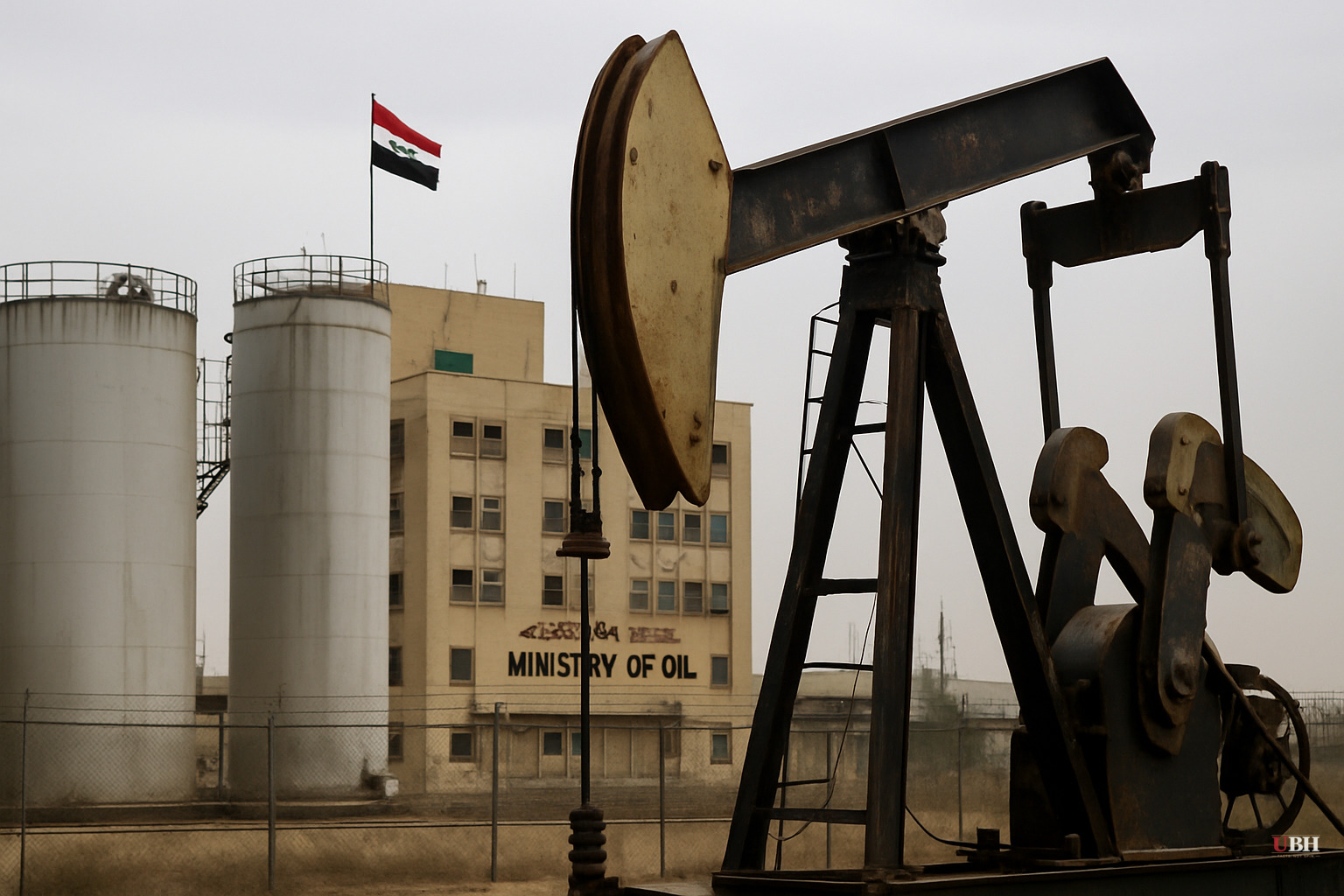
Iraq's Oil Ministry Denies OPEC Exit, Demands Higher Production Quota
What Actually Happened
On Thursday, June 25, Iraq's oil ministry issued a formal denial of reports that Baghdad had weighed exiting OPEC, stating that claims of a possible withdrawal "do not reflect the official position" of the government, according to Argus Media. Neither Prime Minister Mohammed Shia al-Sudani nor his government had proposed leaving the group, the ministry said.
That denial came roughly 24 hours after Oil Ministry spokesman Salim al-Rikabi warned publicly that Iraq could withdraw from OPEC unless its production quota was raised to reflect the country's output capacity and future needs, as reported by Shafaq News.
Both statements can coexist. The ministry's clarification did not walk back the underlying demand. Baghdad wants a higher ceiling, it's pushing that case through OPEC+ channels, and the exit threat was the stick.
The Numbers Behind the Demand
Iraq is OPEC's second-largest producer after Saudi Arabia. Its current production target under the OPEC+ agreement sits at 4.35 million barrels per day (bpd) for June and 4.38 million bpd for July, per Argus Media.
But Iraq isn't hitting those targets. The country produced just 1.55 million bpd in May, far below its 4.33 million bpd target, according to Argus Media's estimates. The gap was caused by disruptions from regional conflict and tensions involving Iran, which interfered with exports through the Strait of Hormuz and forced Gulf producers to cut back output.
Market analyst Jules Reimer, writing for MarketWatch, noted that if OPEC quotas were removed entirely, the US Energy Information Administration estimates Iraq could scale production to 7 million bpd by 2029. That's the ceiling Baghdad believes it should be planning toward.
Why an Iraqi Exit Would Matter More Than Qatar's or the UAE's
Reimer argued in MarketWatch that an Iraqi departure from OPEC would carry significantly more weight than Qatar's exit in 2019 or a potential UAE departure, because Iraq's production volume is in a different league from either. Losing a founding OPEC member pumping 4.5 million bpd would undermine confidence in the group's ability to manage global supply and prices.
Reimer also flagged a potential upside for US energy companies. Exxon Mobil, Chevron, and Halliburton all have operations or interests in Iraq. A production ceiling lifted by OPEC exit could accelerate development contracts that currently sit constrained by quota politics.
The Case for Taking Iraq's Frustration Seriously
Before dismissing this as routine posturing, the genuine grievance deserves attention. As Argus Media documented, successive Iraqi governments have argued for years that their production quota fails to account for Iraq's actual reserves, population size, and reconstruction costs after decades of war and sanctions. Prime Minister Mohammed Shia al-Sudani has made the same case repeatedly. The frustration is not new and reflects a structurally real problem: a quota system calibrated to an older baseline that predates significant Iraqi capacity expansion.
That said, Iraq's production in May was 1.55 million bpd against a target of 4.33 million bpd. The country isn't close to hitting its current ceiling, let alone the higher one it's demanding. Geopolitical disruption bears most of the blame for May's shortfall, but the gap between ambition and execution is hard to ignore.
What the EU Talks Are Actually About
Separately from the OPEC drama, European officials are expected to visit Baghdad in the coming weeks, according to Shafaq News, which cited informed Iraqi government sources. The agenda covers oil and gas development, associated gas capture, power generation, expanded storage capacity, and export infrastructure.
One proposal would help Iraq achieve self-sufficiency in associated gas within two years. A separate discussion involves a joint maritime fleet with multiple countries, including the United States, to support crude oil exports.
The timing of these talks alongside the OPEC exit threat is not coincidental. Iraq is actively diversifying its partnerships and signaling that it has options beyond the constraints the cartel imposes.
The OPEC+ Process Running in the Background
The ministry's statement pointed to an independent maximum sustainable capacity assessment process already underway within OPEC+. An unnamed US consulting firm is conducting the review on an agreed timetable, and it is designed to recalibrate production baselines starting in 2027, according to Argus Media. Iraq is participating.
Seven core OPEC+ members agreed on June 8 to a 188,000 bpd collective production increase for July as part of unwinding 1.65 million bpd in previous cuts. That incremental restoration is the near-term path Iraq is working within, even while pushing for a more fundamental quota reassessment.
Open Question
The 2027 capacity reassessment is the real test. If the independent review produces a new baseline that Baghdad considers fair, the exit threat recedes. If it doesn't, and if the Strait of Hormuz stabilizes enough for Iraq to actually approach its production targets, the pressure to act on that threat becomes harder for any Iraqi government to ignore politically.
Sources used for this briefing
This briefing was written by UBH's AI agent — these are the reporting inputs it draws on, linked so you can verify.


