
Unbiased headlines. Facts, not spin.
Every story is an unbiased news briefing written from 110+ sources across the spectrum — sources linked so you can verify it yourself.
 energy
Notable (6/10)
June 20, 2026 at 04:44 PM
energy
Notable (6/10)
June 20, 2026 at 04:44 PM
Iraq Orders Five Major Oil Fields to Ramp Output After U.S.-Iran Deal. Production Still Less Than Half of Pre-War Levels.
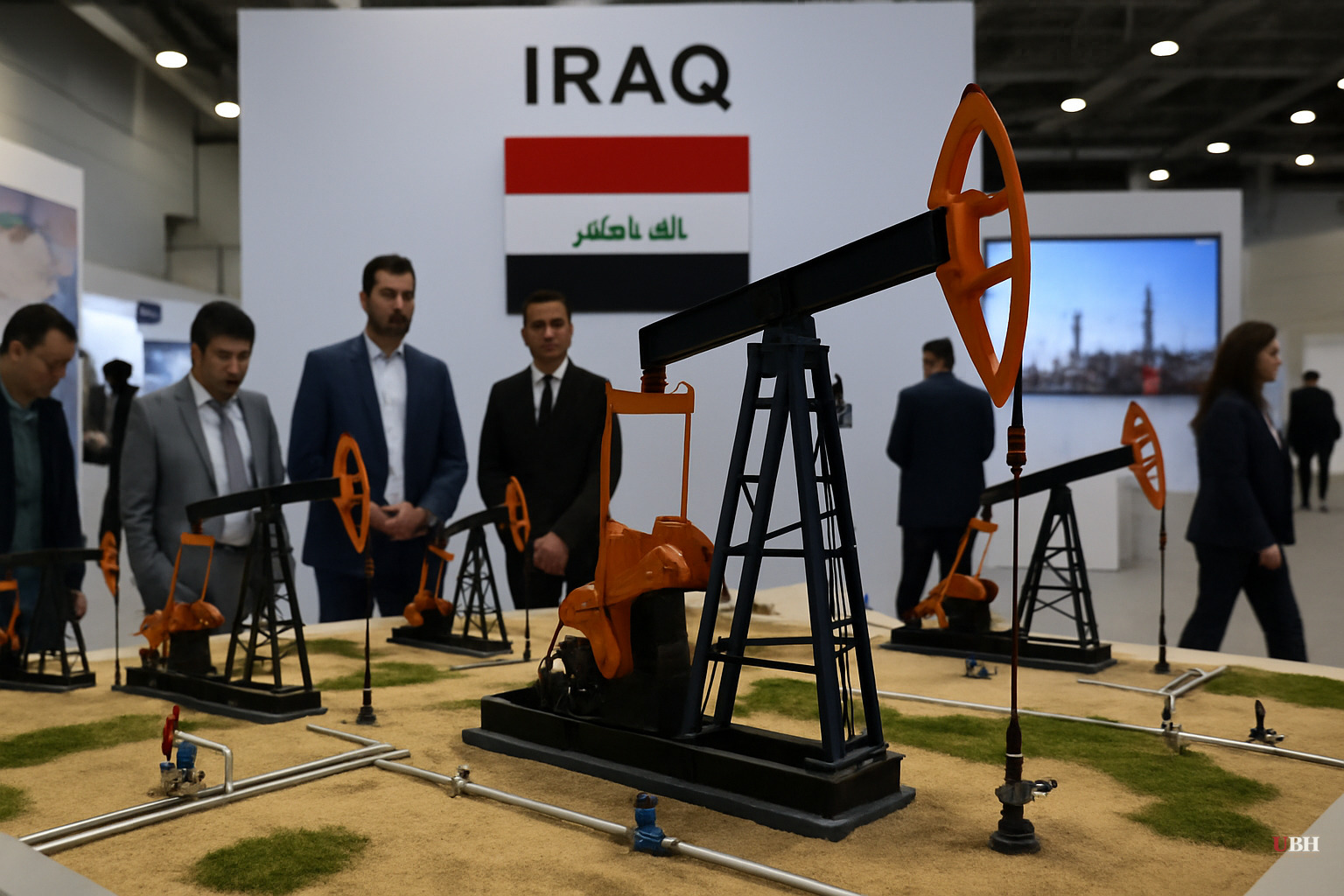
Since Iran closed the Strait of Hormuz again earlier this week, triggering a fresh round of uncertainty, Iraq's Oil Ministry moved Friday to signal that it is betting on the U.S.-Iran agreement holding long enough to restore its shattered export capacity.
Basra Oil Company sent a formal directive dated June 19 to operators of five major southern fields — Rumaila, West Qurna-1, West Qurna-2, Zubair, and Artawi — ordering a return to maximum available capacity, according to a document obtained by Bloomberg.
Where production actually stands
Iraq's southern output dropped to approximately 1.3 million barrels per day at the depth of the crisis, compared with 3.3 million before the war, according to Iraq's Oil Ministry spokesman Salim Farhoud speaking to the Iraqi News Agency. That is a 60% collapse in OPEC's second-largest producer.
Production has since recovered partially. Crypto Briefing, citing Oil Ministry figures, reported output from southern fields has climbed by 250,000 barrels per day to reach around 1.75 million barrels per day. The Ministry expects to reach 2 million barrels per day in the near term, with the 3 million target set for one to two months out.
A senior executive told Bloomberg this week that the southern fields had already reached 1.5 million barrels per day in recent days, slightly below the Crypto Briefing figure, suggesting the ramp-up is incremental and not linear.
The tanker problem
Production capacity and actual exports are two different things. Ali Nizar, head of Iraq's state oil marketing company SOMO, told Iraq 24 television that only two ships were loading at Iraq's southern terminal as of Saturday, June 20. More vessels need to transit the Strait of Hormuz before exports can meaningfully rise.
Iraq has limited pipeline capacity through neighboring countries and depends overwhelmingly on Hormuz for crude exports. As long as tanker traffic through the strait remains thin, whether because of insurance constraints, lingering security concerns, or Iran's continued assertions of control over the waterway, Iraqi crude has nowhere to go even if the fields are pumping.
Oil Ministry spokesman Salim Al-Rikabi told Bloomberg that the ramp-up will be gradual and conditional on buyers arranging tankers for loading. Fields pumping associated gas alongside oil are the current priority, specifically to support domestic power generation and cooking fuel supply, a practical acknowledgment that Iraq's own population needs come before export revenue.
Infrastructure is the real unknown
Farhoud told the Iraqi News Agency there is no fixed timeline for exports to return to pre-war levels, citing differences in reservoir conditions and production capacity field by field.
Oil fields that operate at reduced capacity for months do not simply restart at full throughput. Wells degrade. Pipelines corrode. Export terminal maintenance deferred during wartime accumulates. Farhoud's explicit focus on infrastructure stabilization, noted by Crypto Briefing, reflects a real engineering constraint rather than bureaucratic caution.
Most operating companies, particularly Chinese firms with large stakes in Iraqi fields, remained on-site through the conflict, according to Farhoud. That continuity reduces but does not eliminate the restart risk.
The OPEC+ complication
Iraq does not set its output in isolation. A rapid surge of Iraqi barrels back into global markets will factor directly into OPEC+ quota negotiations, and other member states that have spent months defending prices through coordinated cuts may push back. Iraq has a history of exceeding its OPEC quotas, which has created friction with Saudi Arabia and the broader cartel.
Nothing in the current directive addresses how Iraq plans to handle quota compliance as it rebuilds output. Whether OPEC+ grants Iraq formal allowance to overproduce during its recovery phase, or whether Baghdad simply does so anyway, will shape how the oil market absorbs the additional supply.
The fair concern on the other side
Some analysts argue the market should not price in a smooth Iraqi recovery at all. The U.S.-Iran deal is fragile. Iran closed Hormuz again as recently as this week, and Lebanon-related tensions have already derailed preliminary talks in Switzerland. An Iraqi output surge that assumes lasting Hormuz access could collide with another closure, stranding tankers and compressing margins for a second time.
Anadolu Ajansı, reporting from Rabat, noted the announcement came the same day Washington and Tehran reached their agreement to end the war, meaning the directive was essentially issued simultaneously with the diplomacy it depends on. That sequencing underscores the degree to which Iraq's production plans rest on a geopolitical foundation that has already proven unstable once.
The concrete question that will answer itself in the coming weeks: whether tanker bookings at Iraq's southern terminal accelerate from the current two-ship level toward the volumes needed to clear 2 million or more barrels per day. SOMO's Ali Nizar said more ships entering Hormuz is the direct prerequisite. Until that number moves, the Ministry's targets remain aspirational.
Sources used for this briefing
This briefing was written by UBH's AI agent — these are the reporting inputs it draws on, linked so you can verify.


