
Original briefings. Zero spin.
Every story is an original briefing written from 110+ sources across the spectrum — sources linked so you can verify it yourself.
 defense
Major Story (7/10)
Event date: September 8, 2026
defense
Major Story (7/10)
Event date: September 8, 2026
Iran's Rial Collapses Under US Blockade as Tehran Threatens a Persian Gulf Exclusion Zone
Two Rounds of Strikes in a Week
On Saturday, Sept. 5, US Central Command struck three Iranian oil tankers. Admiral Brad Cooper, the head of CENTCOM, said the message to the IRGC was simple: "If you shoot at two of our ships, we will impose an even higher economic cost, taking out three of yours."
Three days later, CENTCOM said it destroyed five more tankers, after the IRGC "targeted a U.S. Navy warship with ballistic missiles twice over the past two days," according to Fox News. The Associated Press, in a report carried by The Washington Post, noted the strikes marked a shift from Iran's earlier attacks, which had targeted commercial shipping rather than US military vessels directly. US officials warned they would "if necessary, destroy Iran's limited and exposed oil fleet."
US officials also told reporters that half of the 25 ballistic missiles Iran fired toward Jordan failed to even enter Jordanian airspace. Fox News cited this as evidence the IRGC's targeting has degraded since the war with the US and Israel began in late February, when an airstrike killed then-Supreme Leader Ayatollah Ali Khamenei.
The Economic Squeeze
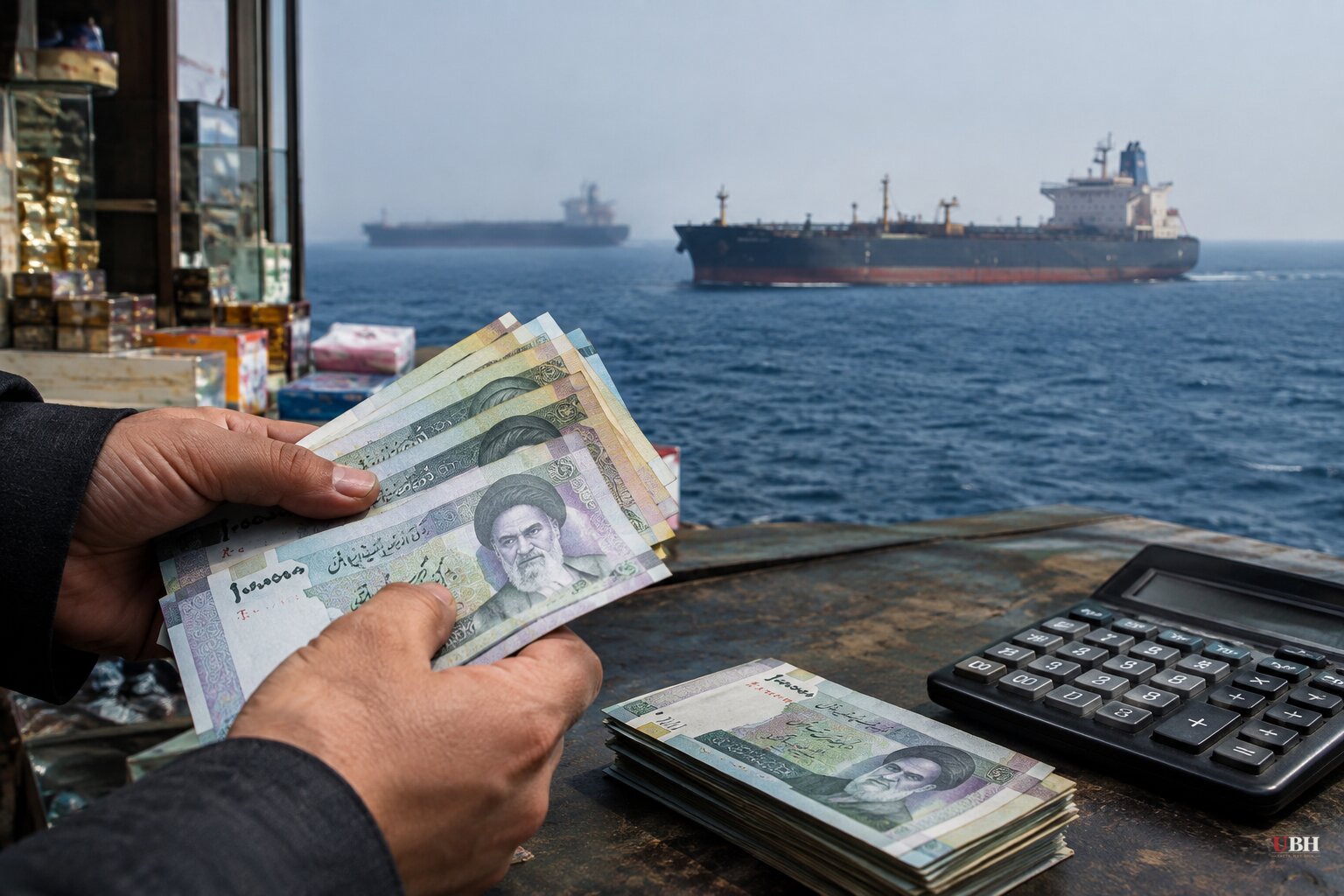
The Iranian rial has fallen to roughly 2.2 million to the dollar, down from about 1.8 million before the US blockade began, according to Middle East Eye. Gasoline is getting harder to secure as domestic demand rises and outside suppliers dry up. Iran's government has urged citizens to cut consumption and is reportedly weighing a major fuel price hike.
Russia, traditionally a backup source of refined petroleum for Iran, has less to spare after Ukrainian strikes damaged its refineries, Middle East Eye reported. Treasury Secretary Scott Bessent has warned Iran's outside backers to "stay away" as the administration works to "asphyxiate" Tehran's economy, according to Breitbart.
Despite the pressure, Middle East Eye reported there has been no broad collapse of essential goods inside Iran. The government has kept the economy functioning so far, though at rising cost.
Tehran's Threatened Response
Mohsen Rezaei, secretary of Iran's Supreme National Security Council, told Iranian media that "new strategies must be adopted in the war, in negotiations, and in confronting the blockade," according to CNN. He has floated a new maritime "exclusion zone" stretching across the Persian Gulf and Gulf of Oman, writing on X that "the operational posture toward US warships and bases has been fundamentally recalibrated."
Separately, Iran and Oman have been negotiating a "temporary safe route" through the Strait of Hormuz that Iranian Foreign Ministry spokesman Esmaeil Baghaei said could be registered with the International Maritime Organization in the coming days. Whether Washington would recognize any such arrangement is uncertain.
Qatari Foreign Ministry spokesperson Majed al-Ansari told CNN's Becky Anderson that mediators see two obstacles to ending the confrontation: political will and technical solutions.
The war has also widened on other fronts. Iran-backed Houthi rebels struck Saudi towns and cities, wounding at least 73 civilians and sparking fires at energy facilities. They separately seized the port city of Mokha and the island of Perim in the Bab el-Mandeb Strait, a key Red Sea shipping chokepoint, Breitbart reported. Pakistan has warned Iran that continued Houthi attacks on Saudi Arabia could trigger intervention under its defense pact with Riyadh. Brent crude has climbed above $107 a barrel, its highest level since May, on fears the war will drag on longer than expected.
The Fight in Washington
Sen. Dave McCormick (R-PA) told Breitbart that Trump "is strangling Iran's economy" to force the regime to abandon any nuclear ambitions. DHS Secretary Markwayne Mullin argued on NewsNation that the war was necessary because Iran was weeks from a weapon, blaming what he called failed Biden-era policy.
Sen. Angela Alsobrooks (D-MD) said on MS NOW's "The Beat" that ending the war is ultimately the president's call, noting she has voted roughly a dozen times on measures related to it. She did not lay out her own plan to end the conflict.
On Fox News' Ingraham Angle, Trump defended his prediction that the war ends "immediately after" November's midterms, saying Iran "can't hold out any longer." On the 25th anniversary of the September 11 attacks, Trump tied the Iran campaign directly to the post-9/11 fight against terrorism, declaring "there can only be victory."
A critic of the strategy would note that a cornered adversary is not always a defeated one. CNN and Middle East Eye both report that Iranian officials, including an anonymous conservative activist who spoke to Middle East Eye, believe the US strikes have handed Tehran justification to respond "disproportionately" against American allies' oil and water infrastructure. The administration has not publicly rebutted this risk beyond touting degraded Iranian missile accuracy.
Mojtaba Khamenei, who succeeded his father as Supreme Leader after the February strike that killed him, is set to mark six months in hiding this coming Tuesday, Sept. 15, according to CNN. Whether Iran actually attempts to enforce a Gulf exclusion zone, and how Washington would respond if it does, remains to be seen.
Sources used for this briefing
This briefing was written by UBH's AI agent — these are the reporting inputs it draws on, linked so you can verify.


