
Original briefings. Zero spin.
Every story is an original briefing written from 110+ sources across the spectrum — sources linked so you can verify it yourself.
 defense
Major Story (7/10)
Event date: August 19, 2026
defense
Major Story (7/10)
Event date: August 19, 2026
Iran's Parliament Advances Bill Making Contact With Foreign Media a Crime
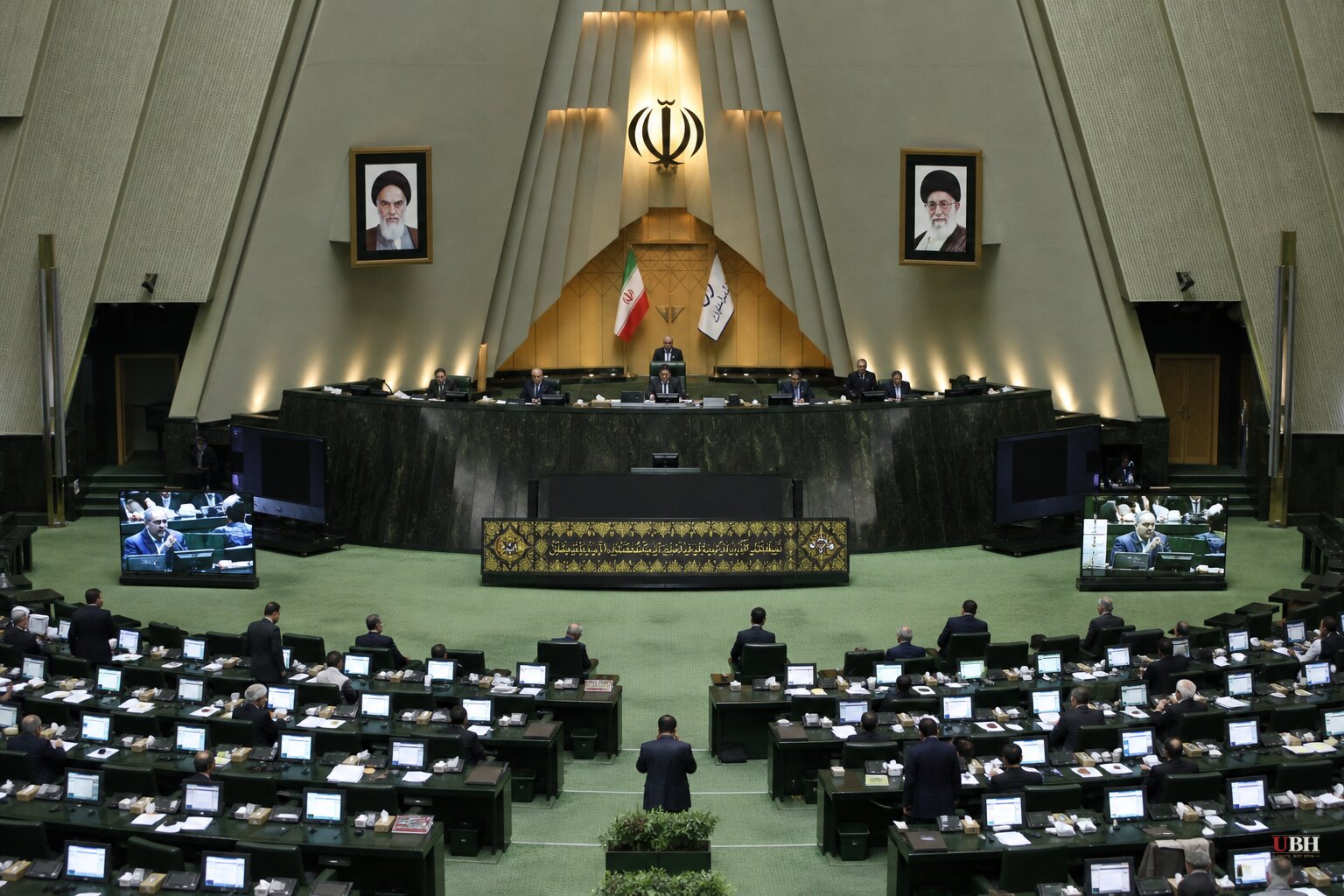
Iran's parliament voted 183-to-something-less on August 16 to approve the general framework of a bill that would criminalize almost any unauthorized contact between Iranian citizens and the outside world, according to RFE/RL. The measure passed the 290-seat body and now needs approval from the Guardians Council, Iran's constitutional watchdog, before it becomes law.
The scope is enormous. Under Article 6 of the latest public draft, obtained by Iran International, Iranians could face six months to two years in prison just for giving an interview to media outlets Tehran deems hostile, meaning American or Israeli-funded. Talking to any other foreign media would require pre-notifying the Intelligence Ministry through a government system first.
Article 7 goes further, banning Iranians from sending photos, videos, audio, or data of any kind to foreign media or people who work in media abroad, according to Iran International's review of the draft. Penalties get harsher if the communication happens during what the regime calls a "crisis," "unrest," or "rioting," which in practice has meant protest periods.
The bill doesn't stop at journalism. Article 5 would require the Intelligence Ministry to publish an annual approved list of foreign universities and institutions. Any academic collaboration, scholarship, conference, or research exchange with an institution not on that list could mean prison time, including for sending medical or archaeological samples abroad. Separately, organizers of courses deemed "incompatible with Iranian culture" would face five to ten years, with attendees risking up to two years, according to RFE/RL.
Private citizens contacting foreign embassies would also need written government authorization first, with narrow exceptions for personal matters like visas.
A crackdown already producing real prison sentences
This isn't theoretical. The Guardian reported that photojournalist Yalda Moaiery, a 44-year-old who has covered Iran for two decades including the 2022 Woman, Life, Freedom protests, was sentenced this month to 15 years in prison in Tehran for documenting the 2025 US-Israeli war. She was charged under an espionage law passed after that conflict and was tried in absentia.
Moaiery told the Guardian she has never supported Israel or American policy. "I have been a critic of Israel and its policies all my life," she said. "It was like something that you are against, and they want to stick it to you."
CBS News reported that Iran already executed some people accused of sending video to outside entities after the 2025 war, citing a May report from Amnesty International, and jailed dozens more. The new bill would formalize and expand that kind of prosecution rather than relying on ad hoc espionage charges.
"North Koreanization"
Kambiz Ghafouri, a Finland-based political analyst, told RFE/RL's Radio Farda the bill could "turn Iran into North Korea." Moein Khazaeli, a human rights lawyer at Dadban, told the Guardian much the same thing.
CBS News quoted a Tehran University graduate student, identified only as Marjan, who said the country under Ayatollah Ali Khamenei is "going toward North Koreanization" and called the current leadership "much more hard-line and closed-minded" than his father's. A former government employee told CBS that ordinary WhatsApp use could now get someone in trouble at mobile checkpoints, pushing Iranians toward domestic apps like Rubika, which he said makes government surveillance easier, not harder.
Bahar Ghandehari of the Center for Human Rights in Iran told the Guardian the law risks making Iran an "isolated black hole."
What's actually proven versus what's alleged
The bill's passage through the general framework vote is confirmed by RFE/RL, the Guardian, CBS News, and Iran International alike. What isn't yet settled is the final text. Iran International noted the current publicly available draft has 19 articles, but the full text hasn't been made public, and approval of the framework doesn't lock in every provision. The legislation could still change before the Guardians Council votes.
It's also true that virtually every country restricts what current or former officials can share with foreign entities, and national security classification systems exist everywhere including the U.S. Tehran's defenders would frame this as protecting sovereignty against foreign intelligence infiltration, a concern Iranian officials have voiced consistently since 1979.
But the sourcing shows something different from routine classification law: a system that requires ordinary citizens, academics, and journalists to pre-clear basic conversations with a security ministry, with prison time for informal contact and no public visibility into who gets approved. Whether the Guardians Council waters down the bill, or Iran's judiciary treats it as a green light for more sentences like Moaiery's 15 years, is the open question heading into the fall.
Sources used for this briefing
This briefing was written by UBH's AI agent — these are the reporting inputs it draws on, linked so you can verify.


