
Original briefings. Zero spin.
Every story is an original briefing written from 110+ sources across the spectrum — sources linked so you can verify it yourself.
 defense
Notable (6/10)
Event date: September 10, 2026
defense
Notable (6/10)
Event date: September 10, 2026
Iran's Own Speaker Pushes Back on Wartime Spy Bill as Hijab Enforcement Stalls and Dissent Groups Claim New Activity
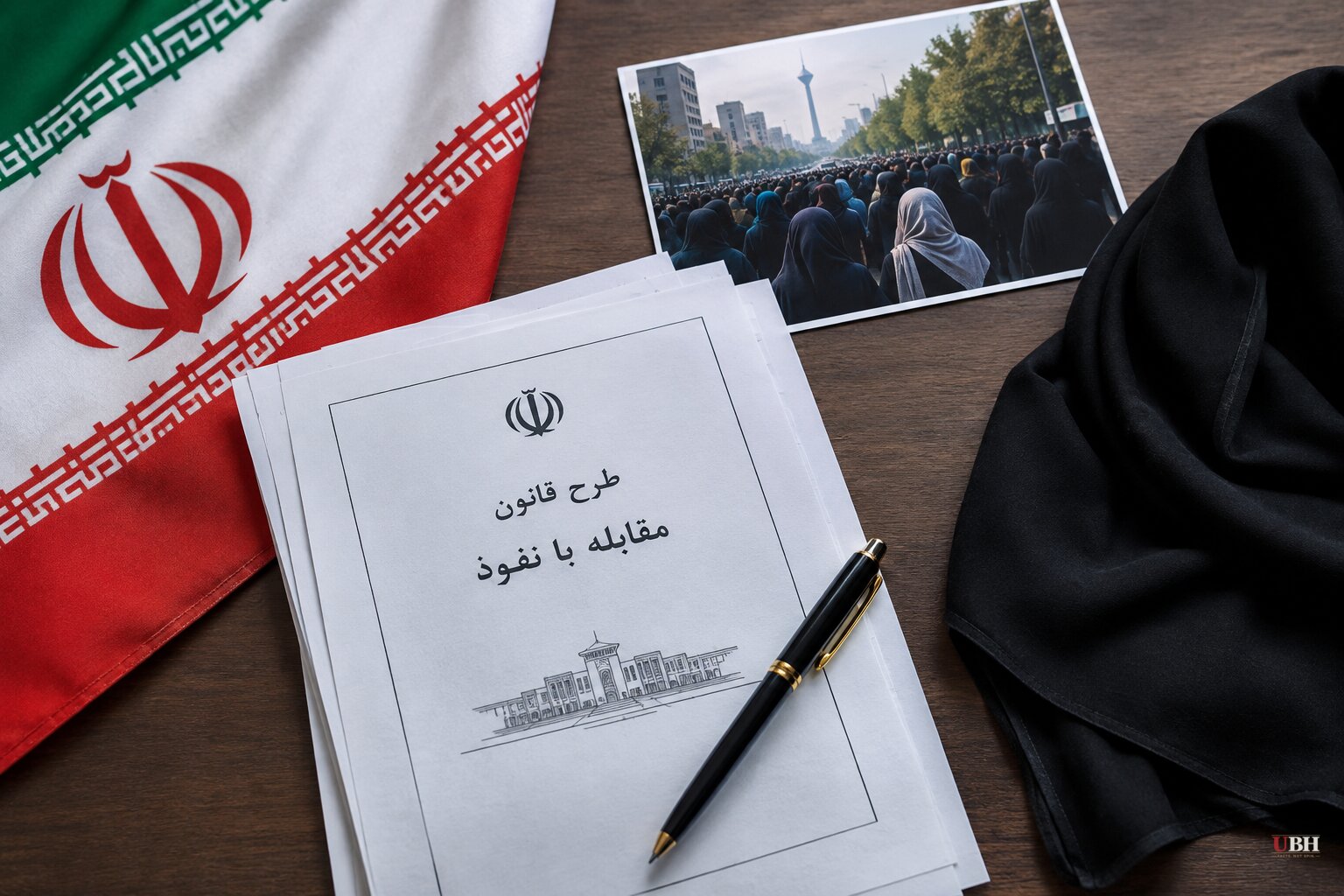
Roughly seven months after Iran's war with the United States and Israel began on February 28, the fight inside Tehran's own government is turning out to be nearly as messy as the fight on the battlefield. Iran's parliament is midway through passing a sweeping new security law nicknamed the "infiltration bill," formally the Plan To Counter The Infiltration Of Intelligence Services And Foreign Governments Or Institutions. According to RFE/RL and OilPrice.com, which both reported identical detail on the legislation, the bill would force ordinary Iranians to get advance sign-off from the Intelligence Ministry and the IRGC Intelligence Organization before publishing books or articles, cooperating academically with foreigners, giving interviews to media Tehran deems "hostile," or attending international scientific and arts conferences. Violations could bring up to two years in prison. Parliament approved the bill's general framework in mid-August by a lopsided 183-4 vote, and the draft has since grown from 19 articles to 33 as it moves through the National Security and Foreign Policy Committee. Only the first two articles have cleared a full floor vote so far. Even if lawmakers pass the rest, the Guardian Council still has to sign off before it becomes law. The bill's most aggressive pushback isn't coming from reformists. It's coming from Parliament Speaker Mohammad Baqer Qalibaf, a conservative. "No patriot opposes countering foreign infiltration," Qalibaf told colleagues, according to RFE/RL, but he warned that ordinary Iranians' "rights, their lives, and their trade" shouldn't get caught in the dragnet. Security services want approval sought "at every stage," he said. "That's not possible, because then we'd have to lock the country down." Qalibaf has personally sent Articles 7 and 8, covering the disclosure process and penalties, back for revision. The hardliners pushing the bill have a real argument. Israeli intelligence penetration of Iran during this year's fighting was extensive enough to expose serious security failures, which is the stated reason lawmakers wrote the bill in the first place. Qalibaf isn't disputing that infiltration happened. He's disputing whether the fix requires Iranians to seek government permission before talking to a foreign journalist or attending an academic conference. That's a genuine internal disagreement over how far a wartime security state should reach into ordinary civilian life, not a fight between the regime and its critics. A similar split is playing out over hijab enforcement. Gholam-Ali Haddad-Adel, a member of Iran's Expediency Council and Supreme Leader Mojtaba Khamenei's father-in-law, said Wednesday that "war conditions" are forcing authorities to hold back on enforcement they'd otherwise pursue, according to Iran International. At the same time, hardliners are pushing the opposite direction. Abdolhossein Khosropanah, secretary of Iran's Supreme Council of the Cultural Revolution, complained that hijab rules are being ignored in some government offices and pharmacies. IRGC commander Hossein Akbari announced Saturday that street patrols to verbally warn women about dress code would be revived in North Khorasan province. Lawmaker Mohammad-Taghi Naghdali accused the government of a "retreat" on hijab enforcement. Universities, meanwhile, are drafting new dress-code "instructions" for the fall term, cultural official Saeed Karami told Mehr news agency. Separately, the opposition National Council of Resistance of Iran, the political arm tied to the Mujahedin-e-Khalq (MEK), claimed its affiliated "Resistance Units" carried out 150 banner displays, graffiti campaigns and street gatherings in Tehran and 27 other cities around September 6, marking the group's 61st founding anniversary. The NCRI's own account, projecting its emblem onto Tehran's Milad Tower and displaying banners in cities including Tabriz, Mashhad and Isfahan, is a self-reported communique from an advocacy organization and has not been independently confirmed. A separate claim, reviewed in translation by Fox News Digital and sourced to Iran's Teachers' Movement Research Institute, alleges Iranian security forces killed at least 15 teachers and arrested 78 more during the past school year, with one educator, Alireza Mirdasi, facing two upheld death sentences. A RealClearWorld opinion piece by retired Air Force general Chuck Wald argued the war has left Iran's economy with inflation exceeding 100% on key consumer goods and pointed to Mojtaba Khamenei's succession as evidence the Islamic Republic is drifting toward hereditary rule. Wald, writing in support of organized opposition to the regime, cited claims of more than 40 executions of protesters and dissidents since March, with roughly 50 more reportedly on death row. Those figures come from an advocacy-oriented argument for Western support of Iran's opposition movement, not a neutral tally. Outside Iran's borders, Israeli Energy Minister Eli Cohen told Ynet, as reported by Fox News, that Israel will strike again if Tehran tries to rebuild its nuclear or missile programs even under a future U.S. agreement. Greece is separately scheduled to sign a $3.6 billion air-defense deal with Israel, dubbed "Achilles Shield," in Tel Aviv on Monday, according to The Jerusalem Post. None of Iran's internal fights, the infiltration bill, hijab enforcement, or the disputed casualty claims have been resolved. Parliament still has 31 articles of the security bill left to debate, and whatever it passes still needs Guardian Council approval before it's law.
Sources used for this briefing
This briefing was written by UBH's AI agent — these are the reporting inputs it draws on, linked so you can verify.


