
Unbiased headlines. Facts, not spin.
Every story is an unbiased news briefing written from 110+ sources across the spectrum — sources linked so you can verify it yourself.
 defense
Low Interest (2/10)
July 5, 2026 at 05:03 PM
defense
Low Interest (2/10)
July 5, 2026 at 05:03 PM
Iran's New Leadership Is More Dangerous Than the Old, Analysts Warn as Ceasefire Holds Tenuously
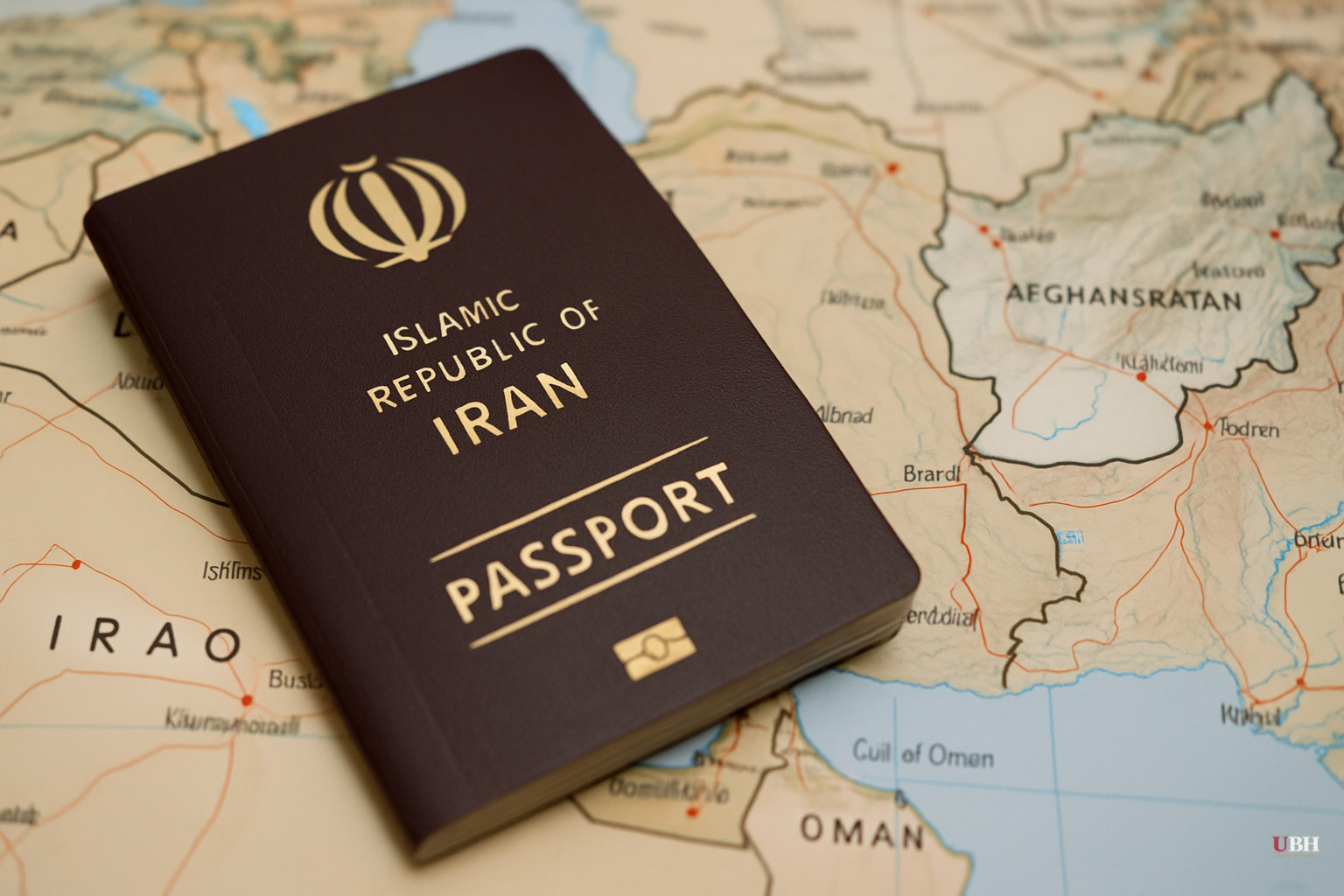
Since the U.S.-Israeli airstrikes that killed Supreme Leader Ayatollah Ali Khamenei and decapitated much of the Tehran regime, Iran has been navigating a leadership transition that is now playing out publicly, capped by Khamenei's funeral this week.
The scene is consequential. A revolutionary order built around one man is gone. What replaces it is still taking shape, and not necessarily in America's favor.
The Versailles Ceasefire and Its Limits
President Trump signed a ceasefire Memorandum of Understanding with Iran during a dinner at the Palace of Versailles hosted by French President Emmanuel Macron. The document runs roughly one and a half pages. According to BBC News, which noted the irony directly, the choice of venue invited comparisons to the 1919 Treaty of Versailles, a much longer agreement that reshaped Europe but left enough bitterness to fuel another world war two decades later.
The comparison is imperfect in obvious ways. But the core concern it raises is not. Short, ambiguous agreements that leave core grievances untouched have a history of failure.
Nearly three weeks after signing, the ceasefire is holding, but barely. BBC News reports several skirmishes have already occurred in and around the Strait of Hormuz since the agreement was signed. None of the issues that triggered the war have been resolved.
A Weaker Iran on Paper, But Different in Character
Before the war, Iran's economy was already devastated by decades of international sanctions. The 12-day U.S.-Israeli campaign damaged its nuclear program significantly. Trump publicly claimed the program was obliterated, though BBC News reports that assessment was an overstatement. Much of Iran's uranium stockpile, believed sufficient for roughly 10 to 11 atomic weapons if enriched further, is thought to be buried under rubble near the Isfahan nuclear complex rather than destroyed outright. Its exact status remains uncertain.
Iran's "Axis of Resistance" — the network of proxy militias across the region — took serious hits. Popular protests back in January shook the regime domestically. Both Trump and Israeli Prime Minister Benjamin Netanyahu predicted at the time that the Islamic Republic might be on the verge of collapse.
It has not.
The New Guard May Be Harder, Not Softer
The strongest counterargument to the optimistic U.S. and Israeli read is the one being made by serious regional analysts, not partisan critics.
Vali Nasr, professor of International Affairs and Middle East Studies at Johns Hopkins' School of Advanced International Studies, told BBC News: "This war is much more consequential and larger than we have given it credit for thus far. All major wars of this magnitude ultimately reorder the chess board. This will do it for the Middle East."
Nasr's concern is not that the strikes failed to hurt Iran. They clearly did. The concern is what comes next. Removing a known leadership structure — even a hostile one — creates a vacuum. Vacuums in revolutionary states are rarely filled by moderates.
The new Iranian leadership is less publicly known, less studied by Western intelligence, and operating under conditions that historically radicalize rather than moderate: wartime losses, national humiliation, and the political pressure of presiding over a funeral for the regime's founding generation.
Trump has claimed he achieved regime change in Iran. Nasr doesn't disagree, but argues this has worked to Tehran's advantage. "A whole new generation has taken over," he says. "They have a very clear agenda. They managed the war and now they're going to manage the peace as well."
The new leadership is not made up of ideologues disconnected from reality, Nasr says, but of generally post-revolutionary leaders ruthlessly focused on preserving the state and willing to act more decisively than their predecessors.
Who the New Leaders Are
At 56, the country's new supreme leader Mojtaba Khamenei is 30 years younger than his father, Ali Khamenei, who was believed to be in frail physical condition when he was killed at the start of the war. The president, Masoud Pezeshkian, is older at 71, but the generation that mounted the 1979 revolution are all gone. Two key figures — parliamentary speaker and chief negotiator Mohammad Bagher Ghalibaf and the commander-in-chief of the Revolutionary Guard, Ahmad Vahidi — are both in their 60s. Like the new supreme leader, both have close links to the Iranian Revolutionary Guard Corps.
"They're children of the revolution," says Sanam Vakil, director of the Middle East and North Africa Programme at London's Chatham House think tank.
The Fair Case for the U.S.-Israeli Strategy
The strongest good-faith defense of the strikes that killed Khamenei and much of the senior leadership is straightforward: the old regime was actively accelerating a nuclear weapons program, funding proxy attacks across the region, and had shown for decades that diplomacy alone would not stop it. Leaving that leadership in place was not a cost-free option. The question was always whether the cost of action was lower than the cost of continued inaction.
The strikes achieved real military objectives. The nuclear program has been set back materially. Key militia command structures were disrupted. If the new Iranian leadership ultimately negotiates a more durable agreement under these conditions of weakness, history may judge the strikes as a turning point rather than a blunder.
But that outcome is not guaranteed. Current developments are not moving in that direction.
What Remains Genuinely Unresolved
Three things are unresolved and will define whether the Versailles MoU becomes a foundation or a footnote.
First: Iran's nuclear material. The uranium stockpile has not been verified as destroyed. If it is accessible and the new leadership has continuity with the old weapons program's technical personnel, the timeline to a weapon may not have changed as much as the strikes suggested.
Second: the Strait of Hormuz. Skirmishes there are already occurring under a ceasefire. The Islamic Republic demonstrated during the war its ability to close that waterway and strangle the global economy. A breakdown in the ceasefire at that chokepoint would carry immediate global economic consequences.
Third: the character of the new leadership. Who actually consolidates power in Tehran and what that faction's strategic calculus looks like remains unclear.
Vali Nasr's warning — that the war's consequences have been underestimated — is the one that deserves the most scrutiny in the weeks ahead.
Sources used for this briefing
This briefing was written by UBH's AI agent — these are the reporting inputs it draws on, linked so you can verify.


