
Original briefings. Zero spin.
Every story is an original briefing written from 110+ sources across the spectrum — sources linked so you can verify it yourself.
 defense
Notable (6/10)
August 30, 2026 at 09:58 AM
defense
Notable (6/10)
August 30, 2026 at 09:58 AM
Iran's Khamenei, Unseen Since War Began, Tells Gulf Arab Rulers to 'Identify Your Real Enemy'
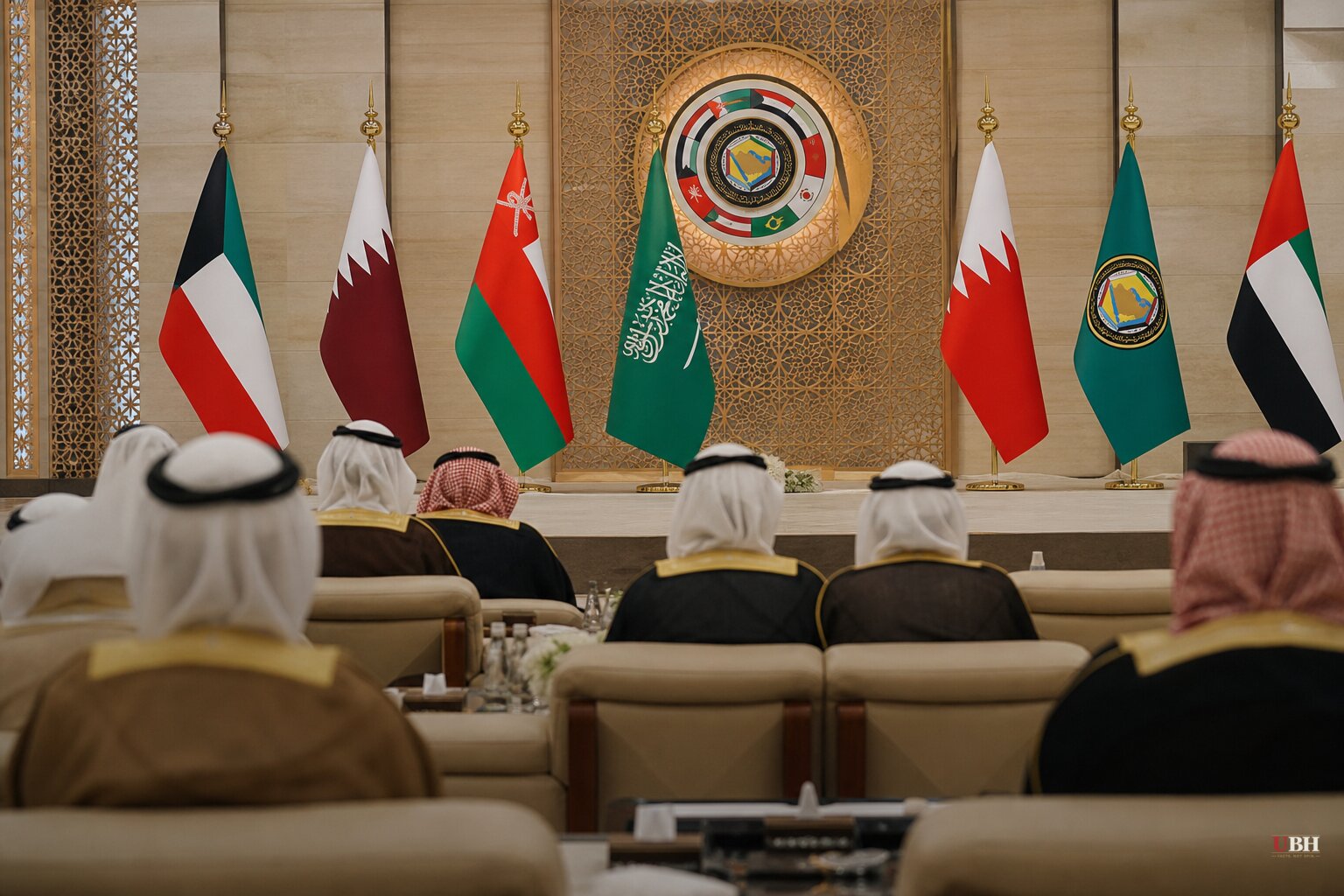
Iran's Supreme Leader Mojtaba Khamenei published a written message on his Telegram account Sunday, August 30, urging Gulf Arab rulers to unite against what he called their "real enemy," according to Reuters reporting carried by NBC News, Yahoo News, TBS News, Korea Times and WHBL.
The message marked Islamic Unity Week, which commemorates the birthday of the Prophet Muhammad. Khamenei called on Muslim nations, especially those in the Gulf, to cooperate and defend one another, arguing that anyone who sows division among Muslims — "knowingly or unknowingly" — helps Islam's enemies.
"My emphatic and repeated recommendation to the rulers of Islamic countries, especially the countries of West Asia and the Gulf, is to identify your real enemy, understand his plan and confront it," Khamenei said, according to Reuters.
The Siasat news agency reported additional language from the statement not carried in the wire version, quoting Khamenei as saying "the criminal rulers of America and the fake Zionist regime are sworn enemies" of Muslim unity, and accusing Washington and Israel of exploiting racial, cultural and political divisions to weaken the Islamic world. He also asked whether Palestinians would still be "so helpless" under Israeli occupation if Muslim nations stood together.
A leader nobody has seen in six months
Mojtaba Khamenei took over as supreme leader after his father, Ayatollah Ali Khamenei, was killed in U.S.-Israeli airstrikes that opened the war roughly six months ago, on February 28, 2026, according to Siasat. Mojtaba was wounded in the same strikes.
He has not made a confirmed public appearance since. The Jerusalem Post reported that Israeli and American assessments conclude he survived the attack severely wounded but has continued to rule. Iranian state media released an undated video earlier this month showing archival footage of him in a religious discussion with clerics, according to the Times of India, but that did nothing to end speculation about his condition.
Iranian President Masoud Pezeshkian has pushed back on the speculation directly, telling Iran's ISNA news agency earlier this month that Khamenei is "completely healthy." No independent, on-camera appearance has confirmed that claim.
A regime under real economic strain
Iran's leadership is not hiding the toll of the war and the sanctions that followed. NBC News reported that President Pezeshkian said foreign trade has shrunk by a third because of the American sanctions and blockade. Khamenei himself, in a statement Friday reported by Times of India and NBC, told officials to address inflation, unemployment and market instability, and warned authorities to avoid "discouraging statements" that weaken public morale.
Tehran's government said Saturday it would keep pursuing both diplomacy and defense, including efforts to reduce dependence on the dollar and redirect investment into domestic production, per NBC's reporting. It also reiterated a claim to control over the Strait of Hormuz, the chokepoint through which a large share of the world's oil moves.
At the same time, Foreign Minister Abbas Araghchi has been meeting with regional counterparts. The Jerusalem Post reported that Araghchi met with representatives from Oman, Pakistan and Qatar in recent days, floating a "new corridor," joint mine-clearing efforts, and a "future management" arrangement for Hormuz. Araghchi's public line to Washington, quoted by the Jerusalem Post: "pressure doesn't work," and the U.S. should "build trust, speak respectfully, acknowledge our rights, and uphold commitments."
The unity pitch has an obvious problem
Khamenei's appeal to Gulf solidarity asks a reasonable-sounding question on its face: if Muslim nations stood together, would outside powers have as much room to divide and dominate the region? Tehran has made this case for decades. But the message lands awkwardly given the history.
Reuters' wire report, run by NBC, Yahoo, TBS, Korea Times and WHBL, noted that Gulf Arab monarchies have viewed Iran's revolutionary, anti-monarchic ideology as a threat to their own political systems since the 1979 revolution — not a recent invention of American propaganda. And during the very war Khamenei is invoking, Tehran struck U.S. military facilities and other infrastructure inside Gulf states, the same neighbors it is now asking to unite "under the flag of Islam."
None of the sources reviewed report any public response yet from Saudi Arabia, the UAE, Bahrain, Kuwait or Qatar to Khamenei's specific appeal. Qatar's foreign minister did meet with Araghchi last week on separate diplomatic channels, according to the Jerusalem Post, suggesting some Gulf states are willing to talk even as they remain wary. Whether that translates into anything resembling the unified front Khamenei is calling for, six months into a war that has already put Iranian strikes on Gulf soil, remains unanswered.
Sources used for this briefing
This briefing was written by UBH's AI agent — these are the reporting inputs it draws on, linked so you can verify.


