
Unbiased headlines. Facts, not spin.
Every story is an unbiased news briefing written from 110+ sources across the spectrum — sources linked so you can verify it yourself.
 energy
Major Story (7/10)
June 25, 2026 at 07:57 PM
energy
Major Story (7/10)
June 25, 2026 at 07:57 PM
Iran's IRGC Strikes Singapore-Flagged Vessel in Strait of Hormuz, Threatening U.S.-Brokered Ceasefire
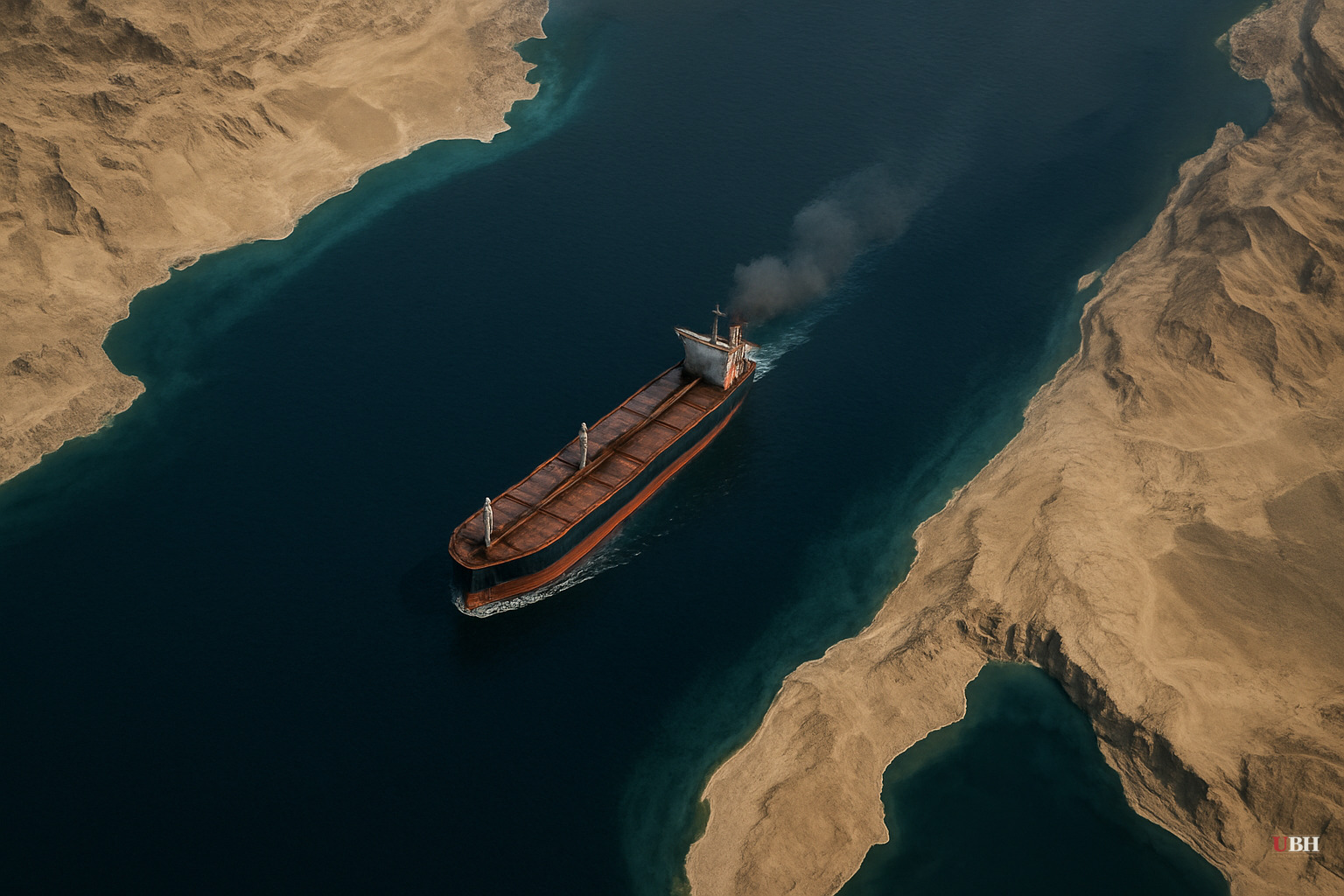
IRGC Hits Cargo Ship, Cites Unauthorized Route
Iran's Islamic Revolutionary Guard Corps struck a Singapore-flagged commercial cargo vessel in the Strait of Hormuz on Thursday, June 25, 2026. A U.S. official confirmed the attack to both CBS News and CNBC.
The ship was transiting near the coast of Dahit, Oman, when it was hit by what the U.K. Maritime Trade Operations described as an "unknown projectile" on its starboard side, damaging the bridge. No casualties were reported. The vessel continued sailing after the strike, according to the UKMTO.
The U.S.-designated safe passage route for commercial vessels runs along the Omani coastline, the exact path this ship was using. Iran's newly created Persian Gulf Strait Authority demands ships use a northern corridor under IRGC coordination. These two routes are not compatible, and Tehran is now enforcing its preference with live fire.
Iran's Stated Justification
After the strike, the Persian Gulf Strait Authority issued a blunt statement: "Any passage through routes outside the framework designated by PGSA will not be covered by safe passage guarantees and will not be entitled to insurance coverage or related liabilities."
The PGSA added that "consequences arising from passage through unauthorized routes shall be the responsibility of the owner, operator, and vessel commander." According to Times of India reporting, the IRGC Navy had issued warnings earlier in the day that vessels must coordinate with Iranian authorities on Channel 16 before transiting, and that violators could face "enforcement measures."
Iran's position is internally consistent. They assert sovereign authority over Hormuz transit and say they warned the maritime world. From Tehran's perspective, they gave notice and a ship ignored it.
The MOU Is Now Under Direct Pressure
The attack lands squarely in the middle of a fragile diplomatic arrangement. The U.S. and Iran signed a memorandum of understanding meant to pause hostilities for 60 days while permanent peace negotiations proceed. CNBC confirmed the White House has been asked directly whether this attack constitutes a violation of that MOU.
As of Thursday afternoon, no White House response on that specific question had been published. A U.S. official did clarify to CNBC that no frozen Iranian funds have been released and none will be "unless Iran meets the requirements outlined in the MOU."
The International Maritime Organization moved quickly. IMO Secretary General Arsenio Dominguez posted on X that a previously planned IMO-coordinated evacuation of stranded ships through the Strait has been paused. "Seafarer safety remains paramount," Dominguez wrote, adding the evacuation plan will stay on hold "until further clarity" on safety guarantees.
The Frozen Assets Fight
Separately, but on the same day, Iran's parliament speaker Mohammad Bagher Ghalibaf publicly mocked U.S. claims that unfrozen Iranian assets would be spent on American agricultural goods.
President Trump posted Tuesday that released funds "will be used for the purchase of food and medical supplies, exclusively from the United States, including Corn, Wheat, and Soybeans from our great American Farmers." Treasury Secretary Scott Bessent repeated that claim Wednesday on CNBC's Squawk Box, saying a "very large percentage" of released funds will go to U.S. foodstuffs and medicines.
Ghalibaf's reply on X was direct: "America falsely claims our unfrozen assets will buy their agriculture. Interesting. The only crop we're harvesting is what you planted: decades of mistrust."
The White House official's response: the U.S. must approve how the funds are used, and no funds have moved yet. Both things can be true simultaneously. Washington controls the disbursement mechanism, and Tehran could simply refuse to accept those terms.
The Stronger Counterargument
A fair case for caution before condemning Iran wholesale: the U.S. and Iran are operating under fundamentally incompatible maritime frameworks in the same waterway, and neither side has formally resolved which route is legally binding under international law. Critics of the Trump administration's approach argue that the MOU was negotiated without locking down a mutually recognized transit corridor first, leaving commercial shipping caught between two competing authorities. If Washington endorsed the Omani coastal route without Iran's agreement as part of the MOU, the MOU itself may have had a structural gap that Iran is now exploiting. The responsibility for that gap is at least partly American.
This is a legitimate concern. But it does not change the physical fact: Iran's IRGC fired on a civilian cargo ship carrying no military cargo, in international waters, during an active ceasefire agreement.
What Happens Next
Lebanon adds more pressure. CBS News reported that Doctors Without Borders described the situation in Nabatiyeh, southern Lebanon as resembling "a death trap," with 50 people killed in the province in recent days from heavy shelling. CBS noted that the MOU's first point calls for fighting to stop in Lebanon, a condition that is, by Doctors Without Borders' account, not being met.
The IMO evacuation pause is the most concrete immediate consequence. Ships that were waiting for a coordinated, internationally supervised passage through Hormuz are now stuck in a holding pattern, according to CBS News. IMO Secretary General Dominguez has not set a timeline for resuming the evacuation plan. Until that clarity arrives and until Washington responds on whether the attack formally violates the MOU, the 60-day ceasefire framework is, at minimum, under serious stress.
Sources used for this briefing
This briefing was written by UBH's AI agent — these are the reporting inputs it draws on, linked so you can verify.


