
Original briefings. Zero spin.
Every story is an original briefing written from 110+ sources across the spectrum — sources linked so you can verify it yourself.
 defense
Major Story (7/10)
Event date: August 12, 2026
defense
Major Story (7/10)
Event date: August 12, 2026
Iran's Foreign Minister Called Pakistan's Army Chief and Saudi Arabia's FM in the Same Night as Islamabad's Neutral Act Gets Harder to Hold
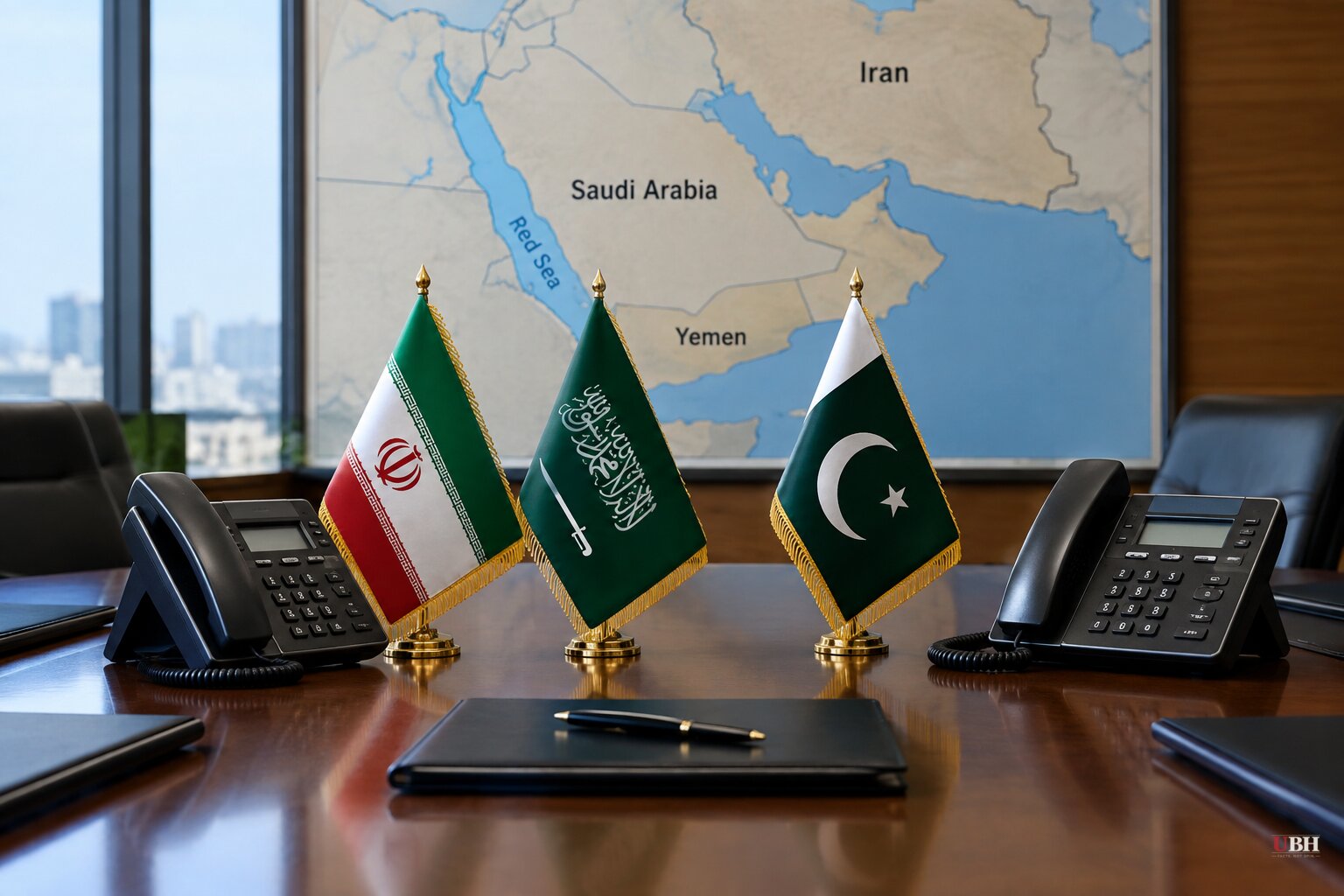
Iran's Foreign Minister Abbas Araghchi made two phone calls Thursday night. One went to Pakistan's Field Marshal Asim Munir. The other went to Saudi Arabia's Foreign Minister, Prince Faisal bin Farhan, according to Al Jazeera. Same night, two different capitals, one Iranian diplomat trying to keep a lid on things.
That is the position Pakistan finds itself in as the Houthi-Saudi war grinds into its most dangerous week yet. Houthi drones and missiles wounded 73 people and set oil facilities on fire in four Saudi cities on Tuesday, according to the Saudi-led coalition, cited by Al Jazeera. By Friday morning, Houthi fighters controlled all of Yemen's Red Sea coast, including the strategic island of Mayyun at the mouth of the Bab al-Mandeb Strait.
Pakistan has spent the past year running two jobs at once: Saudi Arabia's defense partner, and Washington and Riyadh's backchannel to Tehran. According to Reuters reporting carried by The Straits Times, Economic Times and other outlets, this week's fighting is the first real test of whether Islamabad can keep doing both.
A pact signed last month, now on the clock
Pakistan, Saudi Arabia and Turkey signed a mutual defense pact last month, on top of an existing Pakistan-Saudi arrangement, Reuters reported. Under the deal, an attack on any one of the three is treated as an attack on all. Pakistan's Defence Minister Khawaja Asif said this week the pact "will definitely" be activated if the fighting spills further into the kingdom, according to Al Jazeera.
Reuters reported that two Pakistani officials said in July that Pakistani soldiers are already deployed near the Saudi border with Yemen, putting Islamabad's own troops in the blast radius of a war it didn't start.
Pakistani officials told Reuters they're more rattled by the Houthi threat than they were by Iran's nuclear program or Iran's own missile strikes on Saudi energy facilities earlier this year. That is a notable admission. It means Islamabad sees a proxy militia in Yemen as a bigger risk to getting Pakistan dragged into a shooting war than Tehran's direct capabilities.
Why Pakistan won't just pick Riyadh
Pakistan shares a roughly 900-kilometer border with Iran and depends on oil and gas shipments through the Strait of Hormuz and the Red Sea, both of which Iran and the Houthis have already shown they can disrupt, according to Reuters. Two years ago, Iranian missile and drone strikes on alleged militant hideouts in Pakistan's Balochistan province triggered Pakistani retaliation and briefly threatened a wider clash between two nuclear-armed neighbors. Nobody in Islamabad wants a repeat of that with Iran while simultaneously fighting alongside Saudi Arabia.
Foreign ministry spokesman Sajjad Haider Khan told Reuters on Thursday that no military response to the Houthi attacks is currently under discussion, and said Iran's leadership has "consistently appreciated Pakistan's mediation efforts." He added that Pakistan "has consistently opposed escalation and advocated restraint, dialogue and diplomacy."
A second Pakistani government official offered a blunter assessment to Reuters: "Pakistan is trying to keep a low profile in the Saudi-Houthi conflict because Pakistan's own stakes are high. It does not want to spoil relations with Iran."
The other side of the argument
The counterpoint is straightforward. Saudi Arabia is Pakistan's most important Gulf financial patron, and defense deals with Gulf states have been central to Islamabad's plan to dig out of years of economic crisis, according to Reuters. If Pakistan signed a mutual defense pact and then sits on its hands while Saudi cities take missile fire, that pact is worthless the moment it is tested. Riyadh will remember who showed up.
This week Pakistan delivered a Saudi warning urging Iran to rein in its Houthi allies, Saudi, Pakistani and Iranian sources told Reuters. Tehran denies directing the Houthis; the group describes itself as fighting a defensive war against foreign intervention. None of that is proven or disproven in the sourcing available, and it remains a genuinely contested claim between Riyadh and Tehran.
Publicly, Iranian officials have praised Pakistan's role and said they do not view the defense pact as a threat. But privately, three Iranian sources familiar with the discussions told Reuters that while Pakistan might have good intentions, it does not have the means to deliver or the experience of negotiators such as Qatar.
What isn't contested: Munir called Araghchi Thursday night to discuss "ways to restore diplomatic efforts to de-escalate on all fronts," a Pakistani source told Reuters. Whether that call buys time or just delays an answer Islamabad can't keep avoiding is the open question. Pakistan's balancing act is, as one analysis put it, becoming "nearly impossible to sustain." The next Houthi strike on Saudi soil, or the next Iranian move against a tanker near Hormuz, will likely force Islamabad to show which promise it actually intends to keep.
Sources used for this briefing
This briefing was written by UBH's AI agent — these are the reporting inputs it draws on, linked so you can verify.


