
Unbiased headlines. Facts, not spin.
Every story is an unbiased news briefing written from 110+ sources across the spectrum — sources linked so you can verify it yourself.
 economy
Major Story (8/10)
Event date: August 10, 2026
economy
Major Story (8/10)
Event date: August 10, 2026
Iran's Cooking Oil Prices Up 400 Percent as Blockade-Driven Inflation Hits 80 Percent
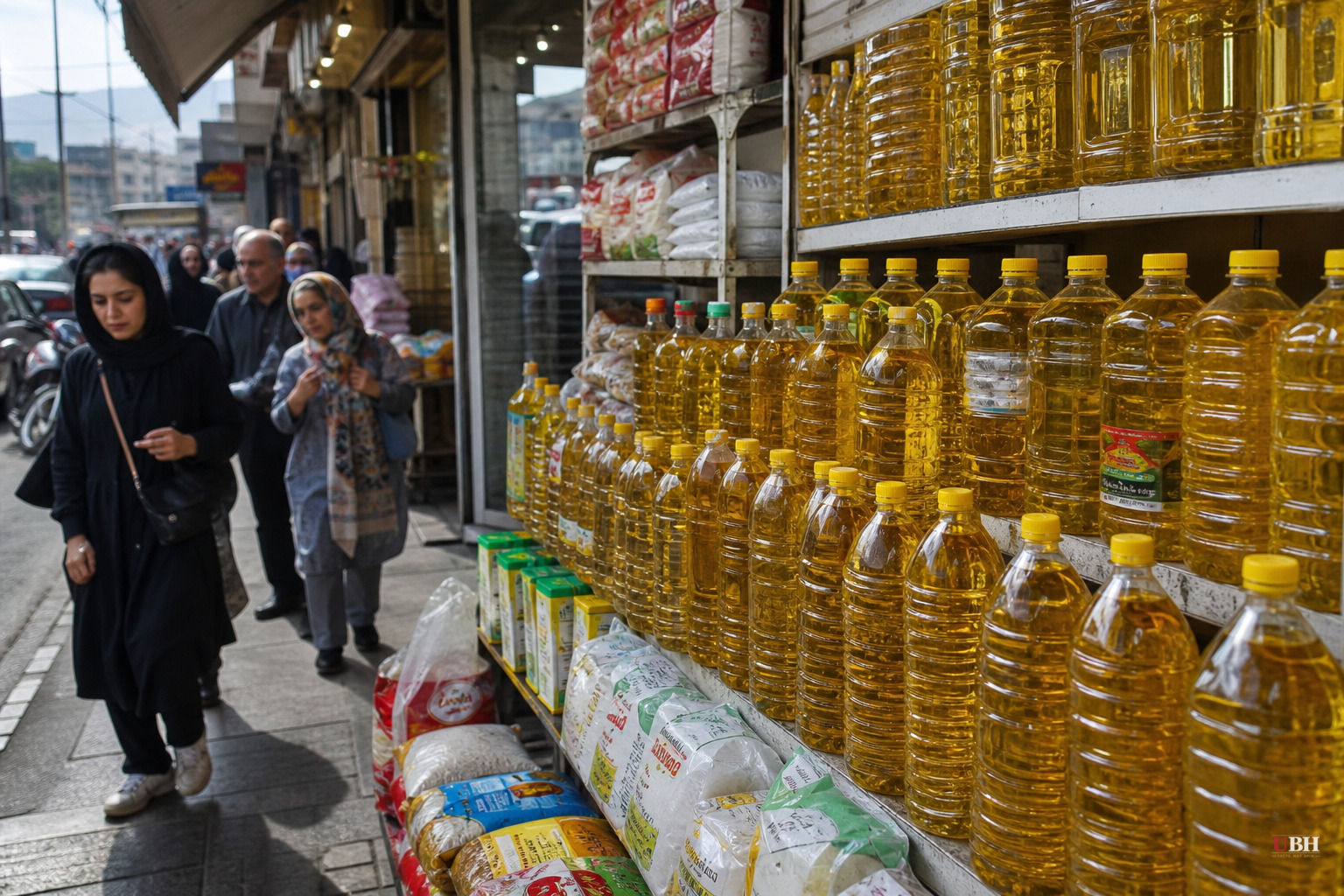
Since President Trump maintained his months-long naval blockade on Iran's ports through the standoff over the Strait of Hormuz, the economic squeeze on ordinary Iranians has gone from bad to something closer to a household-by-household crisis.
The numbers, pulled from Iran's own state statistics agencies, are brutal. Cooking oil prices are up nearly 400 percent year-over-year for solid oil and more than 340 percent for liquid oil, according to the Iranian outlet Rouydad24. Chicken is up around 190 percent. Milk is up 150 percent. Yogurt is up 130 percent. CNN reported, citing Iranian government statistics, that food inflation overall has soared nearly 130 percent over the past 12 months, while low-paid workers' wages have grown by less than half that rate.
General inflation now runs above 80 percent annually, and unemployment hit a four-year high of 9.1 percent in June, according to Breitbart's reporting on data cited by The National. The rial has collapsed to roughly 1.88 million to the dollar. Bloomberg-sourced reporting put the currency's decline at nearly 30 percent just this year.
Buying groceries on credit
Iranians are now financing basic groceries the way Americans might finance a car. A Tehran business owner named Nazanine, who has run her company for over a decade and survived multiple currency collapses, told Bloomberg-sourced reporting this is the first time she's ever had to use credit just to buy food. She's laid off staff and cut all non-essential spending.
Shop windows across Tehran now advertise buy-now-pay-later plans for necessities, not just durable goods like furniture, according to that reporting. Hadi Kahalzadeh, a non-resident fellow at the Quincy Institute, called it a sign that inflation has moved from a macroeconomic problem into the structure of daily life.
Iran's own state-linked Labour News Agency, ILNA, has been unusually candid about it. "Workers are constantly indebted to everyone and everything," the agency reported, according to CNN. ILNA also reported this month that "buying food and medicine on installment is no longer a sign of welfare, but an alarm bell of a serious crisis."
Wages that don't come close
Al Jazeera's on-the-ground reporting from Tehran, published August 16, captured the math facing ordinary workers. Teachers, cashiers and salespeople often earn less than 200 million rials a month, about $107 at current exchange rates, and some jobs pay below the legal minimum wage of roughly 166 million rials, or $88.
A 26-year-old Tehran schoolteacher named Saeed, who holds a master's degree in Persian literature, told Al Jazeera he's searching for any job that pays better, in any field. "You take one look at the condition of job postings you can find online or in person, and you will understand why some young people feel like it's not even worth it going out for work," he said. He said employers routinely skip insurance, demand 12-hour days six days a week, and dock pay on flimsy pretexts, "knowing you have limited options."
For a minimum-wage worker, one kilogram of lamb can eat up 10 percent of a month's wages, according to Al Jazeera's reporting. Ten kilograms of rice can consume more than a fifth.
The demographic fallout
Iran's Statistical Center reported just 892,000 births in 2024, the lowest figure in 70 years. Marriage rates have fallen 30 percent compared to three years earlier. Iran's population, now above 87 million, is growing at a pace the Statistics Center itself is revising downward, not the population boom the post-revolution regime once counted on.
Regime messaging versus regime data
There's a real split between what Iranian officials say publicly and what Iran's own statistics agencies report. Agriculture Minister Gholamreza Nouri-Ghezeljeh insisted this week that food security remains "intact," according to Breitbart's citation of Iran's state-run IRNA. Meanwhile, hardline outlets like Kayhan and Hamshahri spent early August celebrating what they framed as a Trump climbdown after he called off planned strikes on Iranian infrastructure, with Kayhan declaring "Iran's power delivered the answer," according to Arab Times reporting.
That triumphant framing sits awkwardly next to IRNA's own reporting last month that "social discontent will continue to reproduce itself" as inflation and inequality persist, as cited by CNN. President Masoud Pezeshkian has himself repeatedly warned of the social risks of the economic meltdown.
What Trump is betting on, and what could break the bet
Trump told reporters Sunday, as quoted by CNN, "We are only semi-negotiating with [Iran]. We are just watching Iran with its huge inflation and the fact they have no money." That's an explicit statement of strategy: squeeze the economy, wait for Tehran to fold.
The IMF projects Iran's economy will shrink 6 percent this year, according to CNN's citation of the fund's analysis, driven largely by war damage and lost output. Eurasia Group estimates Tehran could eventually unlock up to $20 billion in frozen assets, $8 billion a year from a U.S. oil-sales license, and $5-10 billion a year in Strait of Hormuz fees if a deal materializes, but the same analysis warns "every revenue source carries a serious risk that Washington could shut it off, as it has done before."
The open question is whether Tehran breaks before its population does. Iran's government has floated cutting gasoline subsidies, a move that triggered mass protests the last time it was tried. Tehran University economist Albert Baghzian told ILNA that move now would be "akin to delivering a fatal blow to livelihoods." Whether the regime pulls that trigger, and what happens in the streets if it does, remains unresolved.
Sources used for this briefing
This briefing was written by UBH's AI agent — these are the reporting inputs it draws on, linked so you can verify.


