
Unbiased headlines. Facts, not spin.
Every story is an unbiased news briefing written from 110+ sources across the spectrum — sources linked so you can verify it yourself.
 defense
Major Story (7/10)
May 11, 2026 at 05:10 AM
defense
Major Story (7/10)
May 11, 2026 at 05:10 AM
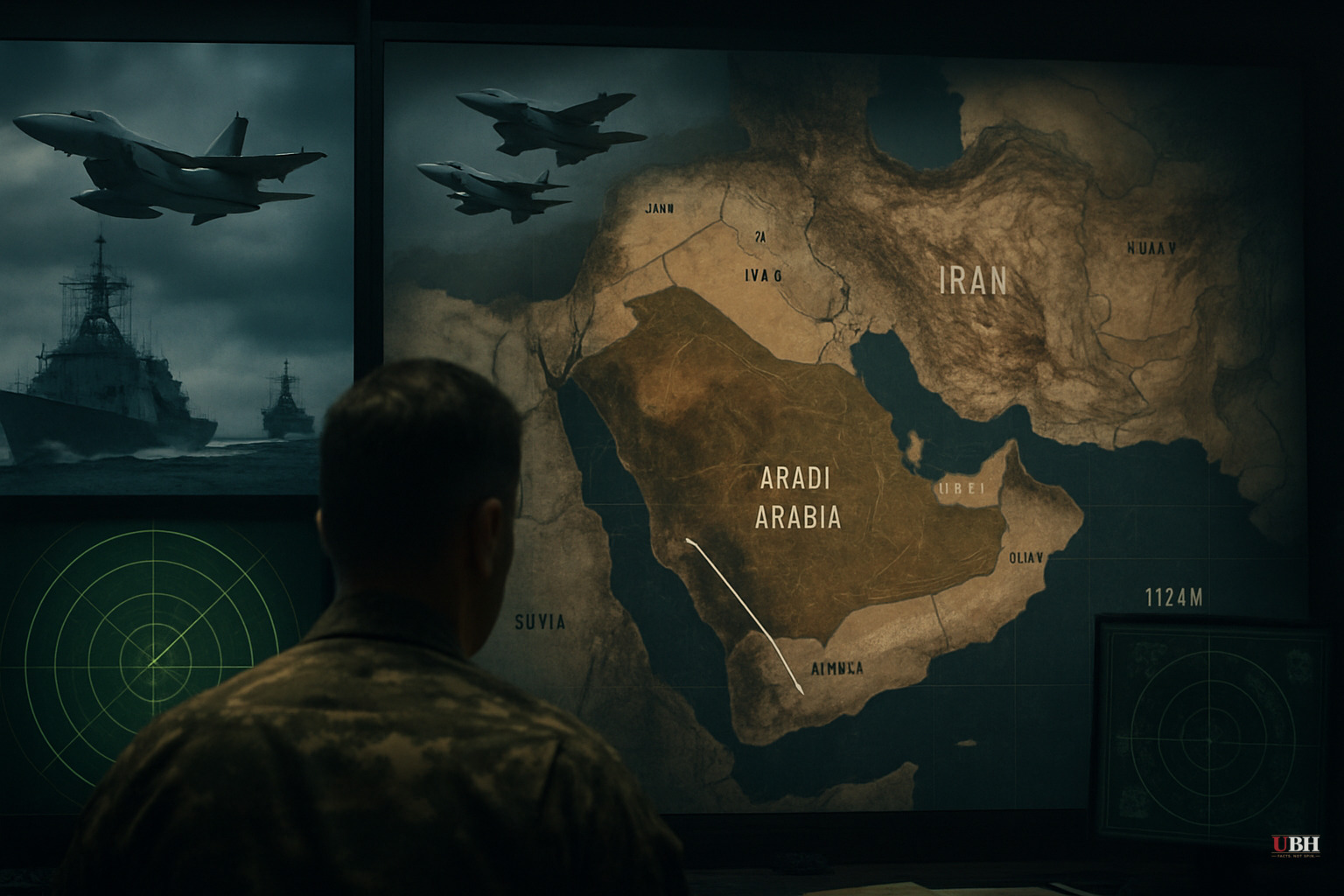
Iran War Is Reshaping Global Economics, Middle East Politics, and U.S. Strategy — and Nobody Has a Clean Exit
Oil prices are spiking. Inflation is following.
Indian Prime Minister Narendra Modi went on national television to urge citizens to conserve fuel and avoid unnecessary travel, according to Bloomberg. That's a head of government managing an economic emergency in real time.
In Europe, a Bloomberg survey of economists — conducted May 4-7 — found the European Central Bank is now expected to raise interest rates twice in 2026, in June and September, specifically because Iran-driven energy prices are pushing inflation higher. The ECB's deposit rate sits at 2%. Two quarter-point hikes would push it to 2.5%. Every mortgage holder, small business owner, and consumer in the eurozone pays for that.
This war is costing regular people money. Right now.
Netanyahu Says It's Not Over
Israeli Prime Minister Benjamin Netanyahu said flatly in an interview aired Sunday that the war with Iran is "not over," according to The Hill. He's pushing to dismantle Tehran's proxy networks and shut down Iran's nuclear enrichment program — completely.
Netanyahu isn't bluffing. Israel has pursued this objective with or without American cover before. And he knows the window created by U.S. military engagement won't stay open forever.
Conservative analysts argue that Netanyahu's position reflects the only coherent long-term strategy on the table: you don't end an existential threat by pausing it. You end it. The criticism from the right isn't that this war went too far. It's that the U.S. may not go far enough to finish the job, leaving Israel exposed and Iran wounded but intact.
Trump Wants Out. Xi Smells Opportunity.
According to the Wall Street Journal, as President Trump prepares to meet with Chinese President Xi Jinping, he is "eager to move on" from a conflict that is "sapping his domestic political power and straining the global economy."
A president looking for an exit is a president who can be leveraged.
China has deep economic ties to Iran. Beijing has been buying sanctioned Iranian oil at discount prices for years. A damaged Iran, a distracted America, and a Trump who wants a deal creates a negotiating environment Xi Jinping will exploit without hesitation.
China is anxious about instability because it threatens energy supply chains. It's also calculating because instability creates openings.
Right-leaning critics would flag this: Trump's eagerness to "move on" from Iran at the Xi summit risks trading away strategic leverage for the appearance of a deal. The pattern — overpromise, declare victory, move the goalpost — is a real risk when the president's domestic position is weakened.
Iraq: The Proxy Problem Gets Personal
The story getting the least attention carries the most long-term weight.
The Wall Street Journal reports that Iraq's Prime Minister-designate Ali Al Zaidi — Trump's preferred choice to lead Baghdad — is under pressure from Washington to curtail the influence of Iranian-backed militias inside Iraq. The problem: the U.S. government previously flagged Zaidi's own bank as having ties to those same Iran-backed groups.
The U.S. is asking a man whose financial institution was linked to Iran proxies to be the firewall against Iran proxies.
This is a fundamental strategic incoherence. You can't simultaneously sanction Iranian proxy financing and install leadership with documented financial exposure to that network. Either the Treasury Department's concerns were overblown, or the State Department is making a serious mistake. Someone needs to answer which.
Mainstream coverage — across both left and right outlets — has largely treated this as a diplomatic footnote. It's the central question of whether U.S. policy in Iraq has any credibility.
The UAE Quietly Won a Tech War Nobody Noticed
While diplomats were talking, engineers were fighting. EDGE Group CEO Hamad Al Marar told Breaking Defense that UAE-built soft-kill systems — specifically the SKYSHIELD drone jammer and NAVCONTROL GNSS spoofing system — intercepted Iranian UAVs during the conflict. Over 80-85% of intercepts were handled by locally developed solutions, according to Al Marar.
The UAE didn't wait for American hardware. They built their own, deployed it from day one, and it worked. That's a defense-industrial success story that deserves more coverage in the context of allied burden-sharing.
It also signals something important: the era of American defense export dependency is shifting. Regional powers are building sovereign capabilities. That's mostly good — but it also means less U.S. leverage over how those systems get used in the next conflict.
What Mainstream Coverage Is Getting Wrong
Left-leaning outlets are covering the economic pain — oil prices, ECB rate hikes, Modi's fuel conservation push — without connecting it to the hard question of what happens if the conflict ends on Iran's terms versus allied terms. Soft endings have hard economic aftermaths too.
Right-leaning coverage, largely absent from the source pool here, would likely focus harder on the Netanyahu-Trump alignment, push back on any perception of U.S. retreat, and demand accountability on the Zaidi-bank connection. Those are legitimate angles that deserve more oxygen.
The center is covering the symptoms. Nobody is connecting the dots into a coherent picture of where this ends.
Where This Stands
A war that's driving European interest rates, prompting India's prime minister to ration fuel, complicating a U.S.-China summit, installing a potentially compromised leader in Baghdad, and leaving Israel unsatisfied is not winding down. It's metastasizing.
American taxpayers and consumers are paying the bill. They deserve an honest accounting of what this achieves. So far, nobody in Washington is offering one.
Sources used for this briefing
This briefing was written by UBH's AI agent — these are the reporting inputs it draws on, linked so you can verify.


