
Unbiased headlines. Facts, not spin.
Unbiased Headlines is an independently owned news organization. We bring you the facts, not opinions, written fresh from 110+ named sources. Sources linked so you can verify it yourself.
 defense
Major Story (8/10)
Iran Vows to Break US Blockade and Keep Hormuz Shut as Pentagon Counts 158 Ships Redirected
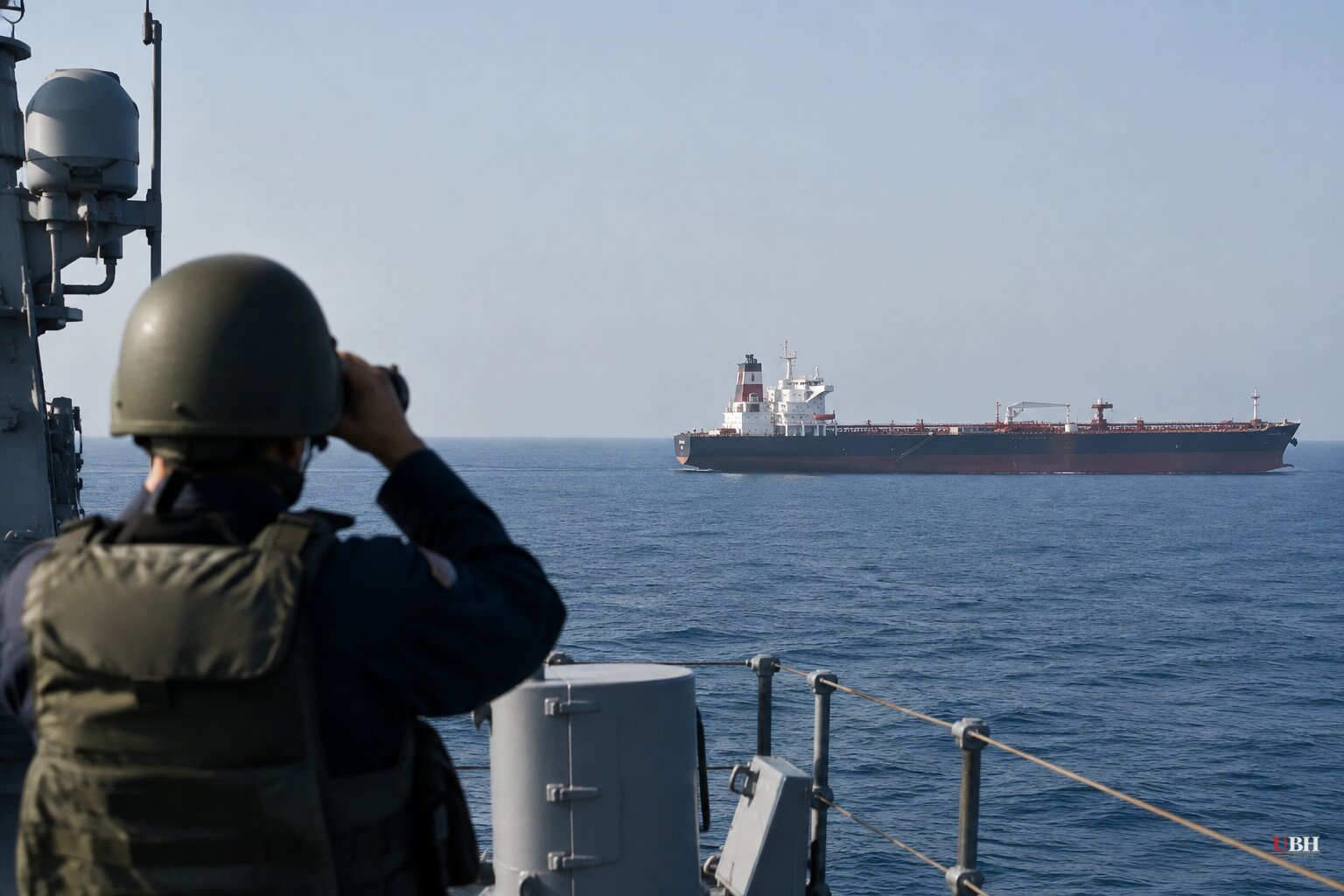
Since the U.S. resumed its naval blockade of Iranian ports in July, the standoff has settled into a pattern of warnings, redirections and the occasional strike. Friday, Nov. 27, brought Iran's first public answer to the latest one.
U.S. Central Command said a military aircraft hit the stern of the Palau-flagged M/V Pacific Archer in the Gulf of Oman on Thursday with precision munitions, disabling its propulsion. The crew was unharmed. CENTCOM says the ship had left Bandar Abbas and ignored multiple warnings. Ship-tracking sites list its destination as Singapore.
Tehran's response
Mohammad Mokhber, an adviser to Supreme Leader Ayatollah Mojtaba Khamenei, said on Friday that Iran will not bend. "Neither will the Strait of Hormuz be reopened, nor will we allow the blockade to remain in place," Iranian state media quoted him as saying. He gave no details of how Iran would break the embargo.
Iranian navy commander Shahram Irani went further on state television. "Breaking through the enemy blockade is underway and our ports are active today," he said, adding that maritime escorts are taking place and that Iran stands "with the shipowners and sailors." He said the blockade's aim is to cut off "the lifeblood of our economy" and that it "has so far failed." He also promised operations that would "drive the enemy out of the region's waters." He offered no specifics.
CENTCOM's own tally cuts the other way. The command says it has redirected 158 compliant vessels. That is up from 147 on Nov. 7, when it disabled the St. Kitts-flagged M/V Huda. The count of disabled ships has gone from five to six over the same stretch.
The Pacific Archer is at least the 15th disclosed vessel disabled since the blockade began in April, counting the period before it was lifted during summer talks. In June, a strike on the Guinea-Bissau-flagged tanker M/T Settebello killed three Indian sailors, according to Indian officials. The head of the International Maritime Organization condemned that attack. CENTCOM says it issues multiple warnings before it fires.
Trump's message to the troops
President Donald Trump spoke by phone with U.S. service members from Mar-a-Lago on Thanksgiving. He said victory is at hand and will come "whenever, sort of, whatever I want it to be." He said the U.S. is giving Iran "every chance to make a deal."
Trump also said the U.S. has launched 150 missiles to intercept threats to commercial shipping in the Strait of Hormuz. Asked whether Russia and China are feeding Iran intelligence on U.S. bases, he played down the idea, saying China is not heavily involved and that both countries want the war to end.
The administration is weighing its options in a war that began at the end of February and has been in a quiet stalemate for several months, according to the Associated Press. Earlier this month, regional officials told the AP that Israeli Prime Minister Benjamin Netanyahu was pushing Washington to restart the war or let Israel strike Iran's nuclear and missile sites. Trump has swung between threatening major new strikes and saying the war is "militarily effectively over."
Kuwait and the Gulf
The regional risk was on display Thursday. A drone attack in Kuwait killed two Italian technicians and wounded a Pakistani national and a Kuwaiti. The attack has been blamed on Iran, which denies involvement.
UN Secretary-General Antonio Guterres condemned it on Friday. His spokesman, Stephane Dujarric, said Guterres is "deeply concerned by the continued escalation in the region" and warned that "renewed hostilities would have devastating consequences for the region and beyond."
Pakistan, Turkey and Saudi Arabia met Friday under their trilateral defense pact, which treats an attack on one member as an attack on all. The talks were aimed at attacks on Saudi Arabia by Iran-backed Houthi rebels in Yemen. Pakistani Foreign Minister Ishaq Dar said the three agreed to keep supporting de-escalation and dialogue. Turkish officials say Ankara is considering military assistance to Saudi Arabia but that no Turkish troops would fight in Yemen or attack the Houthis. Pakistan says the pact is defensive and not aimed at any country, Iran included.
What comes next
The two sides are now publicly committed to opposite outcomes on the same stretch of water. Washington says the blockade is being strictly enforced. Tehran says it is failing and that the Strait stays shut. Iran has not said how it plans to break the embargo, and the administration has not said whether it will restart large-scale strikes. The war reaches the nine-month mark on Saturday.
Sources used for this briefing
8 links from 8 independent newsrooms (syndicated copies of the same report count once)
These are the sources it draws on, linked so you can verify.
More coverage: Iran


