
Unbiased headlines. Facts, not spin.
Unbiased Headlines is an independently owned news organization. We bring you the facts, not opinions, written fresh from 110+ named sources. Sources linked so you can verify it yourself.
 defense
Major Story (7/10)
DEA Tip Lines Target Sinaloa With Jalisco Planned Next; Sheinbaum Answers With Questions About U.S. Fentanyl Money
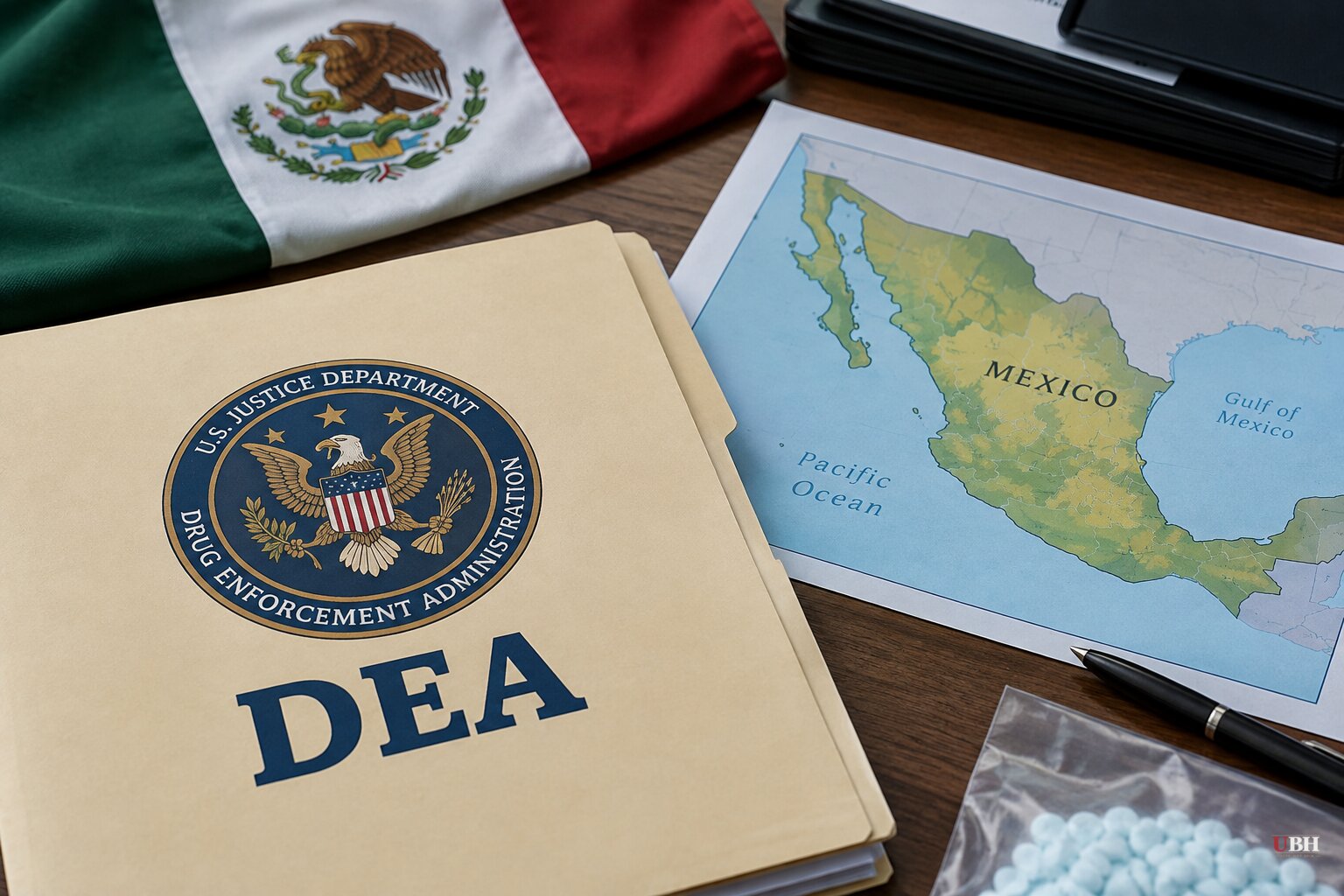
Since DEA Administrator Terry Cole announced anonymous tip lines for Sinaloa on Wednesday, Nov. 25, the channels have become the newest flashpoint in U.S.-Mexico security relations. The details of what the DEA built, and what Mexico's president said back, are now clearer.
What the DEA set up
Cole posted the announcement on X. The agency published a phone number for WhatsApp and Signal, a Threema ID and an email address. Tips are meant to cover members of the Sinaloa cartel, public officials who support it and money-laundering networks that finance it.
"Your information matters. Your identity and your safety matter," Cole wrote. He said submissions would be handled confidentially.
The Sinaloa channels are described as the first phase. Similar reporting lines are planned for the state of Jalisco. No launch date has been published.
The Trump administration has designated the Sinaloa cartel a foreign terrorist organization. That designation is the framework Cole's "narcoterrorism" language rests on.
Sheinbaum's response
President Claudia Sheinbaum answered at her daily press conference on Thursday, Nov. 26. "It's clearly an act of interference," she said.
She asked how Washington would react if Mexico's security ministry opened a WhatsApp account for reporting corruption in the United States.
She also posed questions of her own. "What is the US doing on its own territory? Who distributes the drugs, and where is the money generated from illegal fentanyl sales in the United States accumulated?" Mexico, she said, has its own prosecutor's office and public security ministry.
"The DEA has plenty of work to do in its own country. A lot," Sheinbaum said. "The first thing it should do is investigate corruption in the United States linked to organized crime, or what they call terrorist groups."
The AP investigation she cited
Sheinbaum read from an Associated Press investigation. The AP reported that the DEA let at least 1.4 million counterfeit fentanyl pills go unseized over eight months while it tracked a trafficking ring supplying the U.S. Southwest. One account of the AP findings places the period between August 2024 and April 2025.
That followed AP reporting in June based on DEA whistleblowers. They said agents in New Mexico had in recent years allowed hundreds of thousands of fentanyl pills to go unseized. The DEA denied at the time that it ever knowingly allowed the trafficking.
The AP's findings concern U.S. enforcement tactics. They do not address whether the tip lines are lawful or useful in Mexico. Sheinbaum used them as a rebuttal, not as an argument on the merits of the lines themselves.
The stakes for Mexico City
The tip lines land in a relationship already under strain. In late April, federal prosecutors in New York made public a drug-trafficking indictment against Sinaloa Gov. Rubén Rocha Moya, a member of Mexico's governing party. He and nine other officials are accused of collaborating with a Sinaloa cartel faction. The indictment's charges are allegations. No verdict exists.
Rocha Moya took an indefinite leave of absence and his Mexican bank accounts were frozen. Mexican authorities refused the U.S. request to arrest him. Former Sinaloa Security Secretary Gerardo Mérida Sánchez surrendered to U.S. authorities in May.
The Trump administration has also offered to deploy troops on Mexican soil. Sheinbaum has ruled that out. She says cooperation will continue "but without subordination."
Cooperation has not stopped. On Nov. 20, Mexican forces captured Fausto Isidro Meza Flores, known as "El Chapo Isidro," a key ally of a Sinaloa cartel faction and an FBI Ten Most Wanted fugitive. Mexico asked for U.S. support, and Washington sent a drone to help locate him. Officials said 16 suspected cartel members and four soldiers died in the clashes.
The State Department had offered a reward of up to $5 million for information leading to his arrest. That reward program rests on the same premise as the tip lines: that information from inside Mexico helps U.S. cases.
Sheinbaum has her own incentive to keep talks calm. Her government wants to extend the free-trade deal with the United States and Canada, and it has shown considerable willingness to cooperate while insisting on sovereignty over security.
What is still open
The U.S. has requested Meza Flores' extradition. Attorney General Ernestina Godoy has said he will be tried in Mexico, and the government says he must face justice at home before any U.S. request is considered.
The DEA has not said how it will vet anonymous tips, or what it will do with information on Mexican officials. Mexico has not said whether it will take any formal step against the lines. The Jalisco channels, if launched, will test whether Mexico City's objection stays rhetorical.
Sources used for this briefing
7 links from 7 independent newsrooms (syndicated copies of the same report count once)
These are the sources it draws on, linked so you can verify.


