
Unbiased headlines. Facts, not spin.
Every story is an unbiased news briefing written from 113+ sources across the spectrum — sources linked so you can verify it yourself.
 politics
Major Story (8/10)
Event date: September 17, 2026
politics
Major Story (8/10)
Event date: September 17, 2026
Iran Vows to Abandon 'Proportionate' Responses as U.S. Officials Defend the Strikes That Preceded It
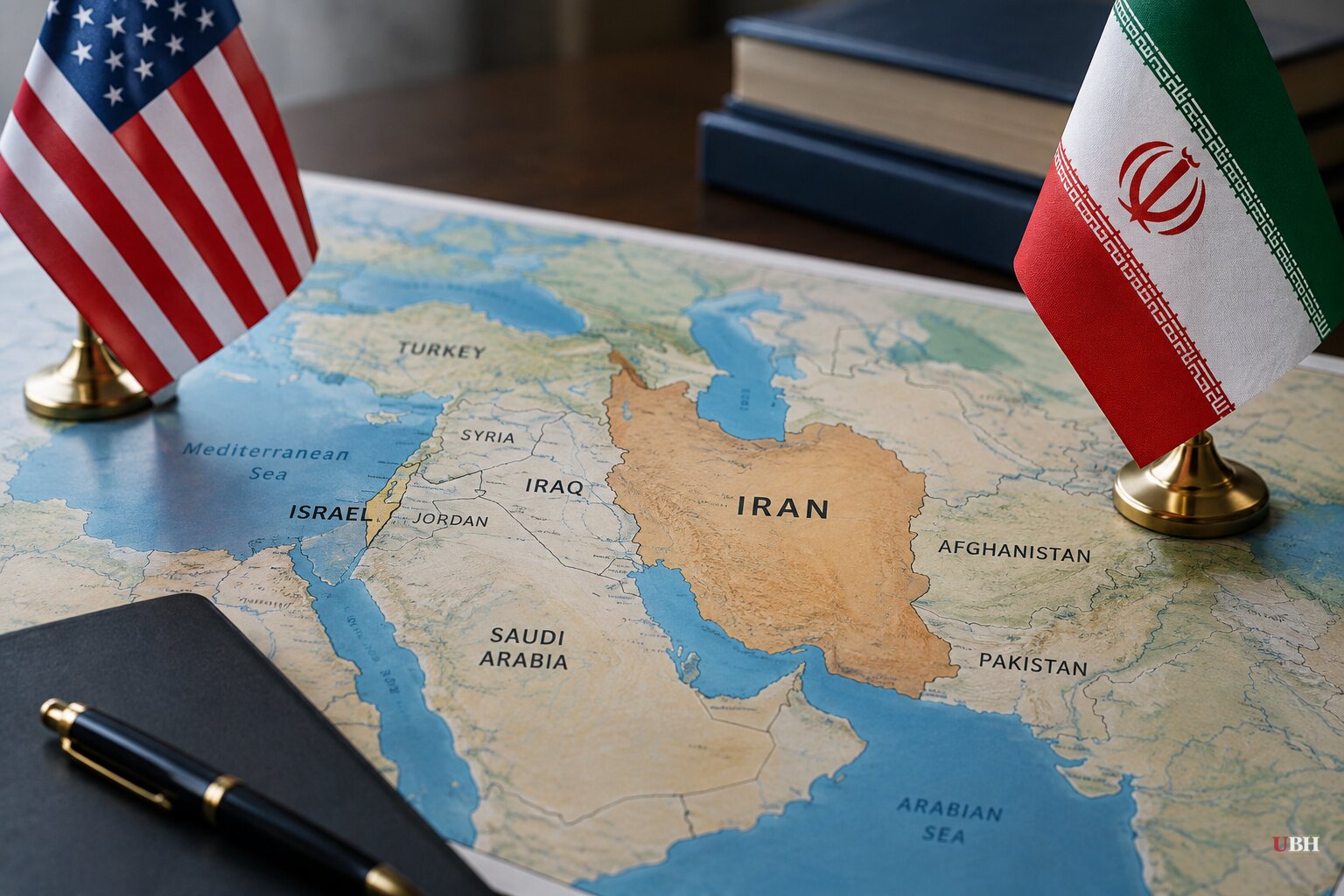
Iran's top negotiator says the old rules are gone.
Mohammad Bagher Ghalibaf, Iran's parliamentary speaker and chief negotiator, declared on September 6 that "the era of proportionate responses is over" and that any future violation of Iran's interests will get a "faster, heavier, and more painful response," according to the Quincy Institute for Responsible Statecraft.
Quincy Institute analysts describe this as a genuine shift inside Iran's security establishment following two rounds of war with Israel and the United States: one that broke out in June 2025, and a second that began in February 2026.
What Changed Inside Iran
For years, the Quincy Institute writes, factions inside Iran's leadership favored restraint, betting that limiting escalation would preserve room for diplomacy and eventually a workable relationship with Washington. That calculation cracked after the first Trump administration withdrew from the 2015 nuclear deal, and it broke down further once actual fighting started.
The think tank's read is that Iran now wants a new regional security arrangement, one where it keeps "coercive leverage at its own choosing" rather than depending on negotiated restraint. Their analysts argue Washington will be tempted to answer Iranian escalation with more force, but warn that risks locking both sides into a cycle that exposes neighboring countries and energy infrastructure to the fallout.
The Quincy Institute does not say diplomacy is dead. Its analysts argue Iran's new posture "does not preclude diplomacy" and leaves room to de-escalate if Washington offers reciprocal restraint, specifically an end to U.S. strikes, a return to good-faith talks, and follow-through on any commitments made.
The Case for the Strikes
Trump administration allies aren't buying that framing. Senator Markwayne Mullin, in a Wednesday interview with NewsNation reported by Breitbart, argued the war was necessary because Iran was "within weeks" of a nuclear weapon, a gap he blamed on Biden administration policy.
Mullin described the decision facing President Trump in blunt terms: higher gas prices now, versus a nuclear-armed Iran. "They were trying to get a nuclear weapon. They had made it very clear for 49 years," Mullin said, adding that Trump made "the right thing, not the politically right thing" call.
That "within weeks" timeline is Mullin's characterization, not an intelligence assessment cited in his remarks, and no underlying assessment was named in the interview. It's a serious claim used to justify a war, and it deserves to be read as an ally's argument rather than as an established fact until a specific intelligence finding is put on the record.
Keane's View From the Ground
Retired four-star General Jack Keane, chairman of the Institute for the Study of War and a Fox News senior strategic analyst, told the Guy Benson Show he recently returned from an extended trip through Israel, Gaza, and Lebanon, where he met with Israel's president, prime minister, the chief of the Israeli military, and both the current and former Mossad chiefs.
Keane's takeaway: cooperation between U.S. Central Command and Israeli forces is "seamless," a level of alliance coordination he says the U.S. hasn't had since World War II. The segment in which Keane discussed the trip was titled, in part, "Iran Is Set On Rebuilding Its Military Capabilities: 'No Amount Of Negotiations Are Going To Change This,'" reflecting his broader assessment that Iran intends to rebuild regardless of what happens diplomatically.
That assessment is drawn from his meetings on the ground, not from a quote out of an underlying intelligence document, but it lines up with the administration's public posture that Tehran cannot be talked out of rearming.
Where That Leaves Things
Trump administration allies and affiliated military voices argue Iran was on a fast track to a bomb and will rebuild no matter what Washington does diplomatically, so force was the option they chose. The Quincy Institute argues the strikes themselves pushed Iran toward a more aggressive doctrine, and that continuing to answer escalation with escalation risks a wider regional war that swallows up neighboring states and oil infrastructure that had nothing to do with the original dispute.
Both things can be true at once: Iran's nuclear program may have posed a genuine threat, and the war may still have hardened Tehran's posture into something more dangerous than before. The open question, three weeks after Ghalibaf's declaration, is whether the Trump administration takes the Quincy Institute's offramp, an end to strikes paired with credible negotiations, or whether Washington and Tehran keep testing each other's tolerance for the next round.
Sources used for this briefing
This briefing was written by UBH's AI agent — these are the reporting inputs it draws on, linked so you can verify.


