
Unbiased headlines. Facts, not spin.
Every story is an unbiased news briefing written from 110+ sources across the spectrum — sources linked so you can verify it yourself.
 defense
Low Interest (2/10)
July 17, 2026 at 09:55 PM
defense
Low Interest (2/10)
July 17, 2026 at 09:55 PM
Iran-US Ceasefire Unravels: Strikes Hit Southern Iran, Tehran Threatens Regional Infrastructure
A Ceasefire That Didn't Hold
A preliminary deal meant to end the US-Israeli war with Iran, a conflict that broke out in late February, has collapsed. Fighting has resumed for six straight days, according to AFP reporting carried by eNCA, with the Strait of Hormuz once again at the center of the fight.
The US military says it struck 'dozens of Iranian military targets,' responding to Iranian attacks on commercial shipping, according to AFP. Iran claims control over the strait, a waterway that moves a huge share of the world's oil and was open to free passage before the war restarted.
Early Friday, Iran reported strikes on an airport, a railway station, and two bridges that killed seven people, according to state media cited by AFP. A senior Iranian armed forces spokesperson said on state TV that if the US strikes Iranian infrastructure, 'all infrastructure across the region will become legitimate targets for Iran.'
Tehran followed through on that threat. Qatar and Kuwait both said they were responding to missile attacks Friday, with AFP journalists in Doha hearing multiple blasts. In Bahrain, Iran targeted US helicopters and aircraft at an air base, according to Iranian state media, prompting Bahraini authorities to sound sirens and urge citizens to shelter in place.
A day earlier, Iran's Revolutionary Guards said they struck a US airbase in Jordan with ballistic missiles, describing it as retaliation for an American strike near a children's cancer hospital close to Ahvaz in southwest Iran. Iranian foreign ministry spokesman Esmaeil Baqaei called that strike 'barbaric.' A 34-year-old teacher from Ahvaz named Hani told AFP the bombardment was 'very intense': 'My hands are shaking. There were at least 11, 12 explosions. My ears are exploding.'
The White House has said President Trump remains 'open to diplomacy' even as he has reportedly threatened to hit Iranian power plants and bridges directly, according to AFP.
The Gap Between Tehran and the Coast
While the capital debates whether a full war is even underway, the country's southern coast is living through one. That's the finding of Iran International's reporting, which draws on Toseh Irani journalist Mira Ghorbanifar's investigative piece, 'The South in the Fire of War and Ashes of Ceasefire.'
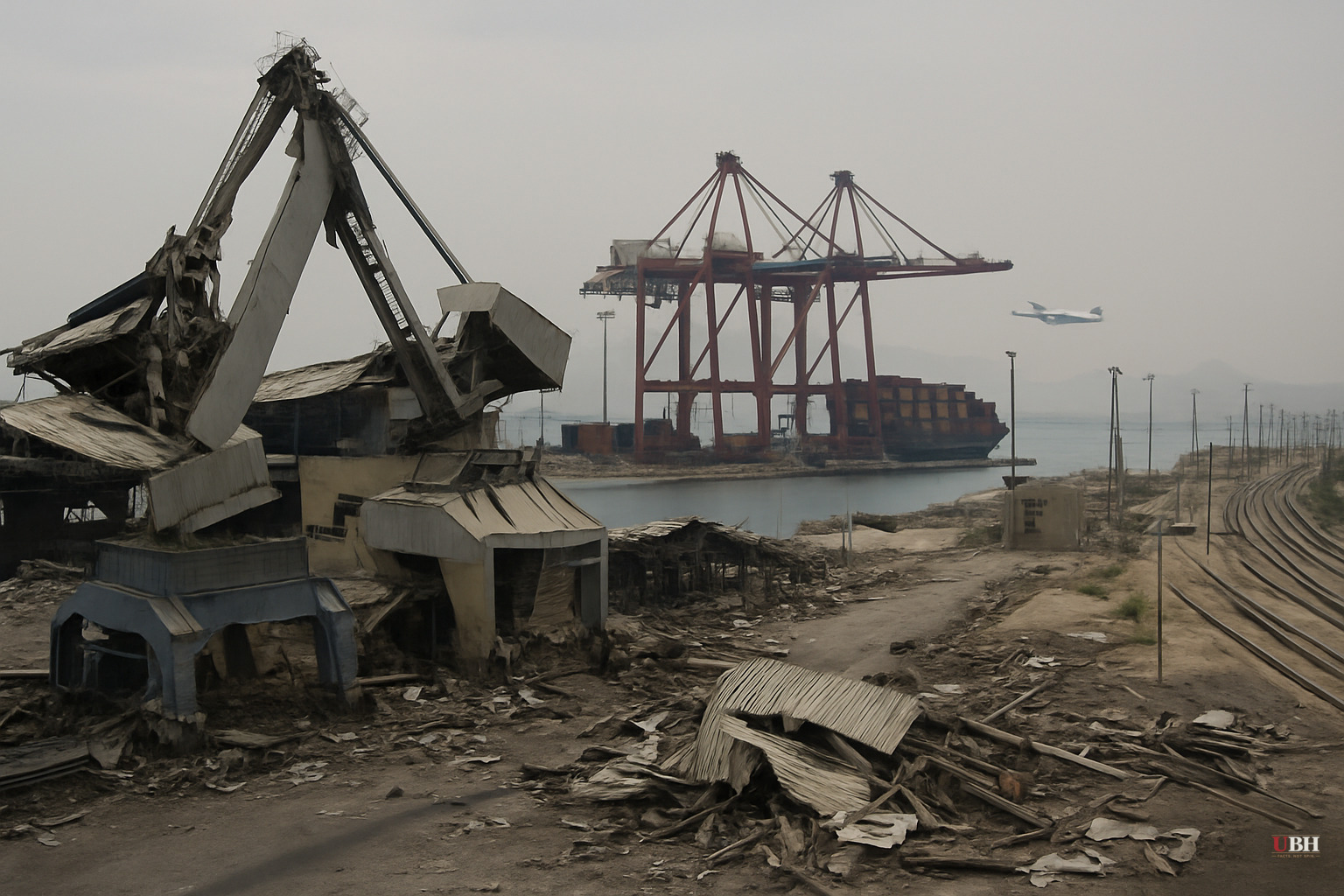
Ghorbanifar describes explosions puncturing the dawn along Iran's coastline, smoke over damaged docks, and fish markets gone silent, all part of what she calls 'a war for which no one has yet chosen a definite name.' Reporter Ali Pakzad, who visited the region during the strikes, documented missile damage stretching from Abadan near the Iraqi border down to Chabahar and Saravan near the Pakistani border, according to Iran International. He described wrecked fishing boats and battered ports where entire communities' livelihoods have been wiped out.
News anchor Fatemeh Rajabi, who first reported the US strikes on southern ports and military sites on the YouTube program Hasht-e Shab, says many people in Tehran still struggle to grasp that a war is unfolding in what they casually call 'down under,' the region along the Gulf's northern shore.
Ghorbanifar raises a question that Iranian officials haven't answered publicly: does the so-called Islamabad Understanding, the earlier framework aimed at de-escalation, still exist? Or is this the start of a new, deliberately controlled escalation rather than a continuation of the same conflict?
Iran's Own Press Is Sounding the Alarm
Iran's own government-aligned and moderate press are raising doubts about the state's ability to hold up under sustained pressure, according to Iran International's roundup of domestic coverage.
The moderate daily Sharq calls the country's situation 'structural and accumulated,' arguing that damaged infrastructure, disrupted shipping, and collapsing logistics mean even small shocks could now trigger major crises. The centrist paper Etemad warns that public trust has eroded while the state remains unprepared for cascading emergencies.
Economic outlets are blunter. Jahan Sanat argues Iran's deterrence capability is steadily weakening under the pressure. Donya-ye Eghtesad says military decisions are increasingly driven by political necessity rather than sound strategy, a dynamic it warns leaves Iran more exposed the longer the fighting drags on. Washington-based analysts Mohammad Ghaedi and Farzin Nadimi have voiced similar concerns, according to Iran International.
None of this amounts to a claim that Iran's government is collapsing or that the war is lost. It's an acknowledgment from inside Iran's own media ecosystem that the gap between official messaging about 'understandings' and 'crisis management' and the reality on the southern coast has grown hard to paper over.
What's Unresolved
No party has confirmed whether the Islamabad framework is formally dead or merely suspended. Iran has stated flatly it will not back down over the Strait of Hormuz, according to a senior military spokesman quoted by state TV. The US has not detailed what would trigger a strike on Iranian power infrastructure directly, only that Trump has threatened it and that the White House still calls diplomacy an option. Whether Qatar, Kuwait and Bahrain, all hosting US forces or allied interests, become recurring targets rather than one-off casualties of this round of fighting is the open question hanging over the Gulf right now.
Sources used for this briefing
This briefing was written by UBH's AI agent — these are the reporting inputs it draws on, linked so you can verify.


