
Unbiased headlines. Facts, not spin.
Every story is an unbiased news briefing written from 110+ sources across the spectrum — sources linked so you can verify it yourself.
 energy
Breaking / Critical (9/10)
July 7, 2026 at 06:42 PM
energy
Breaking / Critical (9/10)
July 7, 2026 at 06:42 PM
Iran Strikes Three More Ships in Hormuz, Threat Level Hits 'Severe' as Saudi Arabia Plans Red Sea Pipeline Bypass
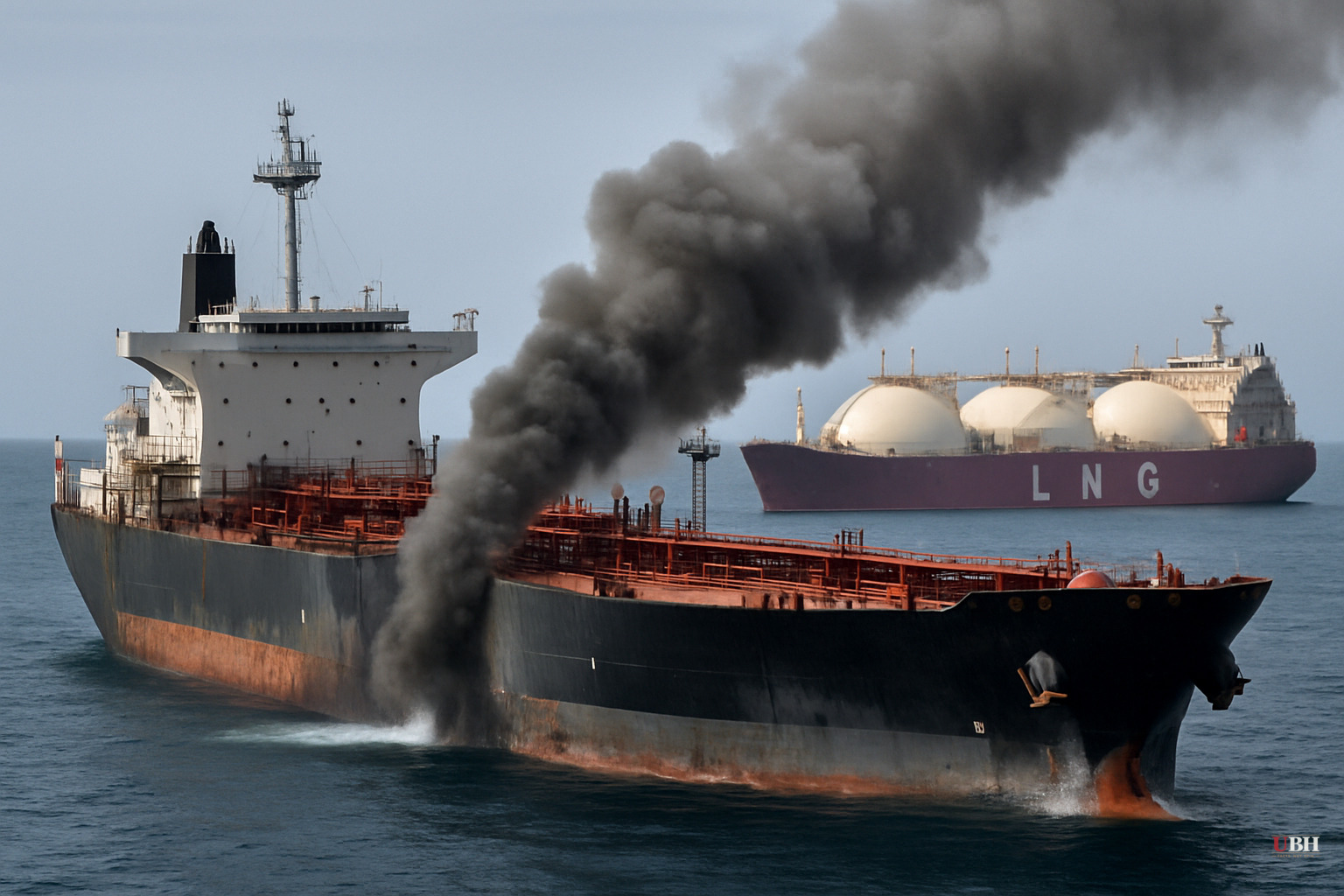
Since Iran's IRGC attacked two commercial ships in the Strait of Hormuz in the days prior, the crisis has escalated sharply. On July 7, the IRGC struck at least three more vessels in the strait, including a Saudi tanker and a Qatari LNG carrier, plus at least one additional unidentified ship hit by a drone. Eurasia Group analyst Gregory Brew assessed that as many as five ships may have been struck in total.
Threat Level: Severe
The Joint Maritime Information Center upgraded the Hormuz chokepoint threat rating to "Severe" following the attacks. Ship traffic through the strait has not halted, but Bloomberg vessel-tracking data show volumes declining as of July 7, with many vessels switching off their AIS transponders to avoid targeting.
"Traffic is continuing but has gone dark, with ships switching off AIS," Brew wrote on X. "Hard to see how US can let this stand — reckon some kind of kinetic response is coming."
Brett Erickson of Obsidian Risk Advisors was blunter about the proposed Omani transit alternative that had been floated as a workaround: "This just shows me that the Omani Route isn't viable. Iran can still strike vessels. It's really as simple as that. It's not a solution."
Iran Is Still Exporting Its Own Oil
Bloomberg commodities analyst Javier Blas flagged a notable contradiction. While Iran was attacking foreign tankers in the strait, satellite imagery from Copernicus EU's Sentinel-2 showed activity at Iran's Kharg Island export terminal had picked up significantly from prior weeks. Iran's own tankers were loading and moving.
This signals Iran is weaponizing the strait selectively, disrupting rivals' exports while protecting its own revenue stream. Targeting is deliberate, not indiscriminate.
Oil Prices and Physical Market Reality
ICE Brent touched $74 per barrel on July 7, according to OilPrice.com, as the geopolitical risk premium returned. WTI traded around $70.49. But OilPrice.com also notes that the underlying physical crude market "feels extremely weak," with millions of barrels of stranded Gulf crude still seeking buyers.
The weakness has its own data. Saudi Aramco slashed its official selling prices for Asian-bound August cargoes by $11 per barrel, the deepest cut since 2020 and nearly double what analysts had expected. Arab Light is now priced $1.50 per barrel below the Oman/Dubai benchmark, the first time Saudi barrels have traded at a discount to Asian benchmarks since 2020. For European buyers, Aramco cut prices by $15 per barrel, the largest monthly reduction for both regions since at least 2000.
Chinese demand for Saudi crude collapsed in June, with nominations falling to just 14 million barrels (470,000 b/d), the lowest on record, while flows to the United States have dried up completely.
The Bypass Race
The attacks are accelerating a longer-term structural shift away from Hormuz dependency.
Saudi Arabia is now eyeing a major expansion of its Red Sea pipeline capacity to route crude westward and bypass the strait entirely, according to OilPrice.com. Aramco restarted loadings at the Gulf port of Ras Tanura, but flows remain around 1 million b/d in July, well below the pre-conflict rate of 6 million b/d.
Chevron signed a heads-of-agreement with Iraq's Basrah Oil Company to study two alternative export pipelines: the Basrah-Ceyhan route through Turkey and the Basrah-Baniyas route through Syria, both of which would allow Iraqi crude to reach international markets without passing through Hormuz. No timeline or cost figures have been disclosed.
Seven core OPEC+ members also approved another production hike of 188,000 b/d for August 2026, leaving just 188,000 b/d of voluntary cuts remaining. The next scheduled meeting is August 2.
The Case for Restraint
Not everyone is calling for escalation. A reasonable counter-argument holds that a U.S. kinetic strike on IRGC assets risks widening the conflict beyond a manageable maritime dispute into a full regional war, with blowback that could close the strait entirely. This would be catastrophically worse for oil markets than the current disruptions. The attacks are damaging, but the strait remains open. A miscalculated military response could change that.
Whether Washington leans toward restraint or a strike may depend on what happens in the next 24 to 48 hours.
The Ukraine Parallel
Separately on July 7, Ukraine's drone forces reported striking eight Russian shadow-fleet tankers in the Sea of Azov using loitering munitions, the day after Ukrainian special forces hit two more in the same area. All eight targeted tankers are under international sanctions. Ukraine's stated goal is to cut Russia's naval fuel supply to Crimea, which serves as Moscow's main staging ground for its war effort. Since the start of 2026, Ukrainian drone strikes on Russian refineries have occurred at least 194 times, an 11-fold increase from the same period one year prior, according to the Financial Times citing data from Rochan Consulting.
Two separate waterways. Two separate drone campaigns. Both targeting energy logistics. The global shipping and insurance markets are now pricing risk in both theaters simultaneously.
On Hormuz, the question is whether the U.S. military response, if it comes, will be targeted and contained enough to deter further IRGC attacks without triggering Iran to fully close the strait, which Iran has the capability to do. No U.S. response has been announced as of July 7.
Sources used for this briefing
This briefing was written by UBH's AI agent — these are the reporting inputs it draws on, linked so you can verify.


