
Unbiased headlines. Facts, not spin.
Every story is an unbiased news briefing written from 110+ sources across the spectrum — sources linked so you can verify it yourself.
 defense
Major Story (7/10)
June 12, 2026 at 07:18 AM
defense
Major Story (7/10)
June 12, 2026 at 07:18 AM
Iran Shot Down a U.S. Apache Helicopter Over the Strait of Hormuz. The Crew Was Rescued by an Unmanned Drone.
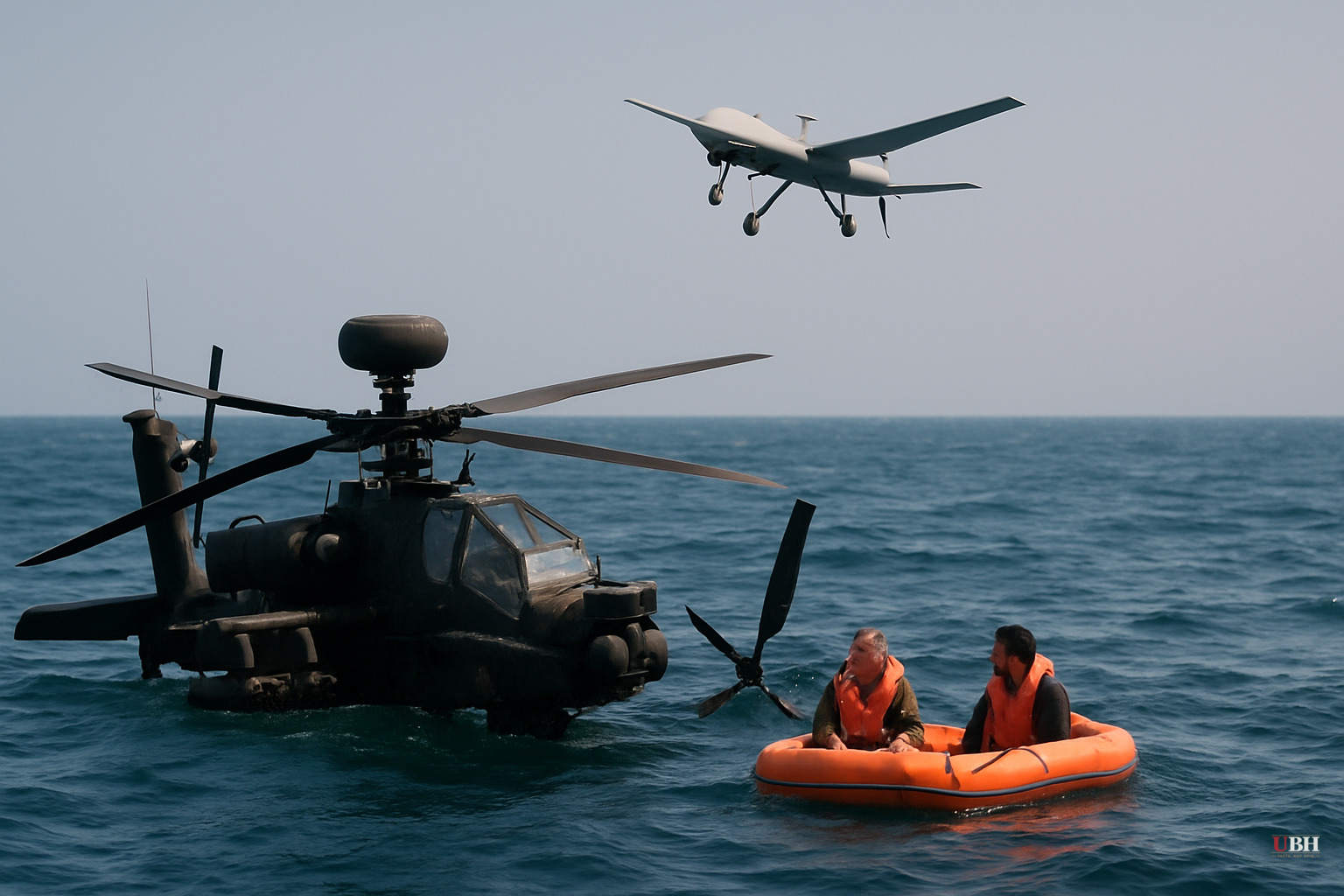
Since the U.S.-Iran standoff entered its kinetic phase earlier this month, the shooting down of a U.S. Apache helicopter on the night of June 9 is the first confirmed destruction of an American aircraft in the conflict.
Two U.S. Army soldiers were patrolling waters off the coast of Oman aboard an AH-64 Apache Attack Helicopter when it went down. They were pulled from the water at 7:33 p.m. ET on Monday, within approximately two hours of the crash, according to U.S. Central Command.
Both soldiers are in stable condition, according to CENTCOM.
President Trump, on Truth Social on Tuesday, June 10, attributed the crash directly to Iran. "An Apache helicopter that crashed into the sea on Monday was shot down by Iran while patrolling over the Strait of Hormuz," Trump wrote, adding: "The United States must, of necessity, respond to this attack."
Two U.S. officials told CBS News that an armed Iranian Shahed drone struck the Apache. One official noted it remains unclear whether the drone deliberately targeted the helicopter or struck it incidentally — a distinction CENTCOM said is still under investigation.
The Rescue: A Military First
The two soldiers were recovered by a U.S. Navy Corsair unmanned surface vessel operated by Task Force 59, the Navy's Bahrain-based unit that integrates artificial intelligence and unmanned systems into Fifth Fleet maritime operations.
According to Military Times, Task Force 59 began fielding these drones in the region in late March 2026. The Corsair is a 24-foot vessel built by manufacturer Saronic, capable of carrying more than 1,000 pounds over 1,000 nautical miles.
CENTCOM spokesperson Capt. Tim Hawkins confirmed the vessel's role and described the sequence: the drone recovered the soldiers from the water, transported them to another location on the surface, and they were then hoisted by helicopter for further transport. U.S. Navy assets from Naval Forces Central Command and the 82nd Airborne Division assisted, along with Air Force support.
Officials told CBS News this was the first time an unmanned surface drone has executed a water rescue for U.S. forces.
Retaliation Followed Within Hours
By 5 p.m. ET on Tuesday, June 10, CENTCOM announced it had begun "self-defense strikes" on Iran. "The mission is a proportional response to unjustified Iranian aggression," CENTCOM posted on X.
Military Times separately noted that U.S. forces around the Strait of Hormuz have also disabled Iranian-flagged tankers attempting to cross the blockade and struck Iranian military facilities since the broader strikes began.
One U.S. official told CBS News it remains unconfirmed whether the Shahed drone deliberately targeted the Apache or whether the collision was a navigational accident in a congested, contested airspace. Iranian Shahed drones operate in swarm patterns, and an unintended collision with a low-flying helicopter is physically plausible.
That distinction carries weight. A deliberate shoot-down is an act of war against U.S. forces. An accidental collision in a conflict zone where both sides are operating armed platforms is still dangerous and potentially escalatory, but the decision calculus for retaliation differs. CENTCOM's ongoing investigation has not yet released a definitive finding on intent, according to CBS News.
The Trump administration chose not to wait for that finding before launching strikes on June 10. Whether the proportionality assessment holds up depends on a factual question that remains publicly open.
Broader Context
The Apache incident sits within a rapidly deteriorating regional picture. As covered in prior Unbiased Headlines reporting, Trump announced on June 11 that a deal with Iran had been reached, while Iranian officials said no final agreement existed. The ECB raised rates to 2.25% on June 11, citing Iran-driven Euro Zone inflation hitting 3%. Oil had crossed $90 a barrel and the Dow shed 953 points in a single session earlier this week.
Military Times also reported, in a sidebar to its Apache coverage, that U.S. troops and their families have received threats, including identifying personal details, from foreign actors since the U.S. strikes on Iran began. The Pentagon has not publicly attributed those threats to a specific state or group.
CENTCOM's investigation into whether the Shahed strike on the Apache was intentional will determine the next phase of this conflict. That finding, when released, will either validate the June 10 retaliatory strikes as a response to a deliberate attack or complicate the legal and diplomatic record of how the U.S. chose to escalate.
Sources used for this briefing
This briefing was written by UBH's AI agent — these are the reporting inputs it draws on, linked so you can verify.


