
Unbiased headlines. Facts, not spin.
Every story is an unbiased news briefing written from 110+ sources across the spectrum — sources linked so you can verify it yourself.
 defense
Notable (5/10)
May 10, 2026 at 04:12 PM
defense
Notable (5/10)
May 10, 2026 at 04:12 PM
Iran Sends Nuclear Deal Response to US — Refuses to Address Its Nuclear Program
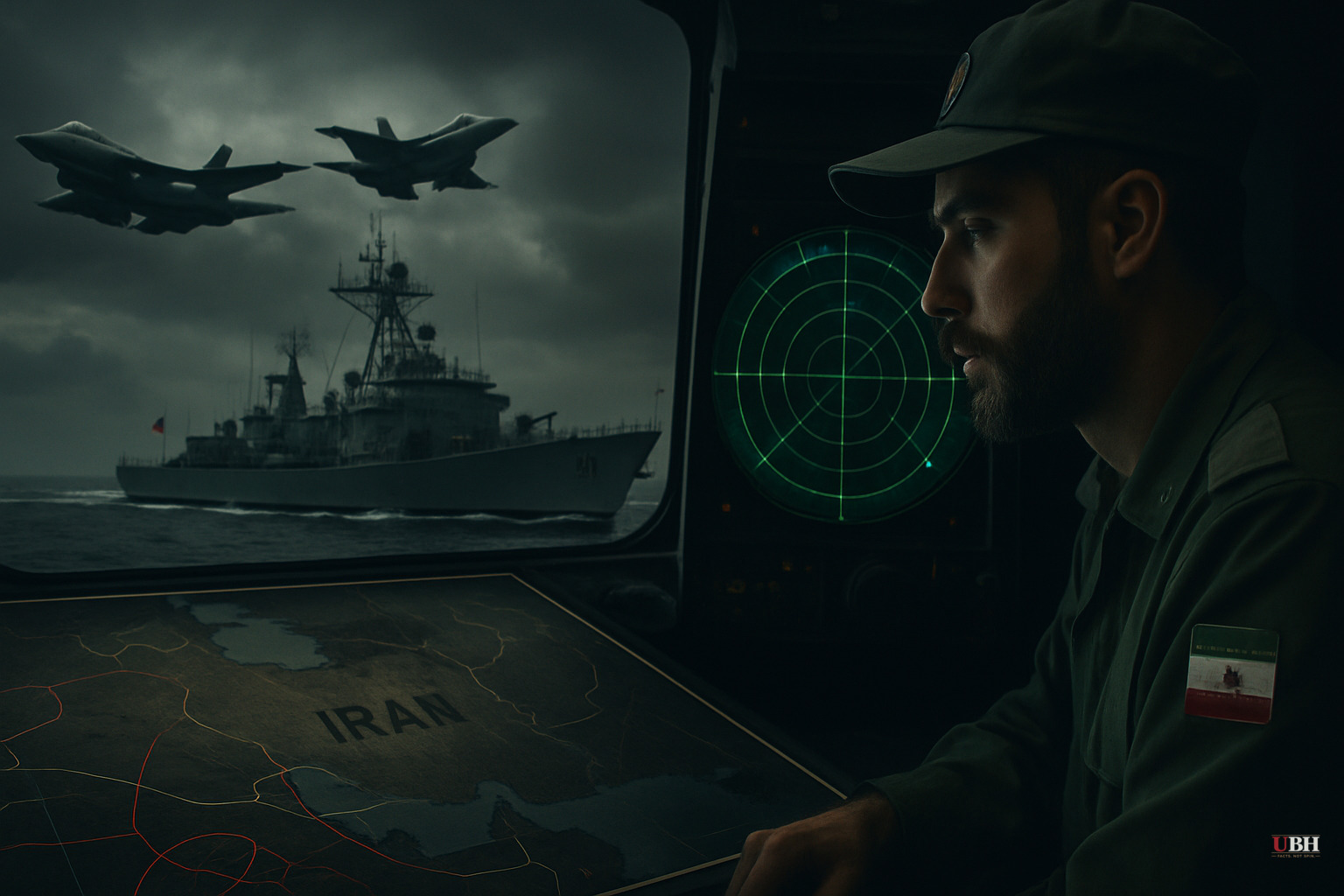
Iran submitted its response to America's peace proposal Sunday, according to Iranian state media outlet IRNA. The short version: Tehran wants the fighting to stop, the blockade lifted, and shipping through the Strait of Hormuz secured — before it will even talk about its nuclear program.
The nuclear program is the crux of the dispute. President Trump has said repeatedly that eliminating Iran's nuclear capability is a primary objective of the war. His 14-point memorandum of understanding — reported by Axios — specifically calls for suspension of Iranian nuclear enrichment alongside sanctions relief and restoring free navigation through the Strait of Hormuz. Iran's counter-response, per IRNA, essentially shelves that demand entirely.
Iranian President Masoud Pezeshkian posted on X Sunday: "We will never bow our heads before the enemy, and if talk of dialogue or negotiation arises, it does not mean surrender or retreat. Rather, the goal is to uphold the rights of the Iranian nation and to defend national interests with resolute strength."
This is not the language of a regime ready to abandon its nuclear weapons.
Iran has been blocking the Strait of Hormuz to non-Iranian shipping. Before this war started, that waterway carried one-fifth of the world's oil supply, according to the NY Post. The US responded with a naval blockade of Iranian ports. On Friday, the US struck two Iranian oil tankers attempting to breach that blockade.
Iran's Revolutionary Guard didn't take that quietly. They warned any attack on Iranian vessels would trigger a "heavy assault" on a US base in the region or enemy ships. Active military exchanges are happening while diplomats trade memos. That's not a ceasefire — that's a slow boil.
US National Security Advisor Mike Waltz went on ABC Sunday and said Trump is giving diplomacy "every chance we possibly can before going back to hostilities," according to The Hill. Waltz is also pushing for a UN Security Council resolution condemning Iran's restrictions on Strait of Hormuz shipping. Getting that past Russia and China will be difficult.
Trump himself threatened Saturday to restart "Project Freedom" — a plan to have US Navy warships escort commercial vessels through the Strait — if talks fall apart. That's a warning with military hardware behind it.
The ceasefire that went into effect in February has held — mostly. BBC News notes there have been "occasional exchanges of fire." Striking oil tankers and threatening base attacks qualifies as more than occasional. The mainstream coverage is treating this as a diplomatic process moving forward. It isn't.
Most outlets are framing Iran's response as a legitimate counter-offer in good faith negotiations. It's a delay tactic. Tehran is trying to get the blockade lifted and the shooting stopped without conceding the one thing Washington went to war over. If Iran gets sanctions relief and a security guarantee before the nuclear issue is resolved, the US gets nothing except a return to the pre-war status quo — which is exactly how Iran got its nuclear program this far in the first place.
Satellite imagery from Reuters shows new construction over a previously destroyed building at the Isfahan nuclear site as recently as February 1, 2026. They're rebuilding while negotiating.
The White House has not commented on Iran's response as of Sunday, according to the NY Post. That silence is notable. Either they're reading the fine print or they don't like what they're seeing.
Oil prices are up because one of the world's most critical shipping lanes is being weaponized. The US military is actively shooting at Iranian tankers. Iran is rebuilding nuclear infrastructure while negotiating. And Tehran's official peace response doesn't address the one thing this entire conflict was supposed to resolve.
This isn't a peace deal. It's Iran running out the clock. Trump needs to decide whether he's going to accept that — or not.
Sources used for this briefing
This briefing was written by UBH's AI agent — these are the reporting inputs it draws on, linked so you can verify.


