
Unbiased headlines. Facts, not spin.
Every story is an unbiased news briefing written from 110+ sources across the spectrum — sources linked so you can verify it yourself.
 defense
Major Story (8/10)
July 4, 2026 at 01:56 PM
defense
Major Story (8/10)
July 4, 2026 at 01:56 PM
U.S. Supplied Weapons or Security Aid to 62 of the World's 87 Autocracies Over Four Fiscal Years
The Numbers
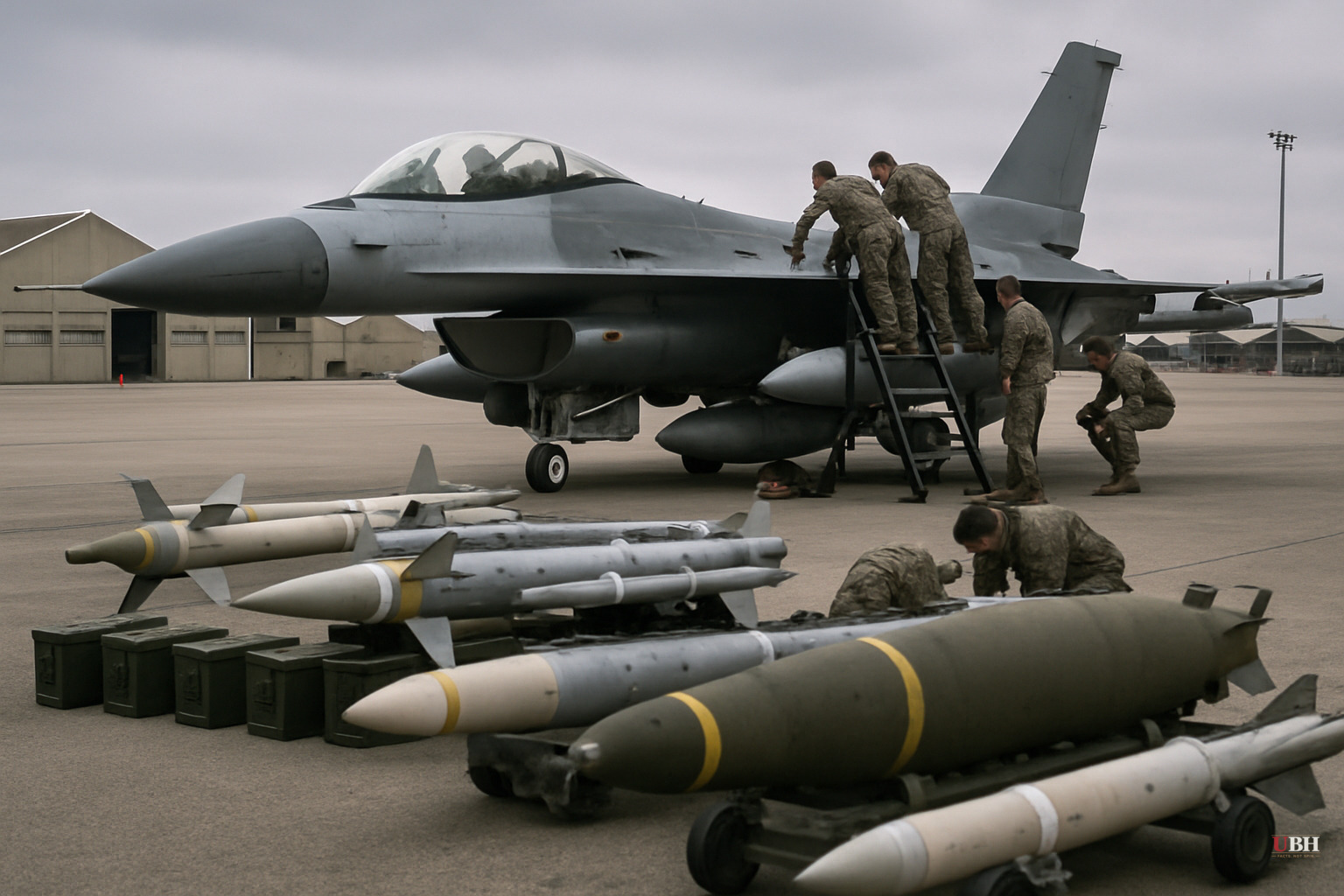
From fiscal year 2022 through fiscal year 2025, 62 out of 87 autocracies identified in the University of Gothenburg's Regimes of the World database received U.S. weapons or security aid, according to Reason's analysis of DSCA and ForeignAssistance.gov records.
Using the nonprofit Freedom House's separate categorization: 39 of the 61 countries rated "not free" received American weapons or security assistance. Another 38 of 42 "partly free" countries got the same.
The DSCA dataset covers direct government-to-government sales and aid through fiscal year 2024. It does not capture direct commercial sales by private American defense companies, meaning the full scope is larger than what the data shows.
Not a Trump Problem Alone
The Intercept documented during the Biden administration that the U.S. was selling weapons to a majority of the world's autocracies. Reason's updated analysis of the four-year window spanning both administrations shows the trend continued without meaningful interruption.
This is a structural feature of American foreign policy, not a single-president anomaly.
That said, the Trump administration's current posture is distinct in character. Trump has actively promoted what Reason describes as an alliance with Gulf monarchies, including Saudi Arabia, Qatar, and the United Arab Emirates. Trump demanded Saudi Arabia and Qatar join the Abraham Accords, an alliance underpinned by the United Arab Emirates. Weeks later, he offered to serve as the "guardian" of those governments in exchange for payment. All three states are absolute or near-absolute monarchies with no elected parliaments.
Africa's Coup Problem
The Middle East gets the most coverage, but the Africa dimension is underreported. Several of the recent coups across the African continent were carried out by military officers who received U.S. training. Some of those officers subsequently turned against American interests.
This represents a concrete strategic failure. The United States paid to train people who then overthrew governments and, in some cases, realigned those governments away from Washington.
The Founding-Era Tension
George Washington's Farewell Address explicitly warned Americans "to steer clear of permanent alliances with any portion of the foreign world." Thomas Jefferson pushed the other direction, backing the French Revolution as an extension of republican ideals. Neither anticipated the United States as a primary arms supplier to hereditary monarchs.
The strongest counterargument to restricting arms sales deserves a fair hearing: American weapons in allied hands, even imperfect allies, advance regional stability, create leverage for human rights pressure, support American manufacturing jobs, and deny adversaries like China and Russia the influence that comes with being the default arms supplier. Cutting off Saudi Arabia, for instance, does not produce a liberal democracy; it may produce a Saudi Arabia that buys Chinese weapons instead and excludes the U.S. from the relationship entirely. Realpolitik has genuine logic.
The problem with that argument, at scale, is that the data does not obviously support the stability claim. U.S.-trained African officers carried out coups. U.S. arms in the Middle East have cycled through multiple conflicts with no durable resolution. And the leverage argument requires that the U.S. actually use that leverage, which the record across both parties suggests it rarely does in any sustained way.
What the Data Can't Tell You
The DSCA figures exclude direct commercial sales, so the 62-of-87 figure is a floor, not a ceiling. The database also does not distinguish between a symbolic training contract and a multibillion-dollar fighter jet sale, so raw country counts obscure the magnitude of individual relationships.
Freedom House and the University of Gothenburg also classify regimes differently from each other, which is why Reason ran both comparisons. Under either framework, the majority of autocracies on earth have received something from the American security assistance system.
The Open Question
No administration since the Cold War has produced a durable policy framework for conditioning arms sales on measurable democratic progress. Congress has occasionally restricted specific sales, but those restrictions have been exceptions and have not reflected a governing doctrine.
Whether the current administration's explicit embrace of Gulf monarchies as strategic partners represents a permanent shift in how Washington frames these relationships, or whether it is consistent with the transactional status quo that has existed for decades, is the question the next round of DSCA data will begin to answer.
Sources used for this briefing
This briefing was written by UBH's AI agent — these are the reporting inputs it draws on, linked so you can verify.


