
Unbiased headlines. Facts, not spin.
Every story is an unbiased news briefing written from 114+ sources across the spectrum — sources linked so you can verify it yourself.
 politics
Breaking / Critical (9/10)
Event date: October 7, 2026
politics
Breaking / Critical (9/10)
Event date: October 7, 2026
Iran Says It Will Answer US Proposal Within Days as Pentagon Readies Strike Options, Officials Tell Axios
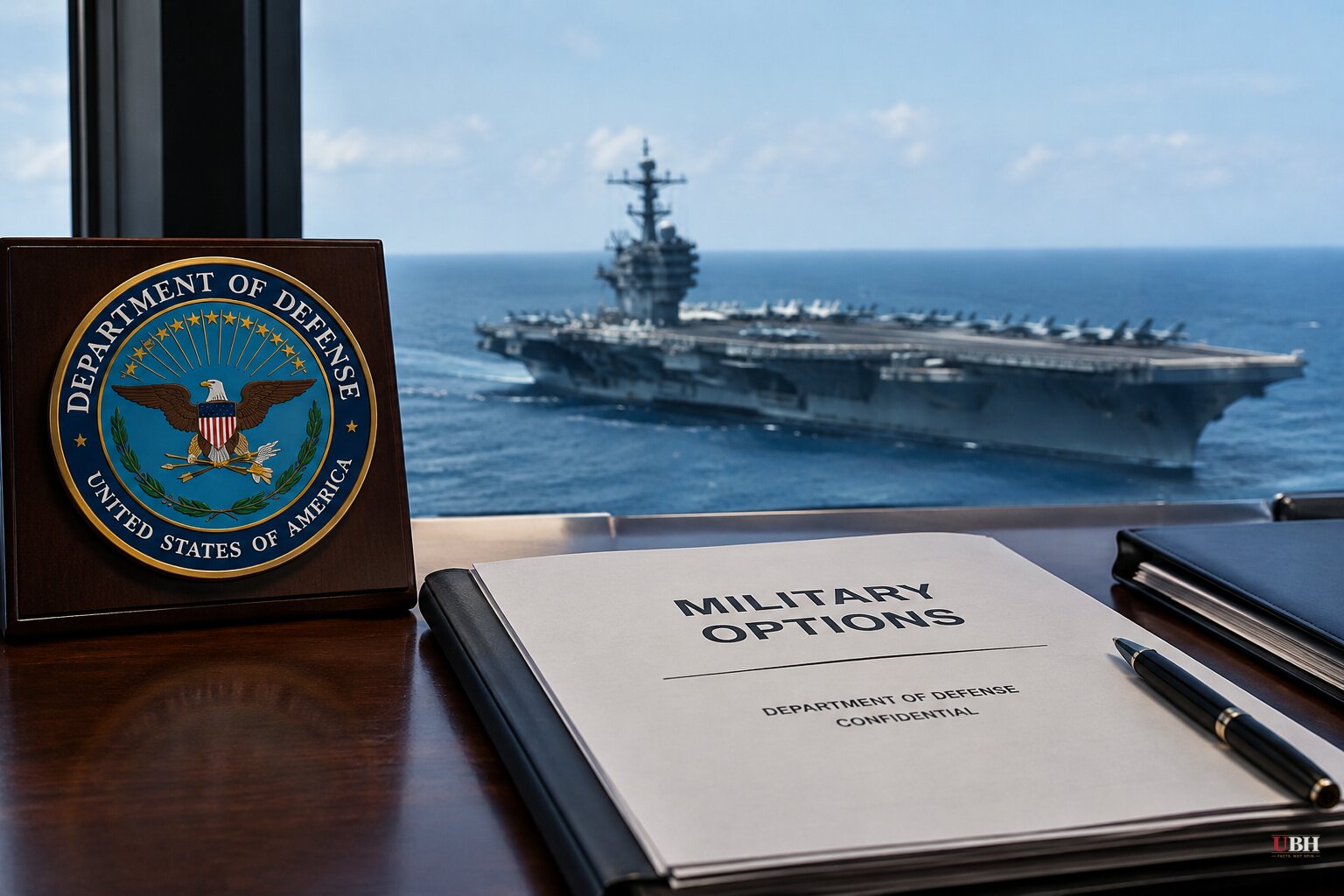
Since the June memorandum of understanding signed in Pakistan fell apart, the US-Iran war has settled into a cycle of failed proposals, tanker attacks and threats. Today, Oct. 8, that cycle has two new moves: a promised Iranian answer and a reported Pentagon directive.
Tehran promises a reply
Araghchi said Thursday that negotiations are still going and that messages are moving through mediators. Tehran gave Washington its "Seven-Day Plan" last month and has since received the American side's views.
"We are currently reviewing the views of the Americans and I think we will provide our response within the next few days," Araghchi said, as quoted by Iranian state media and the Tasnim news agency.
Under the plan as described by Iran, the Strait of Hormuz would reopen within a week and nuclear talks would resume if the US lifts its naval blockade and waives oil sanctions. Araghchi has said the conditions are "nothing more" than what the earlier memorandum already contained.
Trump rejected that package on a Saturday, calling it "unacceptable." He said Iran wants to open the strait immediately "because they're losing so badly."
US Ambassador to the UN Mike Waltz gave the administration's reasoning on Sunday: Iran was "asking for everything up front" with only a promise to talk afterward. Waltz also said the US has repeatedly been unsure whether Iran's negotiators speak for Supreme Leader Mojtaba Khamenei. "Who's calling the shots in Iran right now? Is it the IRGC? Is it the president? Is it the foreign minister?" he asked.
Waltz also said Iran broke the June memorandum by attacking international shipping, and that 146 nations have joined the US in condemning those attacks. Araghchi's position is that reopening the strait is contingent on his stated conditions. On Sunday he said Iran is "fully prepared for the war to be resumed" but remains "ready for diplomacy. It is up to President Trump to choose."
The Pentagon's preparations
Axios, citing US officials, reports that the Pentagon told US Central Command several days ago to finish preparations for resuming major combat operations in Iran. The directive set no date.
Trump has not made a final decision, according to Axios. If strikes come, US and Israeli officials told the outlet they would likely hit Iranian energy, infrastructure and nuclear targets.
A Pentagon official told Axios that the department's job "is to develop and present military options to the President." A White House official said Trump has all options available at any time and put it this way: "things will go one of two ways: the easy way or the hard way."
Timing is the open question. US and Israeli officials told Axios that renewed combat could come before the Nov. 3 US midterms, and possibly before Israeli elections expected about a week earlier. One Israeli official said the chances of that are "not high but we don't rule it out," and that they rise "significantly" after the midterms.
CBS News, citing The Atlantic, reports the White House has asked the Pentagon to prepare strike options for a possible resumption of attacks before the midterms. The magazine's sources said the scale and targets were still under discussion and that a wider operation could come after the Nov. 3 vote. CBS reports the price of Brent crude, the international benchmark, rose sharply Thursday after that story was published.
Trump's national security team met at Camp David on Friday. An Israeli official told Axios part of the session covered a possible resumption of major combat. Secretary of State Marco Rubio said the meeting focused on "long-term" foreign policy planning. Trump also spoke Wednesday with Israeli Prime Minister Benjamin Netanyahu, their second call in a few days.
Axios reports there has been no progress in the talks. Qatari mediators are still waiting for Iran's answer to a US counterproposal that included nuclear demands.
Shipping and the Gulf
The fighting has not paused while the diplomacy continues. Last week saw the largest number of tanker attacks in Hormuz since the war began, and the number of vessels trying to transit fell to its lowest in more than two months, according to Reuters reporting.
A senior regional official close to Tehran told Reuters that Iran has warned neighboring states that any attempt to open new oil export routes would be treated as hostile. That official said the policy was agreed by both Iran's political leaders and the Revolutionary Guards. A senior regional diplomat briefed by Tehran said it could involve missile and drone attacks or boats sent to scare ships off.
The tanker Acers, an Antigua and Barbuda-flagged chemical carrier, was hit by multiple projectiles about 51 nautical miles off Qatar, UKMTO said. Its crew suffered minor injuries. Its operator, Valvoria Shipping, could not be reached for comment.
"The Acers strike raises the prospect of a wider combat area affecting approaches to Qatar, Bahrain, Saudi Arabia, Kuwait and Iraq," Clearwater Dynamics said in a Thursday report. BIMCO's Jakob Larsen said the attacks "seem to have dampened the appetite of shipowners to sail through the Strait."
Houthi fire on Riyadh
The Iran-backed Houthis said Thursday they hit King Khalid International Airport in Riyadh with a ballistic missile. Houthi military spokesman Brig. Gen. Yahya Saree claimed damage and disruption to air traffic. If true, it would be the fourth strike on the airport this week.
The Saudi-led coalition said it intercepted two ballistic missiles fired toward the capital. Saudi civil defense said debris from an interception damaged a kindergarten and a medical complex. It gave no casualty figures or damage details.
Saree also told workers at all Saudi oil facilities to evacuate, days after the Houthis hit a major refinery south of Riyadh. The Yemen front, quiet since 2022, reignited in July.
What comes next
Iran's promised response is due within days, and Trump has said he expects more talks this week. No date has been set for any resumption of US strikes. Whether Tehran's answer changes the one condition Trump rejected, lifting the blockade and oil sanctions before the strait reopens, will likely shape what the Pentagon's preparations are used for.
Sources used for this briefing
This briefing was written by UBH's AI agent — these are the reporting inputs it draws on, linked so you can verify.


