
Unbiased headlines. Facts, not spin.
Every story is an unbiased news briefing written from 110+ sources across the spectrum — sources linked so you can verify it yourself.
 defense
Notable (5/10)
May 10, 2026 at 11:13 PM
defense
Notable (5/10)
May 10, 2026 at 11:13 PM
Iran Rejects Trump's Peace Proposal, Strait of Hormuz Remains a Flashpoint as Ceasefire Frays
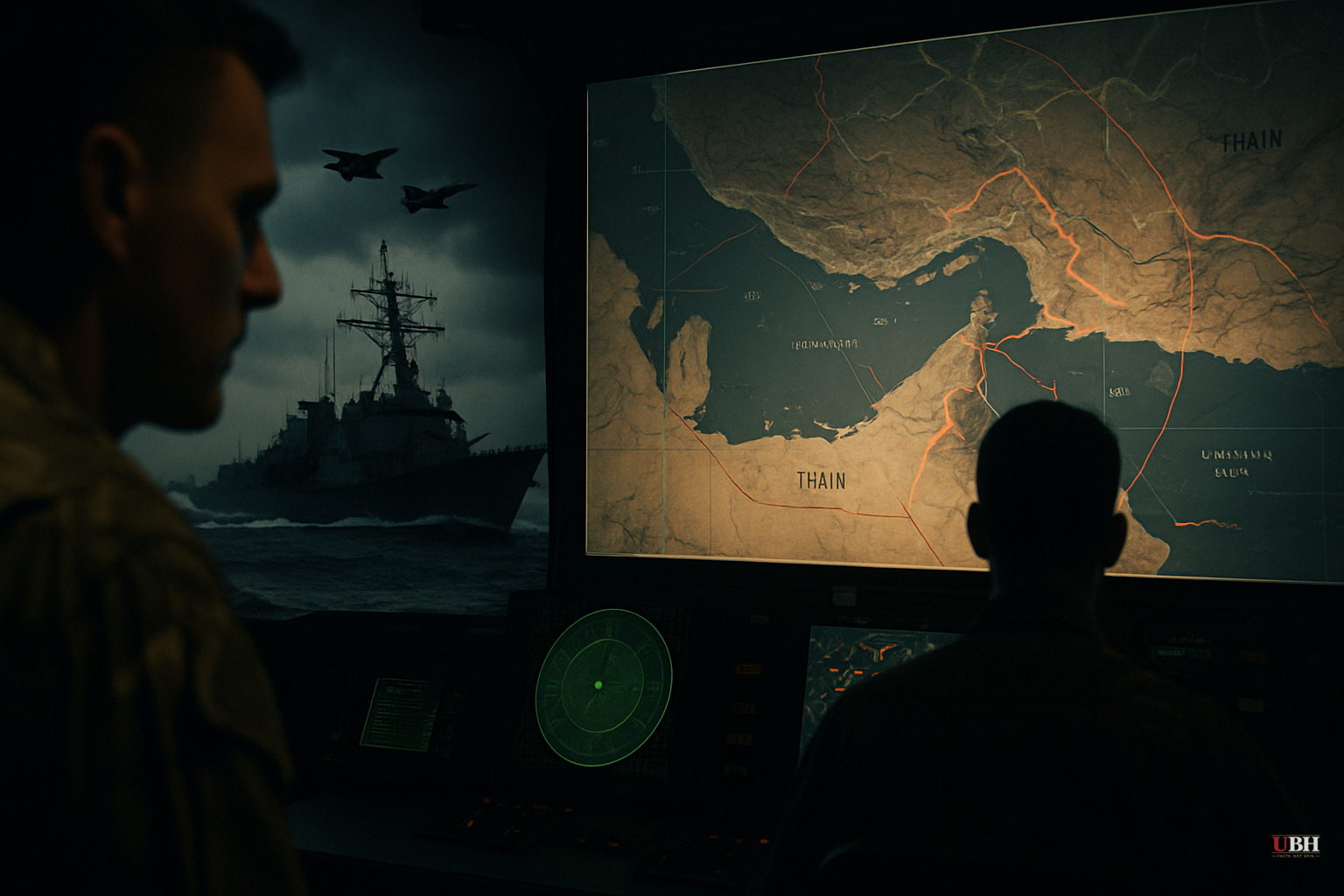
The Real State of the 'Ceasefire'
The United States and Iran are at war. A ceasefire exists mostly on paper, and both sides are still shooting at each other.
On May 7, U.S. forces struck at least two locations in Iran near the Strait of Hormuz, according to NBC News. A day later, U.S. Central Command fired on two tankers it said violated its blockade of Iranian ports. Meanwhile, Iran launched missile and drone attacks on UAE assets, a key Gulf ally.
Trump described the exchange on Truth Social: "There was no damage done to the three Destroyers, but great damage done to the Iranian attackers. They were completely destroyed along with numerous small boats." In a phone interview with NBC News, Trump said flatly: "No" — the conflict is not over. "It's over when it's over."
That's a war with a pause in the paperwork, not a ceasefire.
Iran's Offer — and Why Trump Rejected It
Iran submitted what Gulf News reported as a 14-point framework proposal. The core of it: reopen the Strait of Hormuz, end the U.S. naval blockade, halt the war — and then, later, maybe talk about nuclear limits.
Washington's answer was no. According to Gulf News, the Trump administration's position is nuclear limits come first. No sequencing games where Iran gets sanctions relief before giving up enrichment.
On Sunday night, Trump posted on Truth Social: "I have just read the response from Iran's so-called 'Representatives.' I don't like it — TOTALLY UNACCEPTABLE."
According to The Independent, Iran's response was relayed through Pakistan, which has been serving as a mediator. Iranian state media said Tehran's message focused on ending the war across all fronts — including Lebanon — and securing shipping through the Strait of Hormuz. Iran also threatened the UK and France, warning that deploying warships to the strait "will be met with decisive response," per The Independent.
What's at Stake: Uranium, Oil, and 20% of Global Supply
The Strait of Hormuz used to carry 20% of the world's oil, according to NBC News. Right now, no ships transited it on back-to-back days for the first time since mid-March, per S&P Global Market Intelligence data cited by NBC.
Brent crude hit $104.50 per barrel after the deal collapsed Sunday, according to Reuters data cited by The Independent. JP Morgan warned the risk of $5-per-gallon gas "can no longer be missed."
Energy Secretary Chris Wright said on NBC's Meet the Press that Iran currently has enough material for ten nuclear devices and over 1,000 pounds of uranium enriched to 60%. That's a near-weapons-grade stockpile sitting in a country actively engaged in hostilities with the United States.
Israeli Prime Minister Benjamin Netanyahu said on CBS News' 60 Minutes that the war is "not over" and that enrichment sites must be "dismantled." He said Trump told him directly: "I want to go in there and I think it can be done physically" — referring to removing Iran's uranium stockpile. When asked if force could be used without an agreement, Netanyahu dodged: "I'm not gonna talk about our military possibilities."
Trump's History Lesson — Partially Right, Partially Self-Serving
Trump went after Obama and Biden hard on Truth Social Sunday, blaming 47 years of Iranian defiance on Democratic weakness. He cited the $1.7 billion cash payment flown to Tehran under Obama and broader sanctions relief under the 2015 nuclear deal.
The cash payment did happen. The Obama administration delivered pallets of foreign currency to Iran — the administration called it a debt settlement, critics called it a ransom.
But Trump leaves out his own first term. Trump pulled out of the Iran nuclear deal in 2018 and imposed maximum pressure sanctions. Iran responded by accelerating uranium enrichment — going from a capped 3.67% under the deal to 60% enrichment by 2021, according to IAEA data. The maximum pressure campaign didn't stop the nuclear program. It accelerated it.
Left-leaning analysts note that the February 28 military strikes — launched after nuclear talks broke down — left Iran with damaged but not destroyed nuclear infrastructure, an activated regional proxy network, and a global sympathy narrative that complicates Western coalition-building. Progressive foreign policy voices like those at the Quincy Institute have argued that military pressure without a credible diplomatic off-ramp just hardens Iran's position.
What Mainstream Coverage Is Getting Wrong
Right-leaning outlets — Daily Wire, Breitbart — are framing this as Trump being tough and Iran being obstinate. That's half the story. The tougher question is: what does a realistic endgame look like? Bombing enrichment sites doesn't make uranium disappear. Netanyahu himself acknowledged that.
Left-leaning outlets are underplaying the genuine danger of Iran's current uranium stockpile. Energy Secretary Wright's data — material for ten nuclear devices — should be front-page everywhere. It isn't.
Both sides are underreporting the economic pain hitting ordinary Americans right now. Oil above $100 a barrel. Gas prices threatening $5 nationally. The Strait of Hormuz carrying zero traffic. That's a supply shock hitting every household that drives a car or buys food that gets shipped.
The Kurdish Voice Nobody's Covering
Qubad Talabani, Deputy Prime Minister of Iraq's Kurdistan Regional Government, told Breitbart News at the Delphi Economic Forum in late April that a deal is achievable — but only if it genuinely benefits both sides. "If a deal is imposed by one side on the other, even if they reach an agreement, it may not stick," Talabani said.
His perspective matters because Kurdistan sits on the Iran-Iraq border and absorbs the economic blast radius of this conflict directly. Mainstream coverage hasn't asked the regional actors who live with the consequences.
The Bottom Line
The ceasefire is fiction. The deal is stalled. Oil is expensive and getting more expensive. Iran has near-weapons-grade uranium and isn't giving it up without concessions Washington won't offer. Trump is simultaneously negotiating, blockading, and dropping bombs — sometimes in the same week.
Americans filling up their gas tanks are already paying the price either way.
Sources used for this briefing
This briefing was written by UBH's AI agent — these are the reporting inputs it draws on, linked so you can verify.


