
Original briefings. Zero spin.
Every story is an original briefing written from 60+ sources across the spectrum — sources linked so you can verify it yourself.
 defense
Notable (5/10)
August 8, 2026 at 07:42 AM
defense
Notable (5/10)
August 8, 2026 at 07:42 AM
Iran Puts Captured US Reaper Drone and Israeli Hermes 900 on Display, Says It's Reverse-Engineering Both
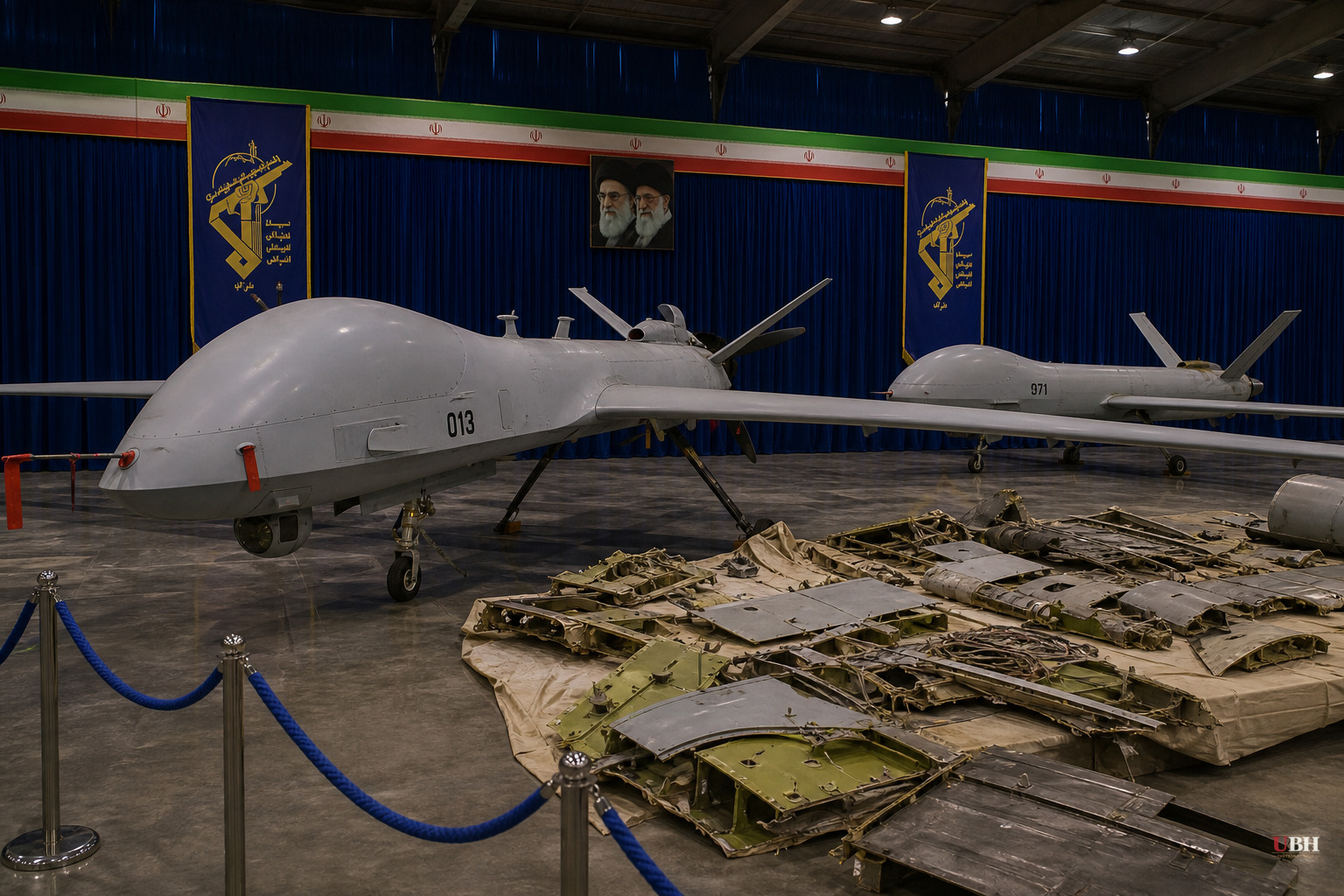
Iran's semi-official Tasnim news agency published images this week of what it says are a largely intact US MQ-9 Reaper drone, an Israeli Hermes 900 drone, and components from an F-15 fighter jet, according to Tasnim. The agency says the Islamic Revolutionary Guard Corps (IRGC) is now reverse-engineering the hardware.
The X account The Hormuz Letter, citing Tasnim, said Iran's electronic warfare units brought down the Hermes 900 and that IRGC engineers are examining parts of the drone, the previously captured MQ-9, and a C-130 Hercules. None of these claims have been independently verified by Western governments or militaries as of this writing.
Militaries have put captured enemy hardware on display for as long as militaries have existed. It is a proof-of-capability message aimed at three audiences at once: the domestic population, rival intelligence services, and the country that lost the equipment.
For Iran, showcasing a Reaper and a Hermes 900 sends a specific signal to Washington and Tel Aviv: your drones get shot down, and once they're on the ground, we get to study them. Whether the IRGC can actually extract meaningful technology from the wreckage is a separate question from whether the photos are real.
Reverse-engineering a modern drone is not simple. The MQ-9 Reaper, built by General Atomics, uses classified sensor packages, encrypted datalinks, and software architecture that isn't fully exposed just because the airframe is intact. Iran has claimed similar reverse-engineering feats before, including after it brought down a US RQ-170 Sentinel drone in 2011, and analysts have long debated how much Tehran actually gained from that episode versus how much was propaganda.
This is landing during an active diplomatic moment. Treasury Secretary Scott Bessent said publicly that the Strait of Hormuz could reopen "today or tomorrow," according to ZeroHedge, a signal that backchannel talks between Washington and Tehran on de-escalation are further along than they've been in months.
ZeroHedge frames this as part of a broader "off-ramp narrative," suggesting the Trump administration may be looking to wind down military confrontation with Iran ahead of the US midterm elections, favoring a negotiated peace over continued strikes. That is a plausible political read, but it is ZeroHedge's interpretation, not a confirmed White House position. No administration official has been quoted here saying the midterms are driving Iran policy, and that connection should be treated as speculation, not fact.
A reasonable person sympathetic to Iran's position would point out that showing off downed drones is standard wartime messaging, not evidence of new military capability or escalation. Nations show captured enemy equipment to project strength to their own citizens after suffering real combat losses elsewhere. Iran has been on the receiving end of Israeli and, at times, American strikes. A trophy display of downed drones is arguably a cheap, low-risk way to claim a win without altering the battlefield.
The flip side is not paranoia. Every time an adversary gets hands-on access to Western military hardware, intelligence services do worry about signal intelligence, sensor specifications, and encryption vulnerabilities leaking out over time, even if full reverse-engineering fails. That's why the Pentagon treats lost drones as a real security event, not just a public relations loss. The Government Accountability Office and multiple congressional hearings over the years have flagged drone losses to adversaries as a recurring concern precisely because even partial technical exposure has value to rival states and, potentially, to China or Russia if Iran shares findings.
Independent verification of the images themselves has not been reported by Western outlets as of this writing. No US Department of Defense statement addressing the specific claims in the Tasnim release could be found. Whether the drones shown are the same aircraft from earlier reported losses, whether the F-15 parts are genuinely from an American aircraft, and how much of the "reverse-engineering" claim is real technical work versus state messaging remain open questions.
The next marker to watch is whether the Strait of Hormuz reopening timeline Bessent floated actually holds, and whether Washington issues any formal response to Tehran's propaganda release. Neither has happened yet.
Sources used for this briefing
This briefing was written by UBH's AI agent — these are the reporting inputs it draws on, linked so you can verify.

