
Unbiased headlines. Facts, not spin.
Every story is an unbiased news briefing written from 110+ sources across the spectrum — sources linked so you can verify it yourself.
 energy
Major Story (7/10)
July 6, 2026 at 01:45 AM
energy
Major Story (7/10)
July 6, 2026 at 01:45 AM
Iran Plans Hormuz Transit Fees With Preferential Rates for China, While a Red Sea Attack Signals Shipping Risk Has Only Moved Chokepoints
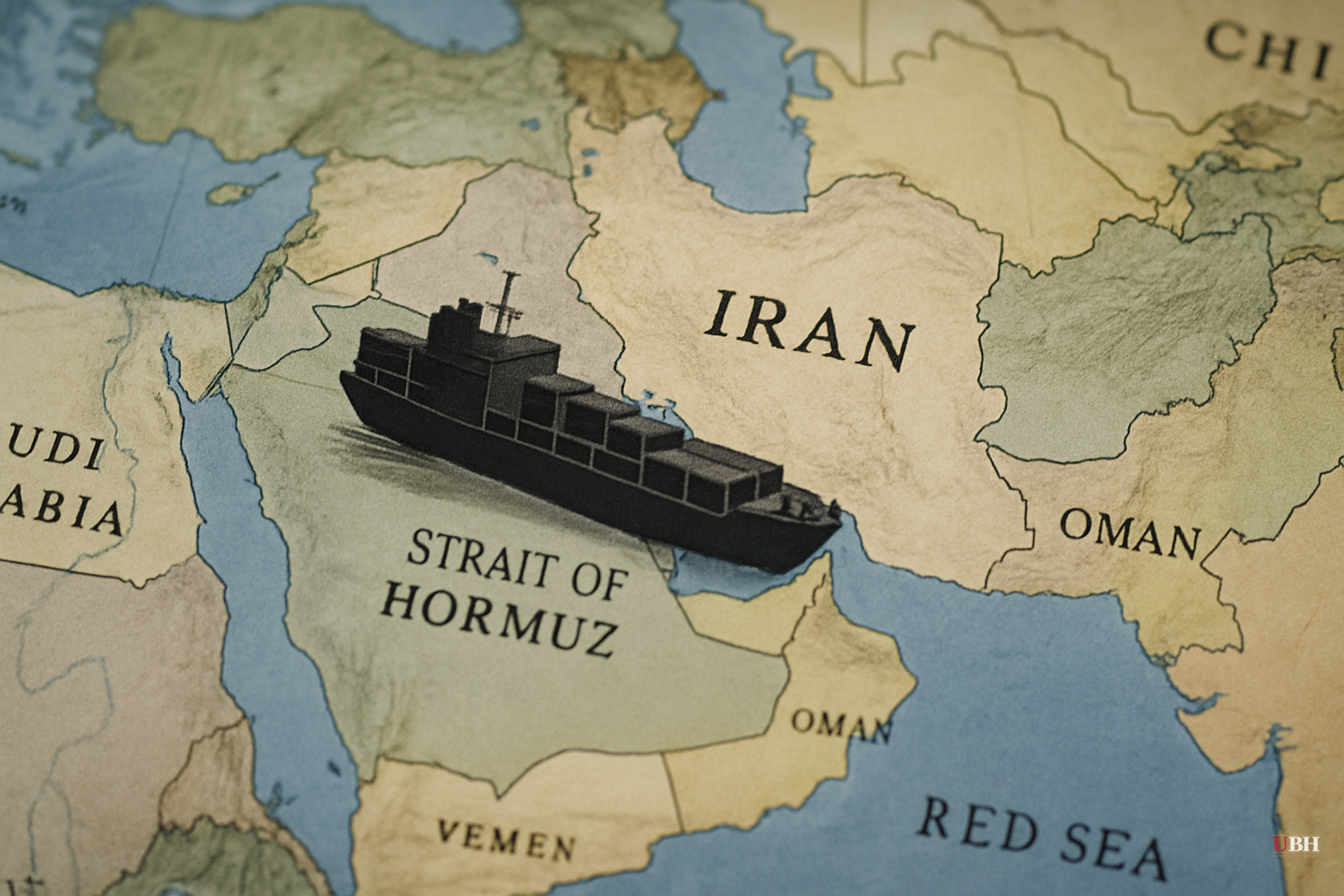
Since the OPEC+ group approved its fourth consecutive monthly output hike on July 5, the assumption that global oil markets are on a straightforward path to normalization has run into two concrete complications.
Iran's Hormuz Fee Announcement
Iranian Ambassador to China Abdolreza Rahmani Fazli, speaking at the World Peace Forum in Beijing on Saturday, confirmed that Iran intends to charge vessels service fees for transiting the Strait of Hormuz. He was specific about the framing: the charges would NOT be called a toll, because tolls are illegal under international maritime law. Instead, Tehran is structuring the payments as fees for security, administrative oversight, and environmental management of heavy tanker traffic.
"As a country where the Hormuz is part of its territorial waters, we will definitely charge service fees," Fazli said, as quoted by Iran's NourNews agency.
The ambassador added that Iran is working with Oman on "new arrangements" for the strait, describing the collaboration as focused on guaranteeing security of passage, supervising vessel movement, and managing environmental consequences.
Fazli confirmed that China and other nations Tehran considers "friendly" will receive "special considerations" on the level and type of fees charged. That distinction matters because Beijing purchases roughly 90% of Iran's oil exports, according to reporting by The Cradle cited by ZeroHedge, providing tens of billions of dollars annually that fund Iran's government and military.
No fee schedule, implementation timeline, or formal agreement with Oman has been published as of July 5.
What This Means for the OPEC+ Picture
The fee announcement lands on top of an already fragile recovery. Brent crude has fallen roughly 43% from its war-time peak to near $72 a barrel, according to Business Standard, driven by lower Chinese imports, non-Middle East production increases, and a record coordinated strategic stock release by the International Energy Agency.
TotalEnergies CEO Patrick Pouyanné put it plainly, as quoted by Benzinga: "Middle Eastern producers have built up such large inventories that they are now desperate to sell their oil. Producers are heavily discounting their crude, and prices are collapsing."
Approximately 30 to 60 vessels are crossing Hormuz per day, according to tanker-analytics firm Kpler, compared with roughly 100 to 130 before the war. The strait still handles about one-fifth of global oil flows when fully operational.
UBS analyst Giovanni Staunovo told Reuters that "the near-term focus will remain on how many tankers will manage to cross the Strait of Hormuz and how quickly demand and Chinese crude imports recover."
If Iran begins imposing fees selectively, cheaper for Chinese tankers and higher or uncertain for Western-flagged vessels, a structural two-tier access system emerges at one of the world's most critical maritime chokepoints. This deepens the commercial logic for China to maintain its Iran crude relationship regardless of U.S. sanctions pressure.
The Strongest Counter-Argument
Iran's stated rationale for the fees deserves a fair hearing before dismissing it. Tehran argues the fees cover real costs: security patrols, vessel supervision, and environmental liability for tanker accidents in a narrow, high-traffic waterway that runs through Iranian territorial waters. Any coastal nation bears genuine administrative costs associated with heavy shipping traffic through its waters, and framing the charges as a service rather than a tax is legally coherent under international maritime conventions. Whether the actual fee structure, once published, is commercially reasonable or is designed as economic leverage is the question that remains unanswered.
Red Sea: The Risk Didn't Disappear, It Moved
Separately, the United Kingdom Maritime Trade Operations published an alert early Sunday reporting that a cargo vessel triggered a distress signal approximately 30 nautical miles southwest of Al Hudaydah, Yemen, stating it was under attack by "unknown armed assailants."
Maritime risk in the region has shifted geography rather than dissolved. The Bab el-Mandeb Strait, the southern gateway of the Red Sea between Yemen and the Arabian Peninsula, still controls roughly 9% of global maritime traffic, 20% of global container traffic, and about 8.7% of world oil supply including the SUMED pipeline, according to Nomura Chief Economist for Asia ex-Japan Sonal Varma.
If Red Sea attacks escalate while Hormuz simultaneously operates under a new Iranian fee regime, shippers face a scenario where both major alternative routes carry elevated costs or risks simultaneously. That would pressure freight rates, insurance premiums, and energy-linked supply chains across Asia, which receives approximately 68% of the crude shipped via the Red Sea route.
OPEC+ Cohesion Is a Separate Problem
The cartel itself is under internal stress that the fee news does nothing to resolve. The UAE quit OPEC+ in May over production limit disputes, according to Business Standard, and Iraq suggested last month it could exit if denied a higher quota. Seven core members, Saudi Arabia, Russia, Iraq, Kuwait, Kazakhstan, Algeria, and Oman, are still in the room, but the alliance has already lost one founding-era member and is negotiating with another that is openly threatening departure.
The open question as of July 5 is whether Tehran will publish a formal Hormuz fee schedule before the next OPEC+ meeting, and whether that schedule draws a legal challenge from the United States, European shipping associations, or international maritime bodies under the UN Convention on the Law of the Sea.
Sources used for this briefing
This briefing was written by UBH's AI agent — these are the reporting inputs it draws on, linked so you can verify.


